


Real estate professionals who commit to making 20 cold calls per day can expect to achieve a 10%-20% success rate.
But you should know how to do it right!
In this blog you will I will walk you through which real estate leads to focus on, which cold calling framework to use for each one, what to say when your prospects pick up, and how to follow up without being annoying.
Ready?
Let’s get started!
How to Cold Call in Real Estate – TOC
TL;DR: Real Estate Cold Calling
Cold calling in real estate works when you target the right leads, follow a proven framework, and stick to a consistent follow-up system.
Focus on booking one appointment per call, not pitching or selling immediately.
Here’s a quick overview of the most popular frameworks used in real estate cold calling, along with their approximate appointment rates:
(Full examples and step-by-step scripts for each framework are detailed below in this blog.)
| Real Estate Lead Type | Cold Calling Framework | Why It Works | Appointment Rate |
|---|---|---|---|
| FSBO | AIDA + SPIN | Engages sellers and uncovers motivation | 12–18% |
| Expired Listings | SPIN + LAER | Handles frustration, uncovers why listing didn’t sell | 15–20% |
| Absentee Owners | SPIN | Identifies motivation for selling or investment | 10–15% |
| Landlords | PAS + SPIN | Highlights problems and offers solutions | 12–17% |
| Probate Leads | Permission-Based + FORD | Respectful conversation in sensitive situations | 8–12% |
| Luxury Sellers | FORD + SPIN | Builds rapport before discussing property | 10–15% |
| Cash Buyers | BANT | Qualifies serious buyers quickly | 18–25% |
| Distressed Properties | PAS | Focuses on problem-solving under pressure | 12–20% |
How to Make a Real Estate Cold Call (Strategy Explained Step by Step)
Cold calling in real estate is a numbers game that requires strategy.
To succeed, you need to master finding accurate leads, using pattern interrupts to keep prospects on the line, handling objections while delivering value, and relentlessly following up.
Here is the exact process I follow for every cold calling session.
Step 1: Build a Targeted Cold Calling Lead List
The first step in cold calling is having accurate phone numbers. Without them, you’re wasting time dialing disconnected lines and wrong numbers.
Most agents build their lists manually from county records, public directories, and online searches. That works, but it’s slow, and the data is often outdated by the time you actually use it.
A faster way is using a tool like Saleshandy Lead Finder to find verified phone numbers of potential leads across different locations and industries.
But before you start searching, be clear about who you’re looking for.
Don’t build a list of random homeowners and hope someone picks up.
Instead, focus on lead sources that already show signs of intent or motivation, like:
- Expired Listings: Properties that didn’t sell. The owner usually still wants to sell but needs a new approach.
- FSBO (For Sale By Owner): Homeowners selling without an agent who often struggle with pricing and negotiations.
- Absentee Owners: People who own property but don’t live there, and are often open to selling.
- Landlords: Especially tired landlords dealing with vacancies, maintenance issues, or problem tenants.
- Pre-Foreclosure Leads: Homeowners facing financial pressure and a deadline to act.
- Probate Leads: Inherited properties where heirs often prefer a quick sale.
- Cash Buyers: Investors actively looking for deals.
The goal is simple: reach the right people, not more people.
Once you know who you want to reach, follow this step-by-step process:
Step 1: Open Saleshandy’s Lead Finder
Sign up and click the magnifying glass icon on the left sidebar. This gives you access to 852M+ verified contacts.
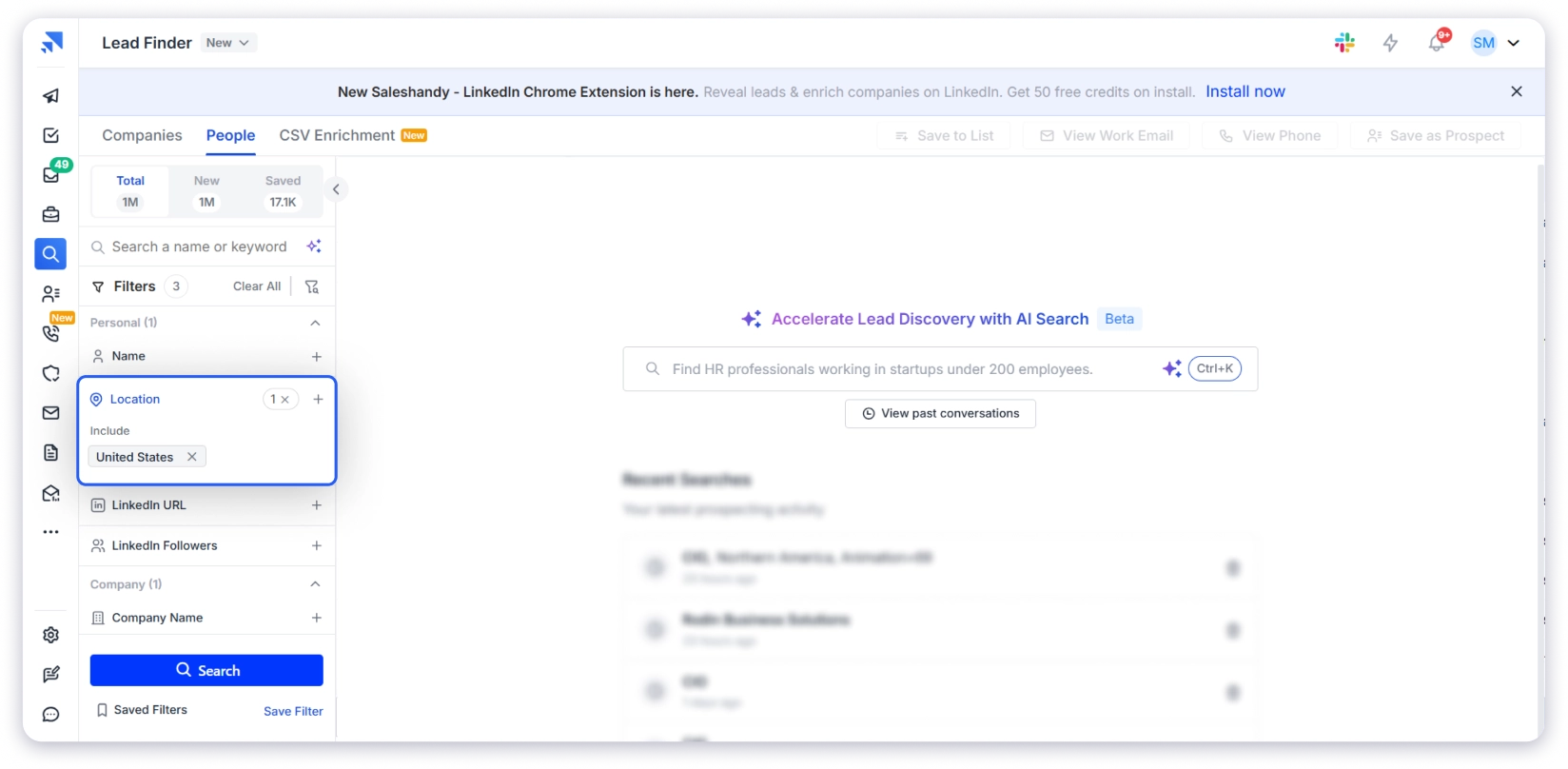
Step 2: Set your location
Now, set your location and choose your target country, state, or city.
Step 3: Add filters for your ideal lead
Filter by job title. Start with CEO, Founder, Owner, President, or Managing Director. These are the people who buy, sell, and invest in property.
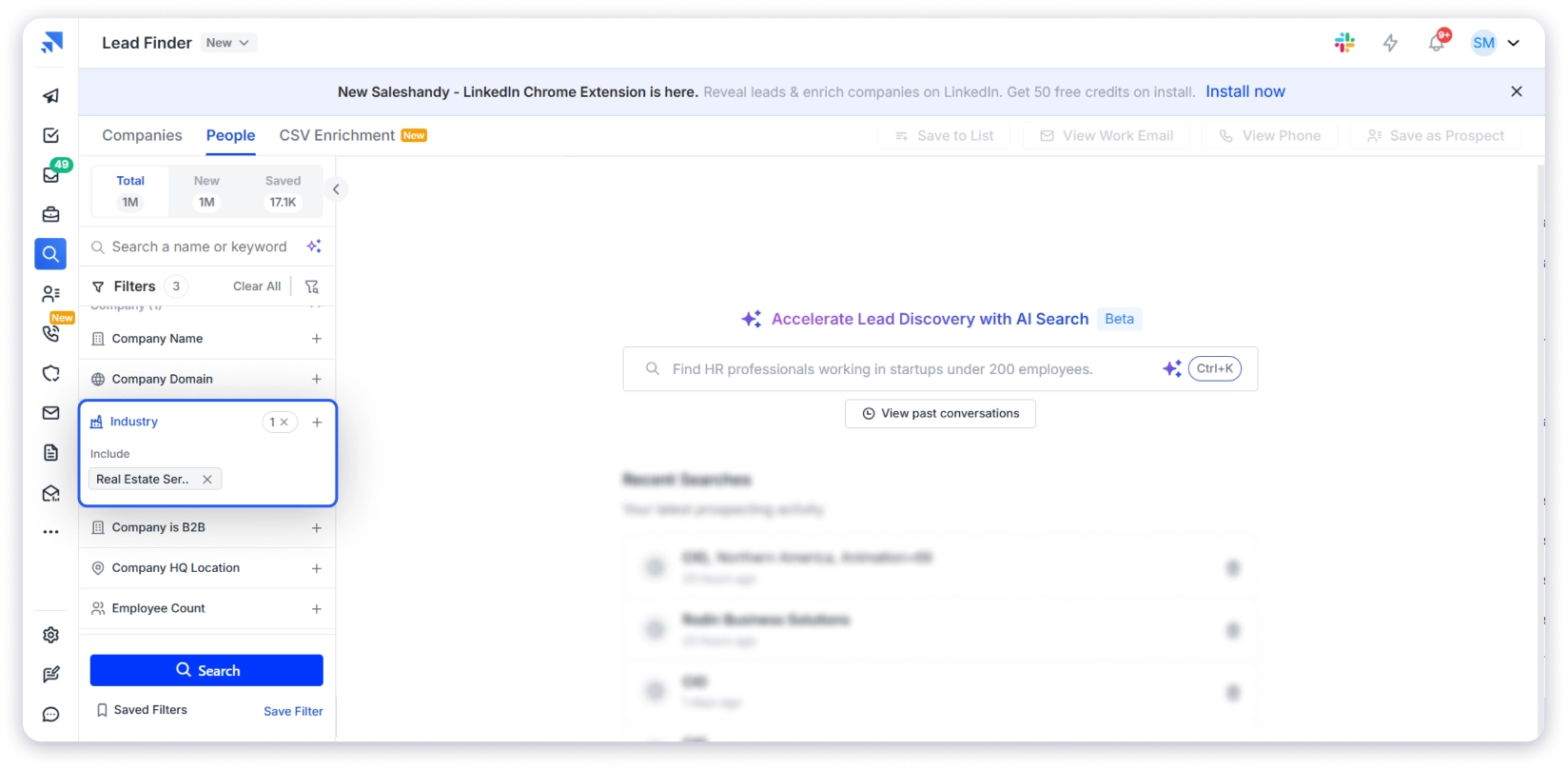
Step 4: Apply industry filters
Set industry to real estate, property management, or related fields. Adjust company size based on your target market.
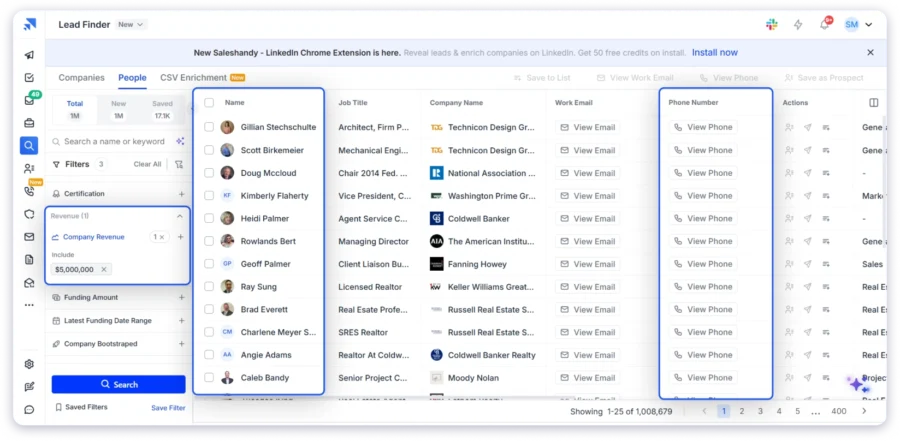
Step 5: Reveal verified contacts
Click to unlock phone numbers. Each number is verified in real time, so you’re not wasting time on invalid leads.
Now that your list is ready, the next question is how to call through it efficiently.
If you are using Saleshandy, the dialer is already inside the platform. Call from any prospect profile or task without opening another tool or paying for a separate subscription. Your list, your dialer, and your notes stay in one place.
Step 2: Research Before You Dial
Before dialing, spend a few minutes reviewing the property’s history, ownership information, and local market activity. This preparation gives you context and helps create a more relevant conversation.
For example, knowing that a listing recently expired or that a landlord has owned a property for ten years gives you a natural reason for reaching out.
This gives you a real reason for calling.
“Hi, I am an agent in your area.”
“I noticed your property on Maple Street has been off the market for a few months.”
That immediately feels more personal and gives the homeowner a reason to keep talking.
Once you have a good reason for calling, the next thing to think about is timing.
Most agents have the best cold calling time 10 AM and 12 PM or 4 PM and 6 PM, with Tuesday through Thursday usually leading to the most conversations.
After all, make sure you’re using the right tools like Saleshandy dialer. With local presence, numbers can help improve pickup rates and save time by automatically logging calls, recording conversations, and dropping voicemails in one click.
Step 3: Nail the First 10 Seconds
The cold calling opening determines whether the prospect stays on the line. They decide in just a few seconds whether to listen or hang up.
Most agents lose the call here because they lead with themselves instead of the prospect.
That sounds salesy and it kills the conversation.
The mistake is trying to sell too early. The prospect does not know you, did not expect your call, and is not interested in hearing a pitch. Your only goal in the first ten seconds is to get permission to continue the conversation.
Here are two techniques that help:
1. Use a Pattern Interrupt
Most cold calls start like this:
“Hi, my name is Mike, and I’m a real estate agent calling about your property…”
The prospect hears “agent” and immediately knows it is a sales call. They tune out before you finish the sentence.
“Hello… Bob?”
Bob says: “Yeah, who is this?”
Now you have their attention. They asked YOU a question. The dynamic already shifted.
That is it. Just their first name with a curious, slightly questioning tone.
It works because it sounds like someone they might know. That brief pause of curiosity gives you 3 to 5 extra seconds before they put up their guard. And that is all you need to start a real conversation.
2. Be Upfront and Make the Call Relevant
Many agents try to disguise the fact that they are cold calling. That backfires. When you acknowledge it upfront, people are actually more receptive because you are being honest.
Once you have their attention, immediately connect the call to something specific about their situation.
This lowers their guard because you are not trying to trick them into staying on the phone. The specificity shows you have done your homework and separates you from agents making generic calls all day.
Just earn the next 30 seconds. If the prospect keeps talking, you have already moved past the hardest part of the cold call.
Step 4: Use High-Converting Scripts
Having a cold calling script ready does not mean reading it word for word.
It means having a conversation template that keeps you on track while you adapt to whatever the prospect says in real time.
Here are two scripts that work for the most common real estate cold calling scenarios.
1. The Circle Prospecting / Recent Sale Script
Why this works: It leads with a real, local data point. The prospect is not hearing a pitch. They are hearing news about their own street. “Or are you a lifer?” is a disarming question that invites an honest answer without any pressure.
2. The FSBO Value Script
Why this works: It removes the biggest FSBO fear upfront (“I am not calling to ask for your listing”). Then it offers something they actually want: a qualified buyer. The close is low-pressure and specific.
Keep your scripts nearby during every session. But remember, the best calls happen when you stop reading and start listening.
Step 5: Overcome Objections With Empathy
Objection is part of cold calling, does not mean the conversation is over. It means the prospect has a concern they need addressed before they can move forward.
Most agents hear “no” and hang up. But in most cases, the prospect is not saying no to you.
They are saying “I do not see a reason to keep talking yet.“
The key is to validate first, then redirect. Do not argue. Do not convince. Acknowledge their concern, show them you understand, and then gently shift the conversation.
Here are the most common objections in real estate cold calls and how to handle each one:
| Objection | How to Respond |
|---|---|
| “I’m not interested in selling.” | “I completely understand. Most people I talk to are not actively looking to sell. Do you already have a neighborhood agent in mind just in case your plans change down the road?” |
| “I don’t want to pay agent commission.” | “I do not blame you at all. Keeping your equity makes complete sense. If I could show you a process that gets your home sold fast enough to cover my fee and still net you more money, would that be worth a quick look?” |
| “I’m too busy right now.” | “I respect your time completely. Would you prefer a quick 2-minute market update sent to your email, or is there a better time to chat tomorrow?” |
| “We want to sell it ourselves.” | “That makes total sense. If I brought you a qualified buyer willing to match your price without any hassle, would you be open to looking at the offer?” |
| “We are already working with an agent.” | “That is great. How has the experience been so far? When does your agreement end?” |
So, that is the entire skill of objection handling. Get comfortable with that one pattern and you will book more appointments than agents who memorize dozens of different scripts but panic the moment a prospect pushes back.
Step 6: Secure the Next Step
Every call should end with a clear next action. Not “I will follow up sometime.” Something specific.
Examples of good next steps:
- Schedule a property visit
- Book a valuation appointment
- Send them market information for their area
- Set a specific follow-up call date and time
Example:
Offering two options makes it easier for them to say yes. It is a small thing, but it works.
Step 7: Record Notes Immediately
After every single call, write down what happened. Do not wait until the end of the day. You will forget the details and your follow-up will suffer.
Note the motivation level, timeline, objections they raised, what you agreed to do next, and the follow-up date. Good notes make every future conversation with that prospect easier and more personal.
Step 8: Follow Up Consistently
Most deals in real estate do not happen on the first call. They happen on the third, fourth, or fifth touch. The agents who book the most appointments are the ones who follow up consistently without being pushy.
Here is a simple follow-up schedule:
| Day | Action |
|---|---|
| Day 1 | Initial call |
| Day 3 | Follow-up call |
| Day 7 | Follow-up call or text |
| Day 14 | Check-in call |
| Monthly | Nurture call |
Each follow-up should add something new. Share a recent sale in their neighborhood. Mention a market update. Reference something they told you on the last call.
Never just say “just following up” because everyone ignores that.
Best Cold Calling Frameworks for Real Estate
Not every lead responds to the same approach.
What works for an expired listing may not work for a landlord, investor, or FSBO seller.
That’s why successful agents use different cold calling frameworks for different types of prospects.
Below are 8 proven frameworks, when to use them, and examples of how they work in real conversations.
1. AIDA Framework (Attention → Interest → Desire → Action)
Best for: Homeowners, FSBOs, and expired listings.
AIDA is one of the simplest cold calling frameworks. The goal is to grab the prospect’s attention, spark interest, build desire, and guide them toward a next step.
Example:
Interest: “I noticed several homes nearby have sold recently for strong prices.”
Desire: “Many homeowners are finding they can sell faster and for more than they expected.”
Action: “Would you be open to a quick conversation about your options?”
This framework works best when you have a strong reason for calling and want to move the conversation toward an appointment.
2. SPIN Selling (Situation → Problem → Implication → Need-Payoff)
Best for: Landlords, investors, and absentee owners.
Instead of pitching, SPIN helps you uncover the prospect’s situation through questions. The goal is to identify a problem, understand its impact, and help the prospect see the value of taking action.
Example:
Problem: “Has managing the property become more challenging lately?”
Implication: “If maintenance costs keep increasing, how would that affect your plans?”
Need-Payoff: “Would selling and reinvesting elsewhere make things easier?”
SPIN works well because it gets prospects talking about their own situation rather than listening to a sales pitch.
3. PAS Framework (Problem → Agitate → Solution)
Best for: Distressed sellers, landlords, and investor outreach.
PAS focuses on identifying a problem, highlighting its impact, and then presenting a solution. It’s effective when the prospect is already dealing with a challenge and may be looking for a way forward.
Example:
Agitate: “Every month a property sits vacant can significantly reduce your returns.”
Solution: “I’ve helped several owners sell quickly and move their money into better-performing investments.”
PAS works best when you know the prospect is facing a specific problem and may be open to discussing solutions.
4. Permission-Based Framework
Best for: General prospecting and first-time calls.
This framework lowers resistance by asking for permission before jumping into a sales conversation. It feels more natural and gives the prospect a sense of control.
Example:
“Hi Sarah, did I catch you at a bad time?”
“I’m calling because I work with homeowners in your neighborhood.”
“Have you thought about selling this year?”
“Would it make sense to schedule a quick consultation?”
Permission-based selling works well because people are more likely to stay on the line when they don’t feel pressured.
5. LAER Framework (Listen → Acknowledge → Explore → Respond)
Best for: Handling objections and keeping conversations alive.
LAER helps you respond to objections without sounding pushy. Instead of arguing, you listen, acknowledge their concern, explore it further, and then respond.
Example:
The goal isn’t to overcome the objection immediately. It’s to understand what’s behind it and keep the conversation moving.
6. BANT Qualification (Budget → Authority → Need → Timeline)
Best for: Qualifying serious sellers and investor leads.
BANT helps you quickly determine whether a prospect is likely to take action or is simply exploring their options. It saves time by focusing on the factors that matter most.
Example:
Authority: “Are you the only person involved in the selling decision?”
Need: “What’s motivating you to consider selling?”
Timeline: “If you decided to move forward, when would you ideally like to sell?”
BANT is useful when you want to separate serious opportunities from prospects who aren’t ready to act.
7. FORD Method (Family → Occupation → Recreation → Dreams)
Best for: Luxury real estate, referrals, and long sales cycles.
FORD is a rapport-building framework. Instead of focusing on the property right away, it helps you build trust through genuine conversation.
Example Questions:
“What originally brought you here?”
“What do you enjoy doing outside of work?”
“If you moved, where would you like to go next?”
This framework works well because people are more likely to work with someone they know, like, and trust.
8. Real Estate Investor Framework
Best for: Off-market properties, investment properties, and investor outreach.
Investors usually prefer direct conversations. This framework gets straight to the point and focuses on uncovering opportunity rather than building a lengthy sales pitch.
Example:
Discovery: “Have you ever considered selling it?”
Motivation: “What would make you consider an offer?”
Timeline: “If you decided to sell, when would you want to do it?”
Close: “Would you be open to discussing your options?”
This framework works because it respects the prospect’s time and quickly identifies whether there’s a potential deal to explore.
Now that you know which framework fits each lead type, here is the step-by-step process for putting it all into action.

Start Cold Calling Your Real Estate Clients Today
You now have the 10-step process and 8 frameworks mapped to every real estate lead type. That covers the strategy. But two things make the biggest practical difference in your daily calling sessions: verified phone numbers and a proper dialer.
I use the Saleshandy Dialer for every calling session. Local presence dialing matches your outbound number to the prospect’s area code, so pickup rates increase up to 4x. Every call is auto-recorded, transcribed, and AI-summarized. Plans start at $23/month and your first phone number is free.
If you are browsing county records or a CRM, the Click-to-Call Chrome Extension lets you dial any number on the page with one click.
The process is straightforward. Build your list. Set up your tools. Make the calls. Follow up. The agents who treat cold calling as a system instead of a one-off activity are the ones booking appointments every week.
FAQs
How many cold calls should a real estate agent make per day?
50 to 100 dials is a realistic daily target. That typically translates to 5 to 15 live conversations, depending on your data quality and time of day. Consistency matters more than volume on any single day. An agent making 50 calls daily for 5 days will always outperform an agent making 200 calls once a week.
What is the best time to cold call in real estate?
Weekdays between 10 AM and 12 PM and 4 PM and 6 PM in the prospect’s local time zone consistently produce the highest connect rates. Avoid Monday mornings when people are catching up and Friday afternoons when they have already checked out. Tuesday through Thursday are the strongest days.
Does cold calling still work for real estate agents in 2026?
Yes. 57.7% of agents rank cold calling as their top lead generation method after referrals. The channel is not dead. Bad execution is. Agents who call random numbers with no framework and no follow-up system will always get poor results. Agents who follow a structured process consistently book appointments.
How do I get phone numbers for real estate cold calling?
I use Saleshandy Lead Finder to pull verified phone numbers filtered by geography and property data. The database has 852M+ contacts. That is more reliable than buying a random list from a vendor site. Avoid cheap bulk lists. They are full of disconnected and DNC-flagged numbers. Always scrub against the DNC registry before dialing.
What is the success rate of cold calling in real estate?
The industry average sits around 2 to 3%. But agents who use targeted lists, a structured opener, and a consistent follow-up system regularly hit 8 to 13%. The gap is not about talent or confidence. It is about the system behind the calls.
Is it legal to cold call homeowners for real estate?
Yes, but there are rules. You must comply with the TCPA and the National Do Not Call Registry. Calling hours are restricted to 8 AM to 9 PM in the prospect’s local time zone. Fines can reach $50,120 per violation. Always scrub your list against the DNC registry before dialing.