

How to get clients for a real estate business?
If you’re asking that, you’re not alone!
Every real estate agent reaches a point where they realize the real challenge isn’t just closing deals. It’s finding the right buyers and sellers to begin with.
Because getting clients isn’t about trying one random tactic and hoping it works.
It’s about building a system that keeps putting you in front of people who are ready to buy, sell, or invest, and giving them a clear reason to choose you over every other agent in the market.
That’s exactly what this guide will help you with.
I’ll break down 12 tried-and-proven ways to get real estate clients, including:
- How each method works
- How long does it usually take
- What results can you realistically expect
- Which method makes sense for your stage
Whether you got your license last month or you’ve been closing deals for years, you’ll find a strategy here that fits where you are right now.
Let’s get into it.
How to Get Clients for Real Estate – TOC
- TL;DR: How to Get Clients for Real Estate
- 12 Effective Strategies to Get Clients for Real Estate
- Use Cold Outreach to Reach Buyers and Sellers Directly
- Work Your Sphere of Influence
- Join a Real Estate Referral Network
- Specialize in a Profitable Niche
- Build a Professional Online Presence
- Set Up a Google Business Profile
- Do Podcasts and YouTube Videos
- Host Open Houses That Generate Leads
- Offer Free Valuations and Workshops
- Farm a Neighborhood
- Door Knocking
- Run Targeted Paid Ads
- Final Verdict: Which Is the Best Method to Get Real Estate Clients in 2026?
- Frequently Asked Questions
TL;DR: How to Get Clients for Real Estate (The Quick Version)
If you are short on time, here are 12 strategies at a glance, ranked by how fast they deliver results.
| Strategy | Strength | Weakness | Success Rate |
|---|---|---|---|
| 1. Cold Outreach (Email + Calling) | Scalable and low cost | Requires daily consistency | 8-20% conversion on cold leads |
| 2. Sphere of Influence | Highest trust, highest conversion rate | Limited by the size of your network | 50-70% conversion on warm referrals |
| 3. Referral Networks | No upfront cost, pay only on close | 25-35% referral fee cuts into your commission | Varies by network and market |
| 4. Niche Specialization | Less competition, higher perceived value | Takes 6-12 months to build a reputation | High once established |
| 5. Professional Online Presence | Works 24/7, builds long-term credibility | Slow to gain organic traction | 5-10 inbound leads/month when ranking |
| 6. Google Business Profile | Free, captures high-intent “near me” searches | Needs consistent reviews to rank in top 3 | Top 3 GBP listings get 70%+ of clicks |
| 7. Podcasts and YouTube | Builds deep trust and authority over time | Time-intensive to produce and promote | Compounds slowly, pays off long-term |
| 8. Open Houses | Free, face-to-face, warm leads | Requires giving up weekends | 3-5 actionable leads per event |
| 9. Free Valuations and Workshops | Positions you as the local expert | Takes planning and promotion effort | High conversion when attendees show up |
| 10. Geographic Farming | Most predictable long-term pipeline | 6-12 months before the first listing | 5-10 listings/year from a single farm |
| 11. Door Knocking | Zero cost, immediate conversations | Physically demanding, high rejection rate | 1 solid lead per 40-50 doors |
| 12. Paid Ads (Meta + Google) | Fast results, scalable, highly targeted | Requires a budget and fast follow-up | 1-3% conversion on paid leads |
12 Effective Strategies to Get Clients for Real Estate
There’s no one-size-fits-all answer to how to get clients for real estate.
Each strategy below can be adapted to your market, budget, and the type of client you want, and most work even better in combination.
Let’s start with the fastest way to put conversations on the board.
1. Use Cold Outreach to Reach Buyers and Sellers Directly
When you have no pipeline, cold outreach is the fastest way to build one. It puts you in front of people who could move right now, instead of waiting for them to find you.
The two channels I would start with are cold email and cold calling.
a. Cold Email
Cold email lets you reach potential sellers, buyers, and investors directly with a short, personalized message. It costs almost nothing, it scales as fast as you want, and it keeps you in full control of your pipeline.
You can use a tool like Saleshandy to pull verified emails and phone numbers from a database of 852M+ contacts and start outreach without spending hours on manual research.
Who Should You Target?
Your results depend entirely on your list. Even the best email fails if it goes to the wrong person.
These segments get the highest response rates for real estate agents:
- FSBO sellers listed for 30+ days who are feeling the pain of doing it alone.
- Expired listing owners whose previous agent could not sell. They want a better option.
- Absentee owners who own property but live elsewhere. Many are open to selling.
- Pre-foreclosure homeowners who need to move quickly.
- Local investors are looking for their next deal.
Once you know who to target, here is how to build your list:
Step 1: Open Saleshandy’s Lead Finder
Sign up and click the magnifying glass icon on the left sidebar. This gives you access to 852M+ verified contacts.
Step 2: Set Your Location
Pick the market you work in by country, state, or city, and drill down to a specific metro or zip code if you farm a tight area.

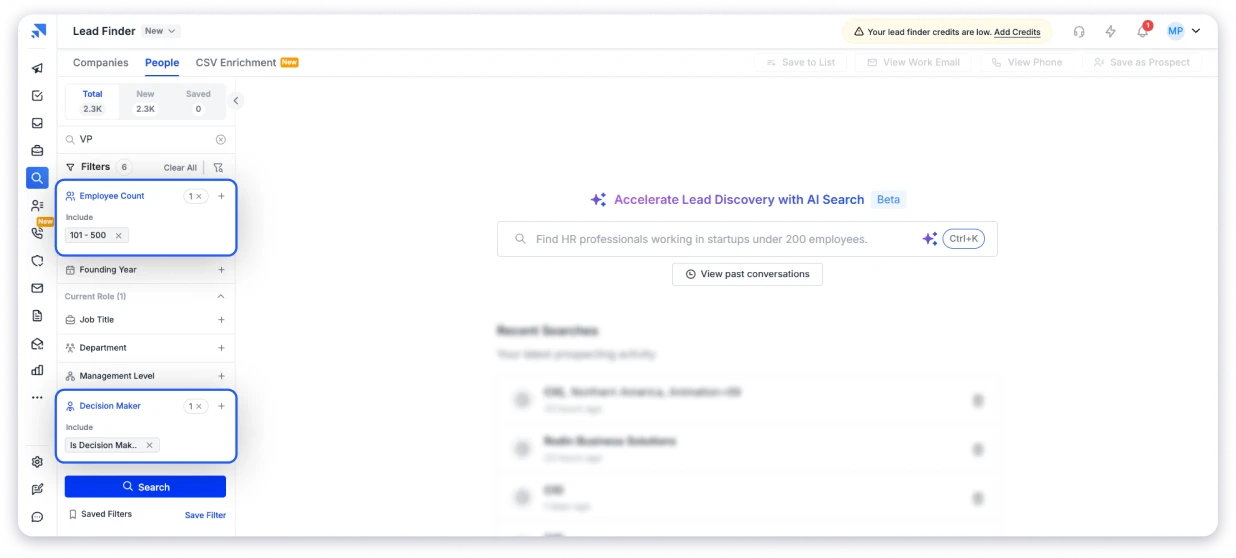
Step 3: Filter for Decision-Makers
Narrow by job title and seniority so you only reach decision-makers, the Owners, Founders, CEOs, Presidents, and Managing Directors who can actually buy, sell, or invest in property.
Step 4: Add a Funding Signal
Instead of a broad industry filter, turn on a buying signal like Company revenue or Funded to surface companies with fresh capital to deploy, the ones expanding, relocating, or ready to invest.
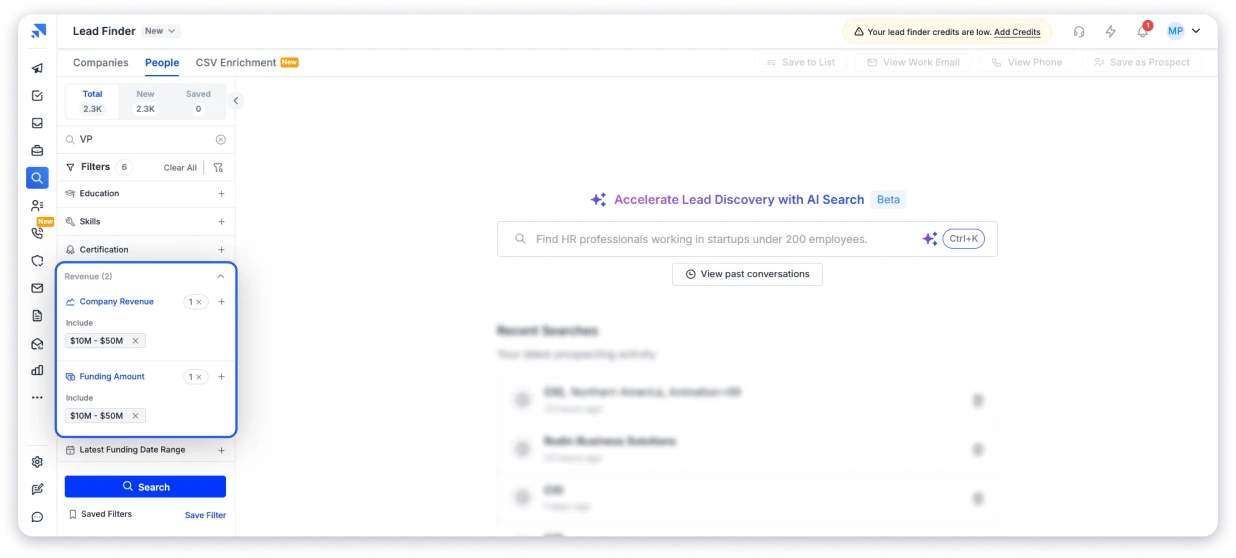
Then match company size to your market: 1-100 employees for solo investors and small landlords, or 101-500 for small brokerages and local firms.
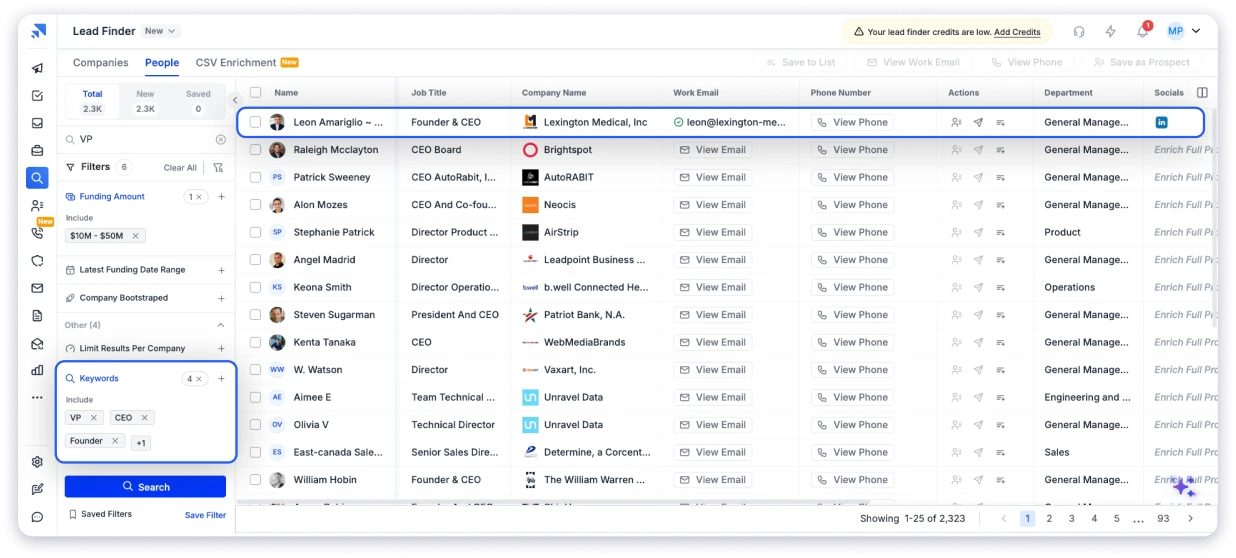
Step 5: Reveal Verified Contacts
Get the emails and direct phone numbers, each verified in real time so you skip invalid leads, then export the list straight into a Saleshandy outreach sequence.
How to Write Cold Emails That Get Replies
One rule: keep every email under 5 lines. Talk about their property, not about yourself.
- Line 1: Reference something specific. A property address, days on market, or a visible listing issue.
- Line 2-3: Show you can help. A comparable sale, a market stat, or a quick insight.
- Line 4: Offer something free. A market snapshot, a Loom walkthrough, or a pricing analysis.
- Line 5: Your name and contact info.
If you want the full framework with examples, here’s my guide on how to write a cold email.
Template:
Hi [First Name],
I noticed your home at [Address] has been on the market for [X days] without an accepted offer. Homes in your neighborhood are averaging [X] days right now, so a small pricing or marketing shift could make a difference.
I put together a free market snapshot for your street. Want me to send it over?
[Your Name]
[Phone Number]
[Brokerage Name]
b. Cold Calling
Cold calling sounds intimidating, but it’s still one of the fastest ways to get real estate clients.
The difference between a hang-up and a booked appointment is simple. It’s not confidence. It’s not luck. It’s having a clear script that sounds human, not robotic.
When you do it right, cold calling helps you:
- Start real conversations with motivated sellers
- Book appointments directly without waiting for referrals
- Build a pipeline even if you have zero online presence
Most experienced agents will tell you the same thing. A small percentage of their business still comes from picking up the phone while everyone else is “posting and hoping.”
Who to call?
Focus only on people with intent, not random numbers:
- Expired listings (call immediately after expiry)
- FSBO sellers (especially 30+ days active)
- Pre-foreclosures
- Absentee owners (investors or out-of-town owners)
- Online leads who never responded after an inquiry
Bonus read: Check out my guide on how to cold call in real estate, and for an in-depth, copy-ready set, see these real estate cold calling scripts.
How To Actually Make This Work
Don’t obsess over perfection. Focus on flow.
- Aim for 30–50 dials per session
- Expect 8–12 real conversations
- A good result is 1–2 booked appointments
That’s it. You are not measuring success by dials. You are measuring by conversations and appointments.
Cold calling isn’t about sounding perfect. It’s about sounding real enough that someone stays on the line.
2. Work Your Sphere of Influence
Your sphere of influence (SOI) is everyone who already knows you: family, friends, neighbors, former colleagues, even your kid’s soccer coach. You have a network; you just haven’t activated it.
SOI works because people hire agents they trust. A 20-year veteran will lose a deal to a client’s newly licensed friend because trust beats credentials.
Referred leads convert at 50 to 70 percent versus 1 to 3 percent on cold, so this is your highest-converting channel.
How It Works
Let everyone know you’re in real estate, casually, so you’re the first name they think of.
- The 30-day blitz: Text your contacts. “Hey, I got my real estate license. If you hear of anyone buying or selling, I’d love the introduction.” Plant the seed, don’t pitch.
- Monthly market updates: A short personal email beats a newsletter. “Three homes sold on your street last month, here’s what that means for your value.”
- Social media visibility: Post listings and market insights so your sphere remembers you when a coworker mentions moving.
- Handwritten notes: A card on a home anniversary takes three minutes and people remember it for years.
Where It Falls Short
- Limited by the size of your existing network.
- People forget you if you stop staying visible.
- It needs ongoing effort, and you can run out of contacts if it’s your only source.
3. Join a Real Estate Referral Network
Referral networks send you warm, inbound leads from other agents, relocation firms, and matching platforms with nothing upfront. You only pay a fee (usually 25 to 35 percent of commission) when the deal closes. It’s one of the lowest-risk forms of real estate lead generation because someone else already found the client.
How It Works
You handle the deal and split the commission with whoever referred it. Main types:
- Agent-to-agent: An agent with a client relocating to your city refers them to you, and you split the commission.
- Relocation companies: Firms pairing transferring employees with local agents, often high-value, with guaranteed moves.
- Online matching platforms and Facebook groups: Sites and private groups that distribute buyer and seller inquiries for a fee on close.
To make it work: join 2 to 3 networks in your market, respond within an hour, send referrals out as well as in, and track each in your CRM.
Where It Falls Short
- Referral fees (25-35%) eat into your commission significantly.
- Lead quality is unpredictable. Some are ready to close, others are months away.
- Zero control over when or how many referrals come in.
- Competition for the same referral can be high in popular markets.
- It works best as a supplement, not your entire pipeline.
4. Specialize in a Profitable Niche
Trying to be everything to everyone usually means you become memorable to no one. The best agents don’t chase every type of client. They pick a niche and own it. That is where the real edge is.
Specializing is also one of the smartest answers to how to get clients as a real estate agent.
Instead of competing with every agent in your city, you become the obvious choice for a specific type of client or property. Over time, that positioning turns into inbound leads, referrals, and higher trust.
Common niches include:
- First-time homebuyers
- Luxury properties
- Investors
- Military relocation
- Senior downsizing
- New construction
- Divorce or probate sales
- Specific neighborhoods
How to Establish Your Niche
Pick just one niche, not two or five. Then build around it:
- Create a dedicated page on your website.
- Add 2 to 3 real case studies.
- Speak directly to that audience (investors don’t care about “beautiful homes,” they care about returns).
- Show up where they already hang out.
- Update your bio, headline, and messaging.
Where It Falls Short
- Your market becomes smaller on purpose.
- It takes time to build authority (usually 6 to 12 months).
- Some niches require extra expertise or certifications.
- You may turn away non-niche leads.
- Early income can feel inconsistent.
5. Build a Professional Online Presence
In 2026, if a potential client cannot find you online, you do not exist to them. A strong online presence is now a core part of how real estate agents get clients.
It is the first impression for 90 percent of buyers and sellers before they ever pick up the phone.
This is not about having the flashiest website. It is about being findable, credible, and easy to contact.
Start a Website
Your site needs to do three things: show you’re a real, active agent, display listings and testimonials, and make contact dead simple. Put your phone number in the top right, add one call-to-action per page (“Get a free home valuation”), give each neighborhood its own page for local SEO, and show 3 named testimonials.
Use Social Media
You do not need to be on every platform. Pick 2 and be consistent.
- Instagram: Post listing photos, neighborhood tours, market updates, and behind-the-scenes content. Reels and Stories get more reach than static posts.
- Facebook: Great for local community engagement. Join local groups, share market insights, and run targeted ads.
- LinkedIn: Underrated for real estate. Connect with local business owners, lenders, and attorneys. Referrals come from professionals, not just consumers.
Post 3 to 5 times per week. The content does not need to be polished. Consistency beats production value every time.
Publish Content That Ranks Locally
Write posts targeting what clients search: “Best neighborhoods in [city] for families” or “How to sell a house fast in [city].” Each post is a long-term lead magnet for real estate leads, sending traffic for months once it ranks. Aim for 2 local posts a month.
Where It Falls Short
- Building organic traffic takes 3 to 6 months minimum.
- Social media needs consistency, not just posting.
- Website traffic doesn’t guarantee clients.
- Competition is high in every local market.
- Content creation takes time and effort daily.
- Mobile optimization is critical, or you lose leads fast.
6. Set Up a Google Business Profile
If you only do one thing on this list for how to get clients in real estate locally, make it this.
A complete Google Business Profile (GBP) puts you in front of buyers and sellers at the exact moment they search “real estate agent near me.”

The top 3 GBP listings get over 70 percent of all clicks. If you are not in the top 3, you are invisible in local search.
How to Set It Up
- Claim and verify at business.google.com, and complete every field: name, address, phone, website, hours, service area, categories.
- Upload real photos: headshots, sold properties, client photos (with permission).
- Post weekly: a listing, market update, recent sale, or testimonial.
- Ask every happy client for a review with a direct link, and reply within 24 hours.
Where It Falls Short
- Captures people already searching, but does not create new demand.
- Fake or incentivized reviews can get your profile suspended.
- Breaking into the top 3 takes time in competitive markets.
- Only works for agents targeting a specific local area.
7. Do Podcasts and YouTube Videos
Video and audio build trust faster than anything else. If you’re figuring out how to get customers as a real estate agent through content, this is the channel that compounds. Familiarity turns you from “just another agent” into someone they know.
You do not need expensive equipment. A smartphone, decent lighting, and a quiet room are enough to start.
What to Create
- Market update videos: “Here is what happened in [city] real estate this month.” Record once a month, post to YouTube and Instagram.
- Neighborhood tour videos: Walk through a neighborhood, point out schools, restaurants, parks, and recent sales. These rank well on YouTube for local searches.
- Buyer and seller education: “5 mistakes first-time buyers make in [city]” or “How to price your home correctly in a shifting market.”
- Podcast interviews: Interview local lenders, inspectors, contractors, and other agents. They share the episode with their audience, and you both get exposure.
Start with one video per week. Keep it under 5 minutes. Post the vertical version on Instagram Reels and TikTok, the horizontal version on YouTube, and embed every video on your website as a blog post for SEO.
Where It Falls Short
- Video creation takes time. Recording, editing, uploading, and promoting can take 2 to 3 hours per video at the start.
- Results are slow and compound over time.
- Your first 20 videos may get low views. This is normal.
- Growth usually starts after consistent posting, around 50 to 100 videos.
- Many agents quit too early, often within 4 to 6 weeks.
- Consistency matters more than early results or perfection.
Video builds authority at a distance. Open houses build it face-to-face.
8. Host Open Houses That Generate Leads
Open houses are still one of the best ways to meet real buyers in person.
If you’re figuring out how to find clients for real estate without a big ad budget, they’re one of the most dependable options.

Every visitor has already shown interest, which makes them warmer than most online inquiries. You don’t even need your own listing; offer to host for other agents in your brokerage.
How It Works
- Promote 48 hours out: A teaser video plus a small local Facebook ad (5-mile radius) lifts turnout.
- Use digital sign-in: Curb Hero, Spacio, or a tablet form to capture name, phone, email, and agent status.
- Offer something at the door: A neighborhood guide, sales report, or home value sheet.
- Invite nearby homeowners: Knock on surrounding doors first. Neighbors attend and often become future sellers.
- Follow up fast: Text within 1 to 2 hours, referencing the property they saw.
Where It Falls Short
- Requires giving up Saturday or Sunday afternoons consistently.
- Not every visitor is a serious buyer. Some are just curious neighbors.
- Some markets and price ranges draw very few visitors.
- Results depend heavily on promotion.
- Only generates leads if you follow up fast. Wait two days, and the lead goes cold.
9. Offer Free Valuations and Workshops
Offering something free lowers the barrier to a conversation. A free valuation, consultation, or market report gives clients a reason to raise their hand without committing, and your expertise does the selling.
Free Home Valuations
This is the easiest lead magnet in real estate. Every homeowner wants to know what their home is worth. Put a free valuation offer on a landing page or social post, and each request hands you contact info and an opening to discuss timing.
Workshops and Seminars
- First-time buyer workshop: Walk through pre-approval, search, offers, inspections, and closing, with a lender co-hosting to split the cost.
- “Selling in a high-rate market” seminar: Tackle sellers’ biggest fear with data on why their home can still sell well.
Promote on social, your email list, and local Facebook ads. A $50 to $100 spend can fill a room of 15 to 25.
Where It Falls Short
- Free valuations attract many people who aren’t ready to sell yet.
- Have a follow-up system to nurture leads over time.
- Workshops require planning, promotion, and preparation.
- Allow 3-4 weeks to organize your first event.
- Low attendance is normal, every attendee is still a potential client.
10. Farm a Neighborhood
Geographic farming means picking one neighborhood and becoming its default real estate expert. It’s one of the most predictable answers to how to get clients in real estate, though not a quick win: 6 to 12 months for the first listing, but once it clicks a single farm can produce 5 to 10 listings a year on repeat.
How It Works
Pick your farm: 200 to 500 homes with 5 to 8 percent annual turnover, no dominant agent, somewhere you actually like.
Work it consistently:
- Mail a branded “just sold” postcard monthly ($0.75 to $1.00 per home). One listing pays for years of mail.
- Door-knock 20 to 30 homes a week with a market update flyer.
- Sponsor a block party, newsletter, or neighborhood Facebook group.
- Track listings and expirations weekly, and reach out the moment a home hits the market.
Where It Falls Short
- Takes 6 to 12 months before the first listing. Most agents quit at month 4.
- Monthly direct mail costs $300 to $500 for a 400 to 500-home farm.
- Hard to break in if a dominant agent already owns the area.
- Requires patience, budget, and consistent weekly effort.
11. Door Knocking
It’s not the flashiest way to find clients, but when you’re figuring out how to get clients for real estate from scratch, door-knocking still works, especially when you’re new and building trust in your community.
Knocking on a few doors and introducing yourself builds real relationships and can generate leads and referrals you didn’t expect. Commit to 5 new doors a day on your regular walk and see what happens.
How to Do It Right
- Pick 2 to 3 streets a week, 1 to 2 hours, 3 days a week.
- Bring a one-page “just sold” flyer with the sale price, days on market, and your contact info.
- If they’re not interested, thank them, leave a flyer and card, and move on. Always leave one where nobody answers.
- Log every conversation in your CRM and follow up within 48 hours.
The numbers: target 30 to 50 doors around your recent sales and expect a 10 to 15 percent answer rate.
Door Knocking Scripts You Can Use Today
For more scripts covering expired listings, FSBO follow-ups, and objection handling, see the cold calling guide and scripts I linked earlier.
Where It Falls Short
- High rejection rate. Most people say no or do not answer.
- Physically demanding and does not scale like email or ads.
- Some neighborhoods have “no soliciting” rules or gated access.
- Results vary by weather, time of day, and day of the week.
- Best windows: weekday evenings (5 to 7 PM) and Saturday mornings.
Door knocking is free but slow. Paid ads cost money but move fast.
12. Run Targeted Paid Ads
Paid ads reach the right people immediately. With a budget, they’re one of the fastest ways to find real estate clients on demand, no waiting on SEO or referrals. The two main platforms are Meta and Google Ads.

Meta Ads (Facebook and Instagram)
Best for local audiences and simple lead-gen offers.
- Target by location, age, income, and life events like moving or a new job.
- Best for listing promotion and lead magnets (free valuations, buyer guides).
- Start at $500 to $1,000 a month, test 2 to 3 variations, and send traffic to a dedicated landing page, not your homepage.
Google Ads
Best for high-intent searchers ready to act.
- Bid on terms like “sell my house in [city]” or “real estate agent [city].”
- Cost per click runs higher, roughly $5 to $30, depending on your market.
Retargeting
Install Meta Pixel and Google Tag, then run small daily ads ($5 to $10) to past visitors. These convert better and cost less because they already know you. Track cost per lead and per closing monthly; follow-up speed usually decides whether paid leads convert.
Where It Falls Short
- Needs a consistent budget to test and optimize.
- Online leads convert at 1 to 3 percent, so fast follow-up (within 5 minutes) is critical.
- Most failed campaigns come from poor follow-up, not bad ads.
Final Verdict: Which Is the Best Method to Get Real Estate Clients in 2026?
If you have made it this far, you have probably noticed a pattern.
Getting real estate clients in 2026 is not about finding a secret tactic. It is about building a system you can repeat. The best approach is usually a mix of channels, not just one.
But winning the client is only half the job. What happens after they sign matters just as much.
The agents who keep clients for years and build a referral engine follow a few simple rules:
- Be transparent about pricing, timelines, and the process.
- Communicate consistently and keep clients informed.
- Set clear expectations to avoid surprises.
- Stay in touch, even with long-term leads.
- Keep your pipeline full to reduce risk.
If you want the fastest way to start filling your pipeline, cold email outreach with Saleshandy gives you verified prospects, automated outreach, and follow-up tracking in one place.
Start with 50 free credits and build your first prospect list today.
Frequently Asked Questions
1. How long does it take to get your first real estate client?
It depends on the strategy. Cold outreach and open houses can generate your first lead within 1 to 2 weeks. SEO and content marketing typically take 3 to 6 months. Farming takes 6 to 12 months. Most new agents close their first deal within 2 to 4 months if they are actively prospecting daily.
2. Should you focus on buyers or sellers when starting out?
Start with buyers. They are easier to find (open houses, online leads, referrals), the transaction process teaches you the fundamentals, and buyer deals close faster. Once you have 10 to 15 closings under your belt, shift your focus toward listings. Sellers are more profitable per transaction, and every listing generates buyer leads.
3. How to Get Real Estate Clients Without Cold Calling
Focus on strategies that generate inbound interest: optimize your Google Business Profile, publish locally targeted content, host open houses, run Meta ads, and work your sphere of influence. Many successful agents have never made a cold call. They build systems that make the phone ring instead.
4. What is the best strategy on a tight budget?
Door knocking, sphere of influence outreach, open houses, and social media posting are all free. Cold email is extremely low-cost with the right tool. These five strategies can build a full pipeline without spending more than $50 per month.
5. How do you handle rejection or being ignored?
Reframe it. Rejection is not personal. It is math. If 1 out of every 50 cold calls turns into a client worth $8,000 in commission, then every “no” is worth $160. The agents who thrive in this business are not the ones who avoid rejection. They are the ones who stop keeping score and focus on the next conversation.