
Only about 41% of sales teams consistently meet their sales goals.
And using the wrong software is one of the reasons behind it.
I have seen teams invest in a powerful CRM when their real issue was poor prospecting. Others add another outreach platform when what they actually need is better pipeline visibility, stronger rep adoption, or more accurate forecasting.
Enterprise sales software includes CRMs, sales engagement platforms, revenue intelligence tools, enablement software, and conversation intelligence platforms.
Each solves a different problem, so comparing them only by their feature lists will not help you make the right choice.
I reviewed 10 platforms based on the problems they solve best, how well they support complex B2B sales, their limitations, pricing, and the teams they are best suited for.
The goal is simple to help you identify where your sales process needs support and choose the right software for the job.
Let’s get into it!
Best Enterprise Sales Software – TOC
TL;DR: Best Enterprise Sales Software at a Glance
If you only have 60 seconds, here is what you need to know:
Saleshandy → Best for enterprise B2B sales teams that want to find verified contacts, run multichannel outreach, and manage deals in one platform without per-seat pricing.
Salesforce Sales Cloud → Best for large organizations that need a customizable CRM for managing pipelines, territories, forecasts, and global sales operations.
Gong → Best for sales leaders who want to analyze buyer conversations, coach reps, identify deal risks, and improve forecast accuracy.
Here is a side-by-side comparison of the top enterprise sales software:
| Platform | Best For | Key Features | Data Security | Starting Price |
|---|---|---|---|---|
| Saleshandy (Best Pick) | Enterprise teams scaling outbound sales | 852M+ contacts, multichannel outreach (email + LinkedIn + calling + WhatsApp), unlimited email accounts, built-in CRM | SOC 2 Type II, ISO 27001, GDPR | $34/month |
| Salesforce Sales Cloud | Large companies managing complex sales pipelines | Custom CRM, AI forecasting, territory management, 7,000+ integrations | SOC 2 Type II, ISO 27001, HIPAA | $25/user/month |
| HubSpot Sales Hub | Growing teams aligning sales and marketing | CRM, lead scoring, workflow automation, marketing and service tools | SOC 2 Type II, GDPR | Free plan available |
| Gong | Sales leaders improving coaching and forecasting | Call analysis, coaching dashboards, deal boards, risk alerts | SOC 2 Type II, GDPR | Custom pricing |
| Outreach | SDR and BDR teams running high-volume outreach | Multichannel sequences, AI optimization, pipeline management | SOC 2 Type II, GDPR | Custom pricing |
| LinkedIn Sales Navigator | Teams finding enterprise decision-makers on LinkedIn | Advanced search, InMail, account mapping, buyer intent signals | SOC 2 (via Microsoft), GDPR | $79.99/month |
| Apollo.io | Teams wanting contact data and outreach in one tool | 275M+ contacts, email outreach, dialer, AI scoring | SOC 2 Type II, GDPR | Free plan available |
| Cognism | Teams selling in Europe or regulated markets | GDPR-compliant data, verified phone numbers, intent data | ISO 27001, GDPR, CCPA | Custom pricing |
| Clari | Revenue leaders who need more accurate forecasts | Revenue forecasting, pipeline inspection, deal-risk detection | SOC 2 Type II, GDPR | Custom pricing |
| Seismic | Teams helping reps find the right sales content | Content automation, sales training, analytics, AI recommendations | SOC 2 Type II, GDPR | Custom pricing |
Why Enterprise Sales Software Matters in 2026
Your reps spend too much time on admin. Not enough time selling.
Enterprise sales software fixes this by delivering accurate data, surfacing buying signals, and consolidating workflows into fewer platforms. Here’s what’s breaking without it:
1. Manual List Building Eats Hours Every Week
Contact data decays faster than most teams realize. People change jobs. Email addresses expire. Phone numbers go dead.
Without continuous verification, your outreach bounces. Dials go nowhere. Reps waste hours every week hunting for contacts, verifying emails, and building prospect lists instead of having conversations with buyers.
The fix: enterprise sales software with real-time verified databases and automated list building. Reps search, filter, and pull verified contacts in minutes instead of days.
2. Poor Timing Leads to Missed Deals
Without intent signals, you reach out too early or too late. You miss the window when buying committees are actively evaluating solutions.
By the time you make contact, they’ve already shortlisted your competitors. Enterprise deals have tight evaluation windows. Showing up after the shortlist is set means you never had a chance.
The fix: platforms with buying signals, intent data, and job-change alerts that tell reps exactly when an account is ready to hear from them.
3. Disconnected Tools Slow Reps Down
When contact data lives in one system, email sequences in another, calling in a third, and CRM records in a fourth, reps spend their day copying information between platforms instead of talking to buyers.
Every handoff between tools is a point where data gets lost, activity goes untracked, and pipeline leaks. Leadership can’t trust the forecast because the numbers live in five different places.
The fix: consolidated platforms that combine prospecting, outreach, and deal management in one workspace. Fewer logins, fewer data silos, fewer leaks.
4. Per-Seat Pricing Makes Scaling Expensive
Most enterprise sales tools charge per seat. That adds up fast.
A per-user tool may look affordable for a small team, but costs can rise quickly as more reps are added.
The wrong pricing model can make growth more expensive and force teams to replace tools when they should be focused on scaling.
What Tools Do Enterprise Sales Teams Need in 2026?
Most enterprise sales teams don’t need more tools. They need fewer tools that do more.
The average sales stack today includes separate platforms for contact data, email outreach, calling, CRM, and analytics. That means five logins, five invoices, and five places where data can fall through the cracks.
Teams that are consolidating are seeing better results. Here are the core capabilities to look for when evaluating enterprise sales software:
Contact and account intelligence
A verified B2B database with firmographic, technographic, and intent filters so reps start with accurate data instead of spending hours building lists manually.
Multichannel engagement
Coordinated outreach across email, phone, LinkedIn, and WhatsApp from one sequence builder. Enterprise deals involve multiple stakeholders, and single-channel outreach doesn’t reach all of them.
Deliverability infrastructure
Email warm-up, sender rotation, and inbox placement monitoring to make sure outreach actually lands in the primary inbox at scale.
Deal management and CRM integration
Pipeline visibility, stage tracking, and stakeholder mapping. Either built-in or deeply synced with Salesforce and HubSpot via two-way integration.
AI automation
Lead scoring, reply categorization, call summaries, and personalization at scale. The less time reps spend on manual work, the more conversations they have.
Analytics and reporting
Rep performance, pipeline health, and revenue forecasting that leadership can trust without manual exports.
With that context in mind, here are 10 of the best enterprise sales software platforms to consider in 2026. Some offer complete sales solutions, while others focus on specific workflows and connect with the tools you already use.
10 Best Enterprise Sales Software for B2B Sales Teams
1. Saleshandy
Best for: Enterprise sales teams that want prospecting, multichannel outreach, and pipeline management in one platform.
Saleshandy is an all-in-one outbound sales platform that helps teams find prospects, engage them across multiple channels, manage replies, and track opportunities without stitching together several different tools.
It takes the #1 spot on our list because it covers more of the outbound sales workflow in one place while addressing some of the biggest concerns for growing enterprise teams: scalability, predictable pricing, data security, deliverability, and CRM connectivity.
Here’s why Saleshandy stands out for enterprise sales teams:
- Prospecting & Lead Finder: Search 852M+ verified contacts across 42M+ companies using 75+ filters. Every contact gets verified through 9 data sources in real time, so reps start with clean, accurate lists instead of buying outdated databases.
- Multichannel Outreach: Reach prospects across email, LinkedIn, calls, and WhatsApp from one sequence builder. AI generates sequences, and conditional follow-ups adjust based on how each prospect responds.
- CRM & Pipeline Management: Track deals in the built-in CRM or sync with Salesforce and HubSpot while keeping your existing CRM as the system of record.
- Data Security & Compliance: SOC 2 Type II, ISO 27001, GDPR support, and SSO cover key security and access-control requirements enterprise teams typically evaluate.
- Flat Pricing Without Per-Seat Cost: Adding more reps does not mean adding more seat licenses, making costs easier to predict as the sales team grows.
Unlimited Email Accounts: Connect multiple sending accounts without paying per mailbox, giving larger teams more room to distribute sending volume and scale outreach.

Best Features for Enterprise Sales Teams
-
Lead Finder: Search 852M+ contacts across 42M+ companies using 75+ filters. Each contact is verified across 9 data sources, so your reps can start with cleaner lists and spend less time manually verifying leads.
-
Multichannel Outreach: Email, LinkedIn, phone, and WhatsApp outreach from one sequence. Your reps can reach different stakeholders without jumping between multiple tools.
-
Built-in Dialer: Call prospects with local presence, number rotation, and voicemail drops. Calls are logged and summarized automatically, which cuts down the admin work after every conversation.
-
Built-in Outbound CRM: Track deals with custom pipelines, boards, and activity history. You can also sync with Salesforce, HubSpot, Zoho, and Pipedrive, so your team does not lose context between outreach and pipeline management.
-
Email Deliverability: Warm up inboxes, spread sending volume across accounts, and see where your emails land. This helps your team scale outreach without putting sender reputation at risk.
-
Unified Inbox: Bring replies from all connected accounts into one place. AI sorts them by intent, so reps can quickly spot interested prospects, booked meetings, and replies that need follow-up.
-
Enterprise Security: Saleshandy is SOC 2 Type II, ISO 27001:2022, and GDPR compliant, with SSO for access control. That makes it easier for larger teams to meet security and procurement requirements.
-
Custom Integrations and MCP Access: Connect Saleshandy with your existing stack through APIs, webhooks, CLI, and MCP. This gives enterprise teams more flexibility to automate workflows and keep data moving between tools.
Pricing:
- Starter: $34/month
- Pro: $76/month
- Scale: $149/month
- Enterprise: Custom
2. Salesforce Sales Cloud
Best for: Large enterprises that need a customizable CRM for complex sales operations.
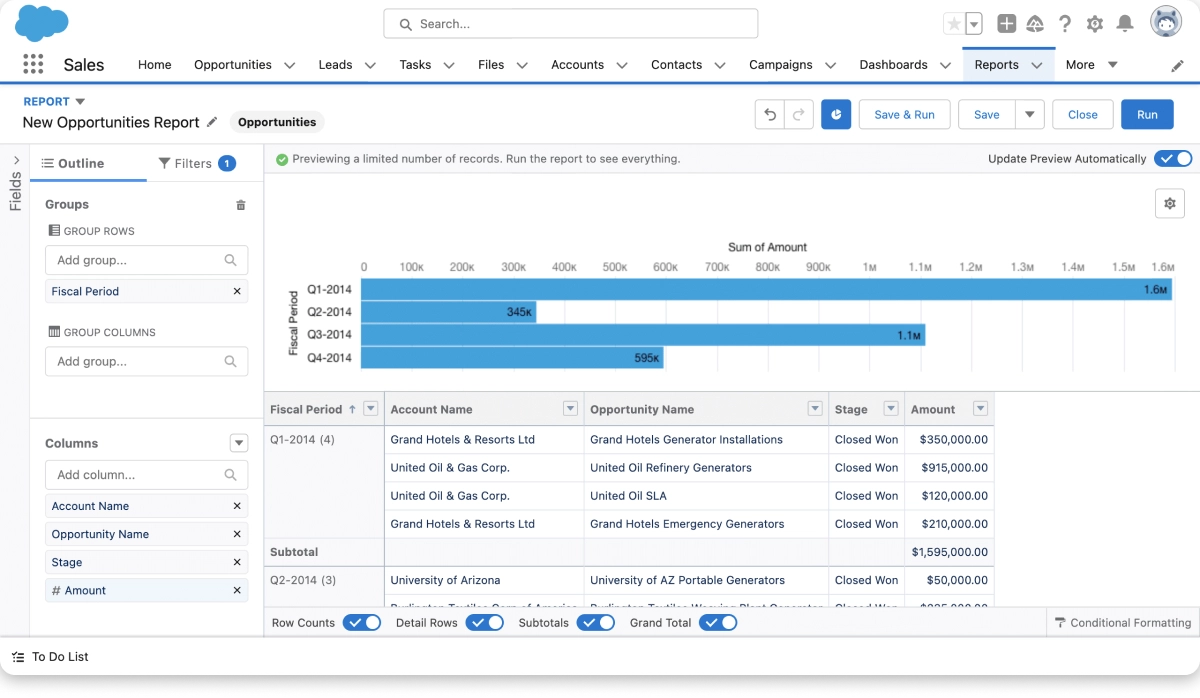
Salesforce Sales Cloud is the best enterprise sales software for large B2B sales teams that need a powerful CRM to manage complex pipelines, forecasting, and global sales operations.
It takes the top spot for enterprise CRM because it gives organizations complete control over their sales process. Teams can customize workflows, manage territories, track opportunities, and build reports around their exact business needs.
I have seen teams use Salesforce as their central system of record, where everything from forecasting and executive reporting to compensation planning runs on Salesforce data.
The platform is not designed to replace every sales tool. Instead, it acts as the foundation that connects prospecting, outreach, marketing, and revenue operations across the business.
Best Features for Enterprise Sales Teams
-
Agentforce AI: Uses AI-powered lead scoring, opportunity insights, and next-best-action recommendations. The Agentforce 1 tier adds autonomous AI SDR capabilities.
-
Pipeline Management: Manage complex sales processes with customizable deal stages, forecasting dashboards, territory management, and opportunity tracking.
-
Workflow Automation: Automate sales processes with Flow Builder without needing custom code.
-
AppExchange Ecosystem: Connect Salesforce with 7,000+ integrations across sales, marketing, analytics, and business operations.
-
Enterprise Reporting: Build detailed dashboards and reports to monitor revenue performance across teams, regions, and business units.
Pricing:
- Starter Suite: $25/user/month
- Pro Suite: $100/user/month
- Enterprise: $175/user/month
- Unlimited: $350/user/month
- Agentforce 1: $550/user/month
3. HubSpot Sales Hub
Best for: B2B teams that want sales, marketing, and customer data unified in one CRM.
HubSpot Sales Hub is one of the best enterprise sales software options for teams that want sales and marketing teams working from the same customer data.
What stood out to me is how easily HubSpot connects marketing campaigns with sales activities without requiring complex integrations.
Unlike traditional enterprise CRMs that often need heavy customization, HubSpot gives teams a shared customer database where marketing interactions, sales conversations, and deal activity stay connected.
The feature I liked most was Breeze AI. It helps teams with lead scoring, prospect research, deal insights, and sales recommendations, making it easier for reps to focus on the opportunities most likely to convert.
I also liked how simple HubSpot’s automation tools are. Teams can create workflows for lead routing, follow-ups, task assignments, and deal-stage updates without relying on developers.
That said, HubSpot can become expensive as teams grow. Advanced automation, reporting, and AI features are locked behind higher-tier plans, and Professional and Enterprise plans include mandatory onboarding fees.
For larger organizations with highly complex sales processes, Salesforce may offer deeper customization. But for teams that want a balance of CRM power and ease of use, HubSpot is one of the strongest choices.
Best Features for Enterprise Sales Teams
-
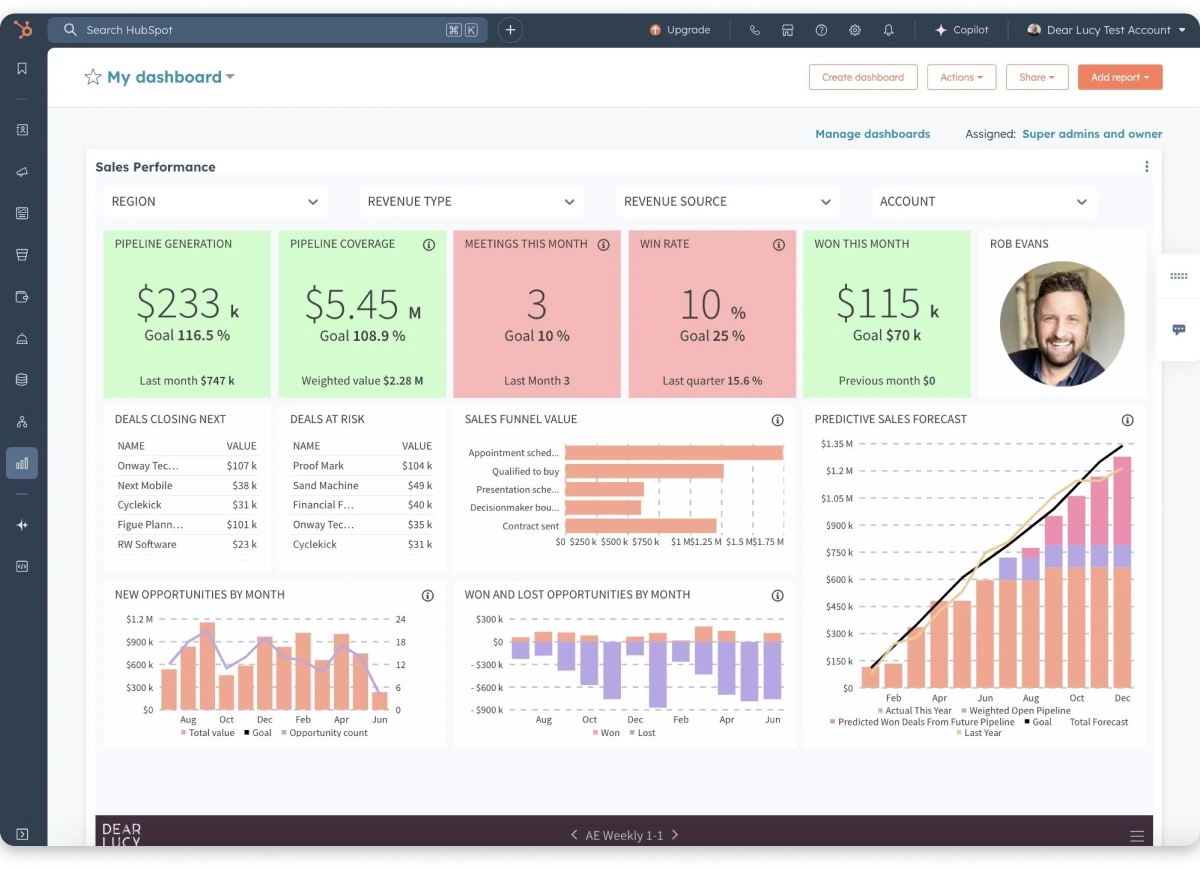
Unified CRM Data: Keeps sales, marketing, and service teams on the same customer records, reducing data silos and improving collaboration.
-
Breeze AI: Provides AI-powered lead scoring, prospect research, deal insights, and sales recommendations to help reps prioritize opportunities.
-
Workflow Automation: Automates lead assignment, follow-ups, task creation, and deal-stage updates with no-code workflows.
-
Sales Pipeline Management: Track deals, manage stages, forecast revenue, and monitor sales performance through customizable dashboards.
-
Marketing and Sales Alignment: Connect marketing campaigns with sales activities so reps have full context before contacting prospects.
-
1,500+ Integrations: Connect HubSpot with tools like Gmail, Outlook, Slack, Zoom, and other business applications.
Pricing:
- Free CRM: $0
- Starter: $20/seat/month
- Professional: $100/seat/month
- Enterprise: $150/seat/month
- Mandatory onboarding fees: $1,500 (Professional), $3,500 (Enterprise).
4. Gong
Best for: Sales leaders who need conversation intelligence to coach reps and improve forecasting.
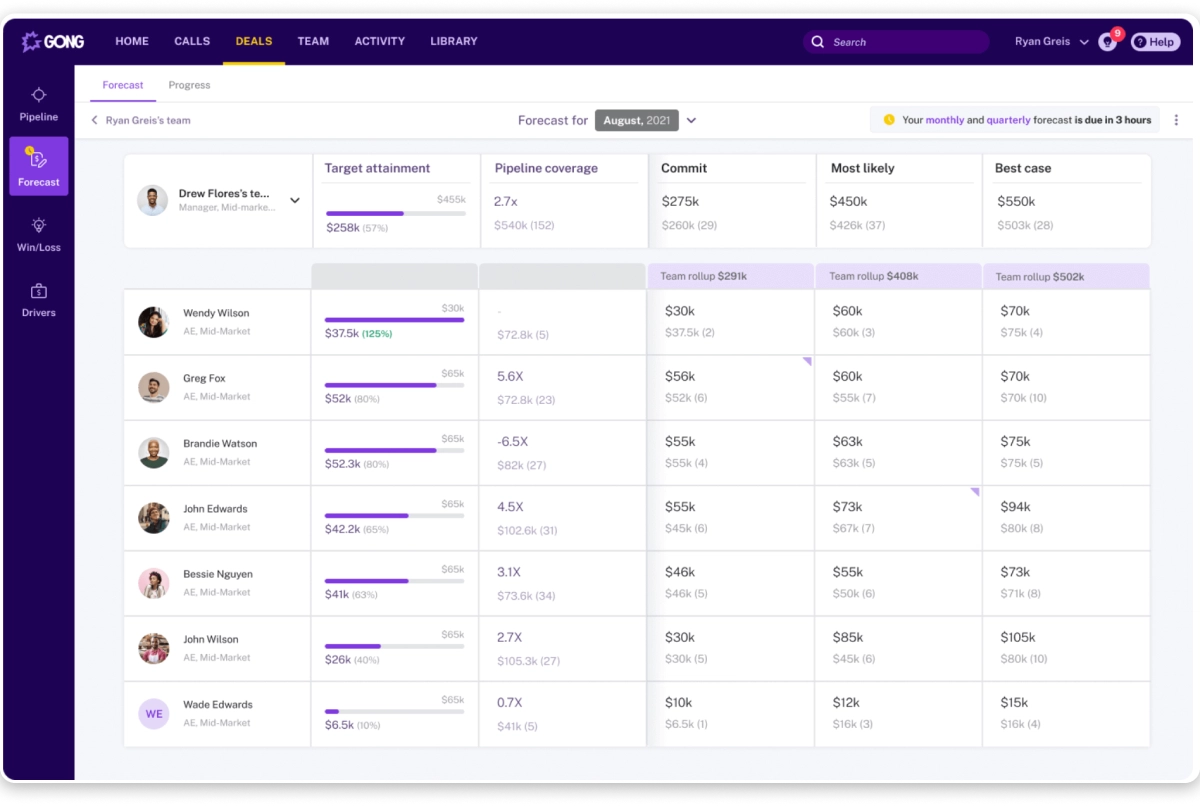
Gong is one of the most established conversation intelligence platforms for enterprise sales teams. What stood out to me is that it goes beyond simply recording sales calls. It analyzes customer conversations across calls, meetings, and emails to help teams understand what is happening inside active deals.
Unlike traditional CRM reporting that depends on manual updates from reps, Gong uses real buyer interactions to identify deal risks, coaching opportunities, and changes in customer sentiment.
The feature I liked most was Deal Intelligence. It highlights opportunities that may be at risk by analyzing buyer engagement signals, conversation patterns, and stakeholder activity instead of relying only on sales rep updates.
I also liked Gong’s coaching capabilities. Sales leaders can review call patterns, compare rep performance, analyze objection handling, and identify what top performers do differently across successful deals.
That said, Gong is built for larger sales organizations and comes with enterprise-level pricing. Smaller teams may find it difficult to justify the cost if they do not have enough sales conversations or a dedicated coaching process.
I also found that Gong works best when teams already have a structured sales process. Without consistent usage and adoption from reps, the insights are less valuable.
Best Features for Enterprise Sales Teams
-
Conversation Analysis: Records and analyzes calls, meetings, and emails to identify objections, pricing discussions, competitor mentions, and buyer sentiment.
-
Deal Intelligence: Detects deal risks using real buyer engagement signals instead of relying only on CRM updates.
-
Coaching Dashboards: Helps managers evaluate rep performance with metrics like talk ratio, objection handling, and conversation trends.
-
AI Summaries: Generates call summaries, follow-up emails, and account insights automatically to save rep time.
-
Revenue Forecasting: Helps sales leaders make more accurate forecasts by using real customer engagement data.
Pricing
Custom pricing.
5. Outreach
Best for: Large SDR teams that need structured multichannel engagement at scale.
Outreach is one of the most established sales engagement platforms for enterprise SDR and BDR teams. What stood out to me is how well it helps large teams follow the same outreach process across hundreds of reps.
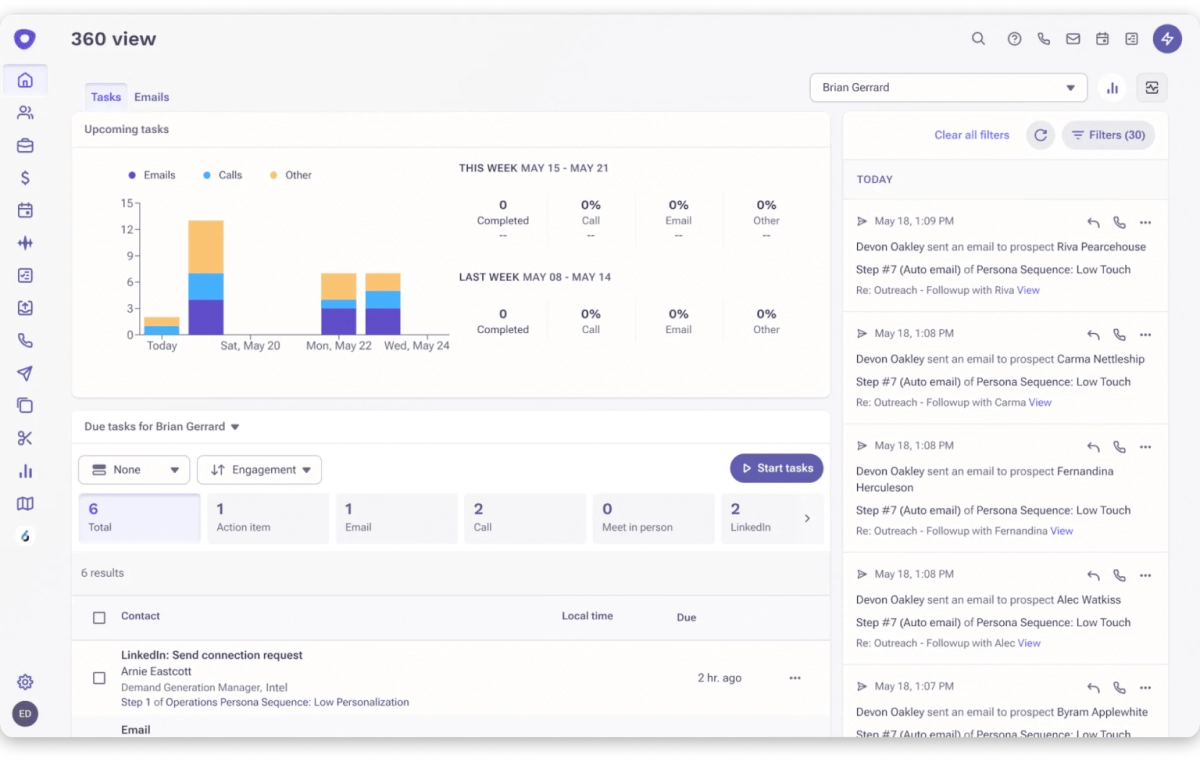
Instead of relying on individual rep workflows, Outreach gives teams a structured way to run multichannel sequences across email, phone, LinkedIn, and SMS with automated steps and clear follow-up processes.
The feature I liked most was the sequence builder. Teams can create detailed outreach cadences with branching logic, A/B testing, and automated actions, making it easier to maintain consistency as sales teams scale.
I also liked the analytics and optimization tools. Managers can track rep performance, monitor sequence results, and identify where prospects are dropping off throughout the sales process.
That said, Outreach is designed for larger sales organizations and may feel too complex for smaller teams. The platform also uses custom pricing, which can make it harder for companies to estimate costs before speaking with sales.
Best Features for Enterprise Sales Teams
-
Multichannel Sequences: Create automated cadences across email, phone calls, LinkedIn tasks, and SMS with branching logic and A/B testing.
-
AI-Powered Optimization: Improve outreach performance with send-time optimization, reply detection, engagement scoring, and AI agents for research and personalization.
-
Pipeline Management: Track opportunities with engagement-based health scores and visibility into deal activity.
-
Performance Analytics: Measure rep performance, reply rates, meetings booked, and sequence conversion.
Pricing
Custom pricing.
Best for: Sales teams that need buyer intelligence to find and engage decision-makers.
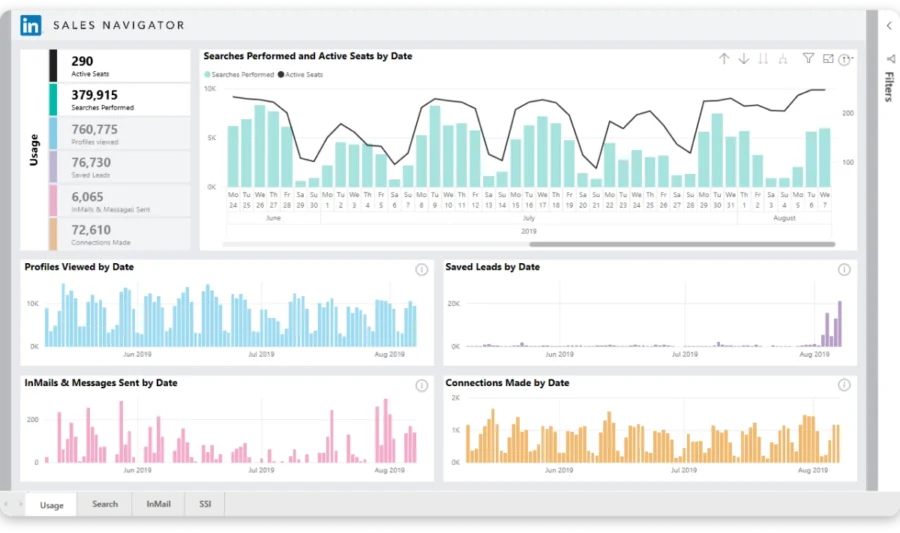
LinkedIn Sales Navigator is one of the strongest tools for enterprise prospecting because it helps sales teams identify the right people, understand buying committees, and build relationships before starting outreach.
What stood out to me is the level of buyer intelligence it provides. Instead of reaching out blindly, teams can research company structures, track role changes, and find relevant decision-makers before starting conversations.
The feature I liked most was Account Mapping. It helps sales teams identify key stakeholders within target companies, follow organizational changes, and understand who influences buying decisions.
I also liked the advanced search capabilities. Teams can narrow down prospects using filters like industry, company size, seniority, location, and role, making it easier to build targeted account lists.
That said, Sales Navigator works best as a prospecting and relationship-building tool rather than a complete sales platform. Teams still need separate tools for email sequencing, automation, and pipeline management.
Best Features for Enterprise Sales Teams
-
Advanced Search Filters: Find prospects using 50+ filters, including industry, company size, seniority, location, and job role.
-
Account Mapping: Identify decision-makers and influencers within target accounts with alerts for job changes and company updates.
-
InMail: Reach prospects outside your network with direct messaging credits included in paid plans.
-
Buyer Intent Signals: Identify accounts showing interest or research activity related to your solution on Advanced tiers.
-
CRM Integration: Sync prospect data with platforms like Salesforce, HubSpot, and Microsoft Dynamics on Advanced Plus plans.
Pricing
- Core: $79.99/month
- Advanced: $149.99/month
- Advanced Plus: Custom pricing
*CRM sync with Salesforce, HubSpot, and Dynamics is available only on the Advanced Plus plan.
7. Apollo.io
Best for: Teams that want prospecting data and outreach automation in one platform.
Apollo.io is one of the strongest all-in-one sales platforms for teams that want a large B2B contact database combined with email sequencing and sales engagement tools.
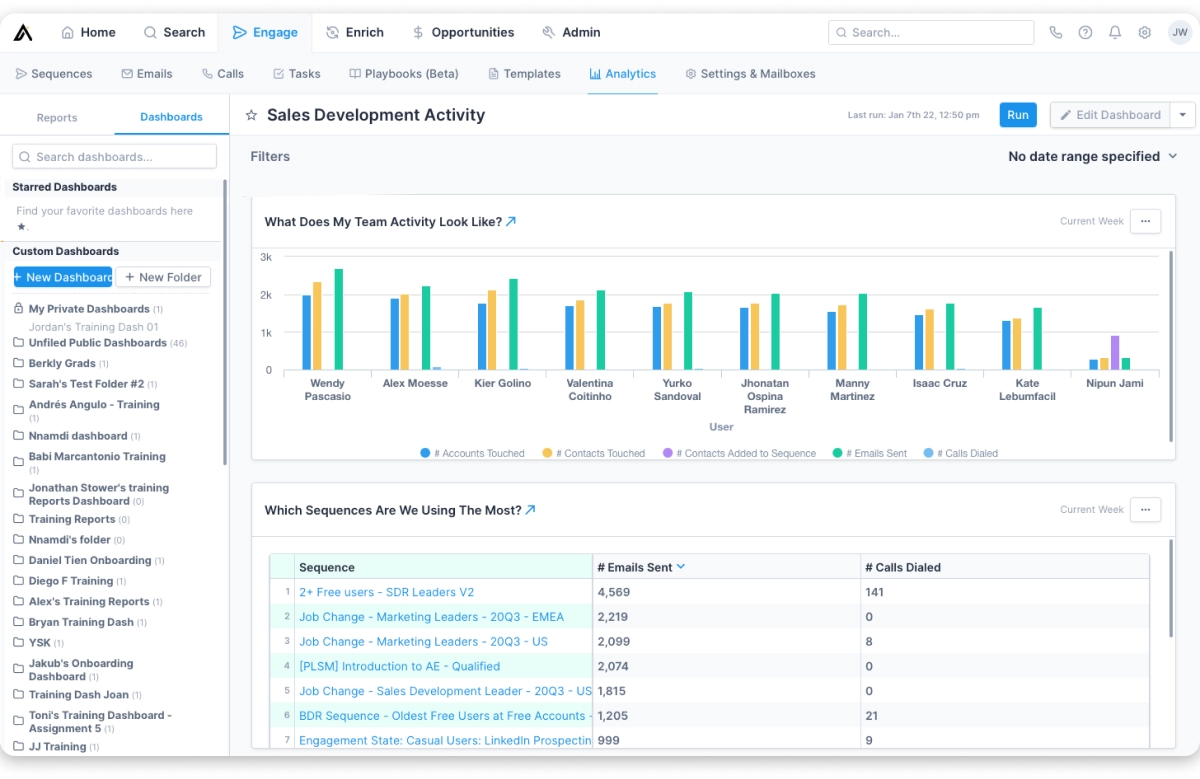
What stood out to me is that Apollo brings prospect discovery and outreach together. Instead of exporting leads from a separate database and moving them into another outreach tool, teams can find prospects, build sequences, and manage engagement from the same platform.
The feature I liked most was the contact database. Apollo provides access to millions of B2B contacts with filters for industry, company size, job title, location, and technology stack, making it easier to build targeted prospect lists.
I also liked the built-in sequencing and dialer features. Sales teams can move from finding a prospect to starting outreach without switching between multiple platforms.
That said, Apollo uses a credit-based pricing model, which can become expensive for teams that rely heavily on contact exports or phone data. Data accuracy can also vary depending on the market and contact type, so verification is still important before launching campaigns.
Best Features for Enterprise Sales Teams
-
Contact Database: Access 275M+ B2B contacts with filters for industry, company size, job title, location, and technology stack.
-
Email Sequencing and Dialer: Build multi-step email campaigns and add calls directly into outreach workflows.
-
AI Prospect Scoring: Prioritize leads using predictive scoring to identify prospects with higher conversion potential.
-
Free Tier: Test Apollo with a usable free plan that includes 900 credits per year.
-
Sales Engagement Tools: Manage prospecting, outreach, and engagement tracking from one platform.
Pricing
- Free: $0 (900 credits/year)
- Basic: $49/user/month
- Professional: $79/user/month
- Organization: $119/user/month (minimum 3 seats)
Add-ons:
- Advanced Dialer — $119/team/month
8. Cognism
Best for: Enterprise teams needing accurate B2B data and GDPR compliance for global prospecting.
Cognism is one of the strongest B2B data providers for sales teams targeting European enterprise accounts and industries where data compliance is critical.
What stood out to me is its focus on data quality and compliance. While many databases provide large contact lists, Cognism puts more emphasis on verified information and regulatory requirements, helping teams prospect with more confidence.
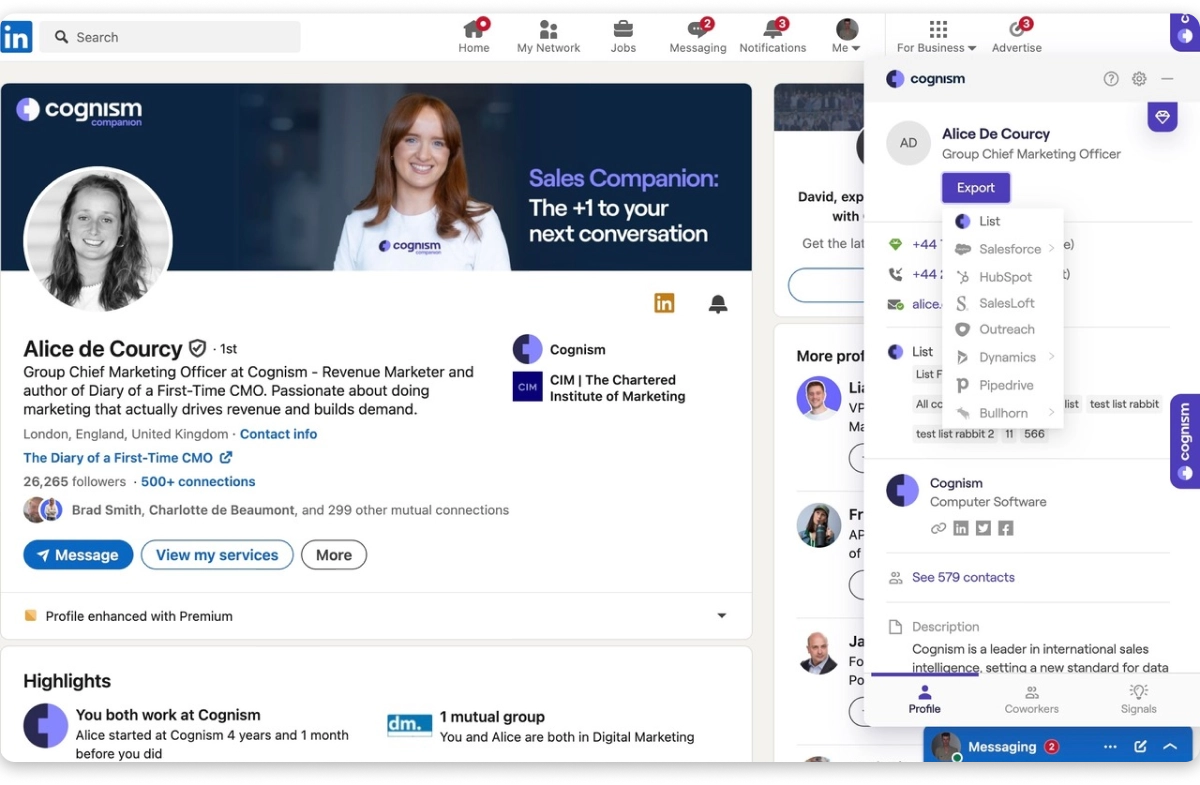
The feature I liked most was Diamond Data. These are human-verified mobile numbers designed to improve connect rates, which is especially valuable for sales teams that rely heavily on cold calling.
I also liked Cognism’s compliance approach and LinkedIn Chrome extension. Sales reps can access verified emails, phone numbers, and company data directly from LinkedIn, making prospecting more efficient.
They can then export contacts to tools like Salesforce, HubSpot, Outreach, SalesLoft, Pipedrive, and Bullhorn. This saves time and eliminates the need for manual data entry between platforms.
That said, Cognism is positioned as a premium data provider, so it may not be the best fit for smaller teams looking for affordable prospecting tools. Pricing is also custom, making it harder to compare costs upfront.
Best Features for Enterprise Sales Teams
-
GDPR-Compliant Database: Access global B2B contact data with compliance checks and verification processes, including checks against 13 global do-not-call lists.
-
Diamond Data: Human-verified mobile numbers designed to improve connection rates for outbound calling campaigns.
-
Intent Data: Identify companies actively researching solutions like yours through buyer intent signals powered by Bombora.
-
Real-Time Enrichment: Keep contact records updated through browser extensions, APIs, and CRM integrations with platforms like Salesforce and HubSpot.
-
Sales Intelligence: Build targeted prospect lists with accurate company and contact information for enterprise outreach.
Pricing
Custom pricing.
9. Clari
Best for: Revenue teams that need AI-powered forecasting and pipeline visibility.
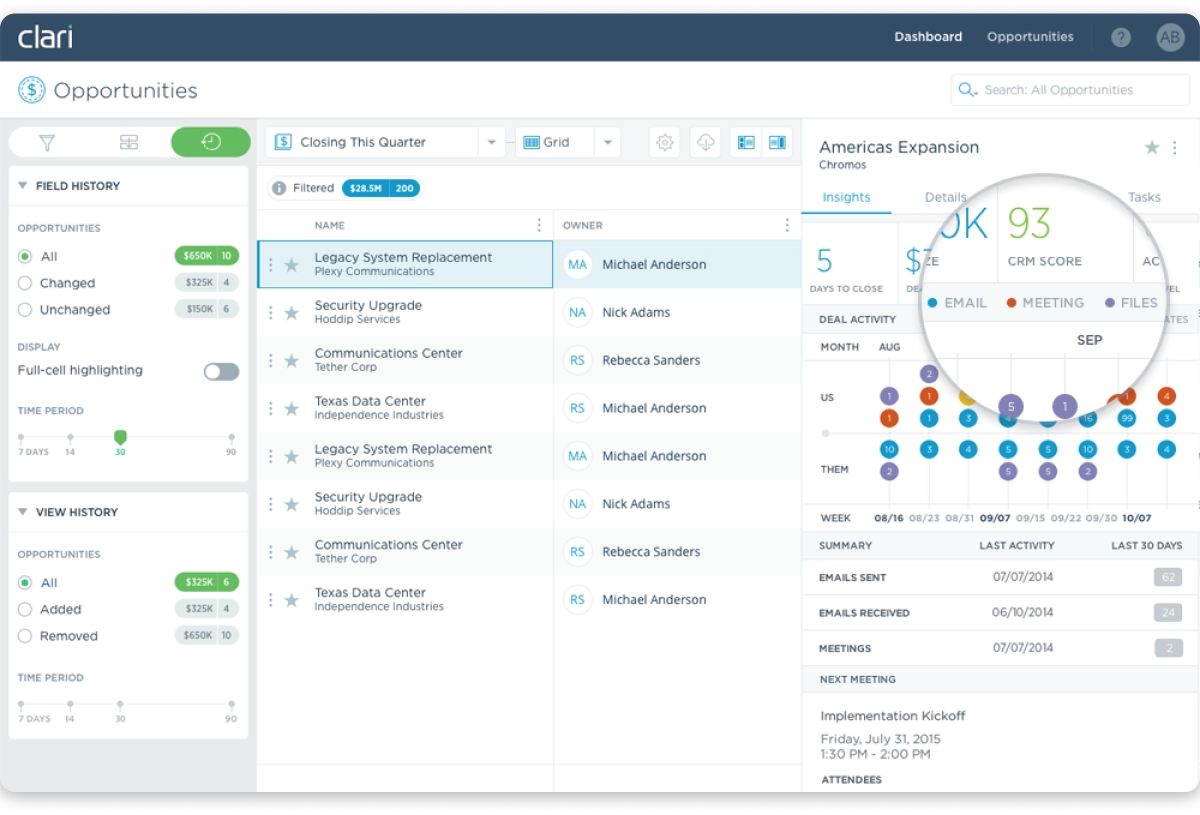
Clari is the best enterprise sales software for revenue leaders and B2B sales teams that need forecast accuracy and pipeline visibility across complex, long-cycle enterprise deals.
Clari unifies data across CRM, email, calendar, and conversation records. Its Signal AI detects deal slippage and engagement gaps in real time. For enterprise sales organizations where the board asks “will you hit the number” every quarter, Clari gives a data-backed answer instead of rep optimism.
Note: Clari completed its merger with Salesloft in late 2025, creating a combined revenue platform.
Best Features for Enterprise Sales Teams
-
AI Revenue Forecasting: Combines CRM data with activity signals. What-if scenario planning for modeling different pipeline outcomes.
-
Pipeline Inspection: Deal-level visibility into engagement patterns, last activity, and risk indicators.
-
Signal AI: Detects at-risk deals, revenue leak, and engagement gaps in real time.
-
Data Unification: Pulls from CRM, email, calendar, and calls without requiring rep data entry.
Pricing:
Custom pricing.
10. Seismic
Best for: Enterprise teams that need sales content, training, and enablement tools.
Seismic is one of the strongest sales enablement platforms for enterprise teams that need to help reps deliver consistent messaging across complex deals.
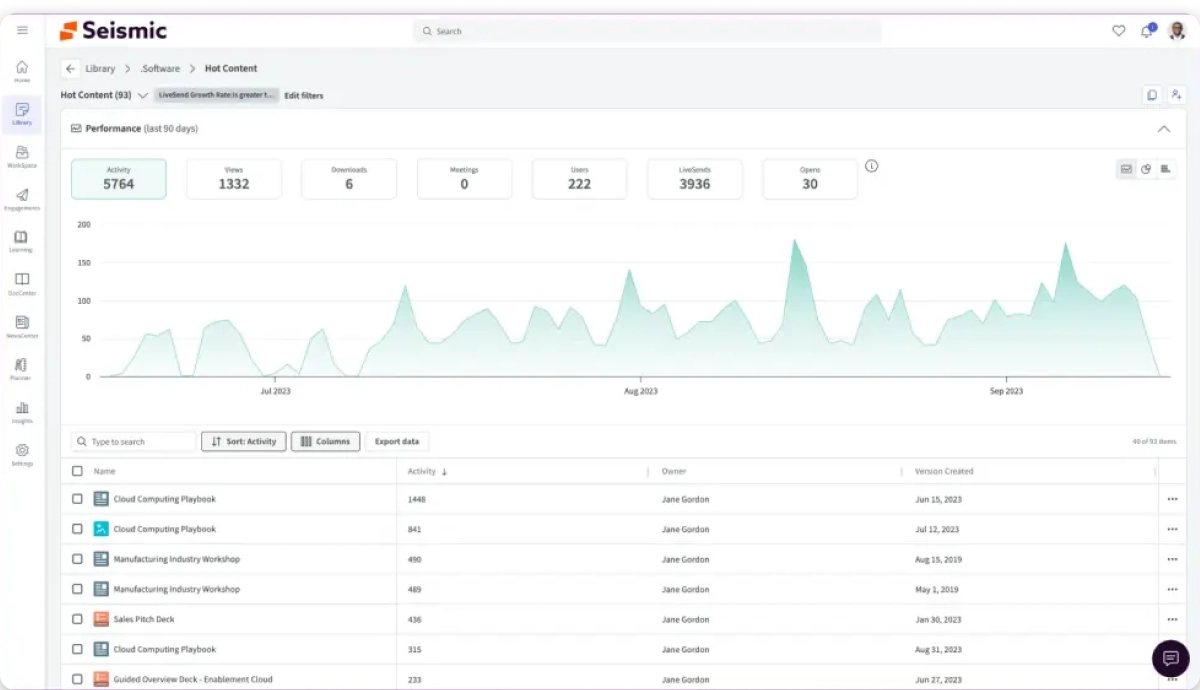
What stood out to me is how Seismic creates a single source of truth for sales content. Instead of reps searching through scattered documents and outdated files, they can quickly find approved materials based on the customer, industry, or deal stage.
The feature I liked most was Aura AI. It recommends relevant content based on buyer personas, deal progress, and engagement signals, helping reps choose the right resources during sales conversations.
I also liked the content analytics. Sales teams can see which assets prospects interact with, what content gets shared, and which materials influence buying decisions.
That said, Seismic is designed for larger organizations with dedicated sales enablement needs. Smaller teams may find the platform too advanced if they only need basic content sharing or document management.
Best Features for Enterprise Sales Teams
-
Centralized Content Hub: Manage sales materials from one place with version control, permissions, and compliance guardrails.
-
Aura AI Recommendations: Suggest relevant content based on deal stage, buyer persona, and engagement activity.
-
Content Engagement Analytics: Track how prospects interact with content, including views, time spent, and sharing activity.
-
Sales Training and Onboarding: Create training programs to help new reps learn messaging, products, and competitive positioning.
-
Enterprise Content Management: Keep sales teams using the latest approved materials across regions and teams.
Pricing
Custom pricing.
Final Verdict: Which Is the Best Enterprise Sales Software in 2026?
After comparing 10 enterprise sales software platforms, here is my take.
I evaluated each tool based on prospecting, multichannel outreach, AI features, CRM capabilities, deliverability, pricing, and ease of use.
If you need one platform for finding prospects, running outreach, managing replies, and tracking deals without per-seat pricing, Saleshandy is the strongest option on this list.
You get access to an 852M+ contact database, email, LinkedIn, calling, and WhatsApp outreach, AI-powered reply categorization, unified inbox, built-in CRM, and deliverability tools.
It brings together workflows that usually require multiple tools, helping enterprise teams manage their outbound sales process from one platform.
Start Building Your Enterprise Outbound Pipeline →
Frequently Asked Questions
1. What is enterprise sales software?
Enterprise sales software is any tool that helps sales teams manage complex, high-value B2B deals with long sales cycles, multiple stakeholders, and cross-department approvals. It goes beyond basic CRM to include prospecting, multichannel outreach, conversation intelligence, revenue forecasting, and sales enablement. Most enterprise sales teams use 3–5 tools together, not one platform alone.
2. How much does enterprise sales software cost?
Pricing ranges widely, and most enterprise sales software doesn’t publish it. Only 4 out of 10 tools on this list have transparent pricing. Saleshandy starts at $34/mo with unlimited email accounts. Salesforce runs $25–$550/user/mo depending on tier. HubSpot starts free but enterprise features cost $150/user/mo. Apollo.io starts free with paid tiers at $49/user/mo. Gong, Outreach, Cognism, Clari, and Seismic all require a sales conversation to get a quote.
3. What tools do enterprise sales teams use?
Most enterprise sales teams use a combination covering: CRM (Salesforce or HubSpot), outbound prospecting and outreach (Saleshandy, Outreach, or Apollo), conversation intelligence (Gong), data and enrichment (Cognism), social selling (LinkedIn Sales Navigator), forecasting (Clari), and enablement (Seismic). The exact stack depends on team size, sales motion, and where the biggest workflow gap exists.
4. What’s the difference between enterprise sales software and a CRM?
A CRM manages customer relationships, deal stages, and pipeline data. It’s the system of record. Enterprise sales software is a broader category that includes CRM plus prospecting tools, outreach platforms, conversation intelligence, forecasting, and enablement. A CRM tells you where deals are. Enterprise sales software helps you move them forward.
5. How long is the typical enterprise sales cycle?
Enterprise sales cycles typically range from 3 to 12 months, depending on deal size, industry, and the number of stakeholders involved. Deals under $50K often close in 3–4 months. Deals above $100K regularly take 6–9 months. Deals above $500K can extend to 12+ months, especially in regulated industries with procurement layers and legal review requirements.
 Dhruv Patel