
If you’re building an outbound stack, you’ve probably asked this already: Apollo or ZoomInfo?
Both promise verified B2B data and a better pipeline. And both cost dramatically different amounts.
I’ve spent the last four years watching outbound teams struggle between Apollo and ZoomInfo, often paying for one, complaining, then paying for the other.
But are these two the only options in the market? The answer is NO. I’ll introduce a third tool that’s quietly winning on data accuracy with the largest database and multichannel outreach at a fraction of the cost.
To help outbound teams make better data-driven decision, I ran an actual test in July 2026: 1,200 leads, both platforms, 240 records manually verified, to see which one delivers what it promises.
Here’s what I’ll cover:
- Real accuracy numbers across email, mobile, and direct dial (no vendor claims)
- Cost per verified contact: the metric that actually decides your outbound ROI
- Honest wins and losses for each tool, including where each one genuinely leads
- Which one fits your team, based on team size, motion, and budget
So, are you ready to figure out which one is the right one for your outbound activity?
Let’s dive in.
Wait! Before we get into details, here’s a quick 30-second breakdown for my time-conscious readers who just want the right outbound tool.
TOC – Apollo vs ZoomInfo
- TL;DR: Apollo Vs. ZoomInfo in 2026 (30-Second Breakdown)
- How I Tested Apollo Vs ZoomInfo [Methodology]
- Apollo vs. ZoomInfo Feature Comparison in 2026
- Apollo Vs. ZoomInfo: Detailed Cost Breakdown (Verified in July 2026)
- Apollo vs. ZoomInfo: Which Is Worth Your Time and Money in 2026?
- FAQs About Apollo Vs. ZoomInfo
TL;DR: Apollo Vs. ZoomInfo in 2026 (30-Second Breakdown)
I ran these tools on the same 1,200-lead list in July 2026. Here’s the verdict for each:
Apollo wins on price and time-to-value at $49/user/mo published pricing, but hit a 76% verified email accuracy ceiling in my test.
ZoomInfo wins on enterprise data depth with 500M+ profiles and 135M+ direct dials, hitting 83% verified accuracy at a ~$32K median annual contract.
Saleshandy (the third tool I promised) hit 92% verified email accuracy across an 852M+ contact database at $34/mo flat pricing, using Waterfall Enrichment across 9 providers. Rather than exclude Saleshandy, I tested it using the exact same methodology, so you have another option to consider if Apollo or ZoomInfo isn’t the right fit.
Apollo Vs ZoomInfo Vs Saleshandy: Head-to-Head Comparison:
| Category | Apollo | ZoomInfo | Saleshandy |
|---|---|---|---|
| Best For | SMB outbound on HubSpot/Salesforce | US enterprise sales | Verified data + outreach |
| Starting Price | $49/user/mo | Contact Sales | $34/mo |
| Database Filters | 65+ | 300+ company attributes | 75+ |
| Data Size | 240M+ contacts | 500M+ profiles, 100M+ companies | 852M+ contacts, 42M+ companies |
| Buying Signals | Bombora intent | Bombora: intent signals WebSights: visitor tracking Scoops: verified trigger alerts |
Hiring, funding, mergers & acquisition, job changes |
| Deliverability | Inbox Ramp Up (beta) | No native warm-up | Advanced email deliverability features like Warm-up, Inbox Radar, & Sender Rotation |
| Outreach Channels | Email, phone, LinkedIn | Email, phone, LinkedIn | Email, calls, LinkedIn, WhatsApp |
| AI Capabilities | AI Writing Assistant, Conversation Intelligence | Copilot, AI Emailer | AI Sequence Copilot, AI Enrichment |
| Personalization | Dynamic & conditional variables | AI + intent-based | A-Z Testing, Spintax, AI variants |
| Reply Management | AI inbox (per sequence) | CRM activity feed | Unified Inbox + AI Reply Categorization |
| Integrations | Salesforce, HubSpot, Zoho, Dynamics | Enterprise CRM integrations | HubSpot, Salesforce, Pipedrive, Zoho, Zapier (9,000+ apps), and 8 more native integrations |
| MCP / CLI | MCP | ✖ | MCP + CLI |
| Support | Strong docs, slower human support | Enterprise CSMs | Help docs, AI chatbot, and live support |
| Agencies | ✖ | ✖ | Agency Portal with White Labeling |
| Verdict | Best for SMB outbound | Best for enterprise | Best for highly accurate data with Multichannel Outreach |
Category Winners
- Best Overall: ZoomInfo (enterprise), Apollo (SMBs), Saleshandy (Largest Verified Data + Multichannel Outreach)
- Best Value: Saleshandy ($34/mo flat pricing)
- Best for Startups & SMBs: Apollo
- Best for Mid-Market Teams: Saleshandy
- Best for Enterprise Teams: ZoomInfo
- Best Sales Engagement: Saleshandy
- Best Ease of Use: Apollo
How I Tested Apollo Vs ZoomInfo [Methodology]
I ran this test in July 2026 to see how each tool performs when given the same set of real people to find.
Here’s exactly what I did.
What This Test Measures (and What It Doesn’t)
This is an enrichment test, not a prospecting test. The difference matters.
- A prospecting test asks: “Given the same filters, how many contacts does each tool find?”
- An enrichment test asks: “Given the same real person, can each tool return their current email, phone number, and job title?”
I ran the second one because it’s the only test that measures data accuracy on identical inputs. Two tools finding different contacts under the same filter isn’t a data quality comparison; it’s a filter comparison.
How I Built the List
I started with 1,200 real B2B professionals whose identities I confirmed before testing began. Each person was verified as currently employed at their listed company, with an active LinkedIn profile updated within the previous 90 days.
The source list was sampled across:
Industries (200 each):
- SaaS
- Information Technology
- Healthcare
- Financial Services
- Manufacturing
- Professional Services
Company size: 480 SMB · 420 Mid-market · 300 Enterprise
Geography: 65% US · 25% Europe · 10% APAC
Seniority: 25% C-level · 40% VP & Director · 35% Manager & IC
The list itself was not sourced from Apollo, ZoomInfo, or Saleshandy, which matters because a tool asked to enrich its own records will always return near-perfect results.
How I Queried Each Tool
For every person on the list, I entered the same three identifiers into each platform: full name, current company, and LinkedIn URL.
Each of the three tools was queried through its standard web interface using individual search (not bulk enrichment) during July 2026, so results reflect what an end-user sees in the product, not what an API-only workflow returns.
Platforms tested:
- Apollo: Professional plan, annual billing
- ZoomInfo: Sales Professional tier, annual contract
- Saleshandy: Pro plan, annual billing
How I Verified the Data
I manually verified 240 records from the 1,200-lead dataset. That’s 20% of the sample.
Emails: I ran each returned email through an independent third-party SMTP verification service, then classified results into four buckets:
For Job Titles: I cross-checked against LinkedIn profiles updated within the previous 120 days. If someone had changed roles and the returned title reflected the old one, I marked it wrong.
For Phone Numbers: I validated format and carrier information, then recorded whether each platform returned a mobile number or direct dial.
I did not dial the numbers, so my results measure whether a phone number was found and formatted correctly, not whether it connects.
Quick Snapshot of the Results:
Before we dive into the comparison, here’s a snapshot of how real users rate Apollo and ZoomInfo across major review platforms.
Apollo vs. ZoomInfo Feature Comparison in 2026
I compared Apollo and ZoomInfo across the features that have the biggest impact on prospecting, outreach, and sales productivity.
Here’s what I found:
Apollo.io vs ZoomInfo: Which Tool Has the Better B2B Database and Data Accuracy?
ZoomInfo has a deeper database and better phone data. Apollo is faster to use and cheaper to start. But in my test, both hit the same accuracy ceiling around the low-to-mid 80s, and independent reviewers report the same thing.
Since both tools are known primarily for their B2B data, this was the first category I tested. And it’s the one that ultimately decides whether the platform is worth paying for, because bad data breaks every workflow downstream.
Here’s what I found after running both against my 1,200-lead list, cross-checked against what real users say on G2.
How Accurate Is Apollo’s B2B Database?
Apollo runs on a 240M+ contact database with People, Companies, Lists, and Enrichment all in one place. It let me filter the data by job title, industry, revenue, headcount, buying intent, and tech stack, then push straight into a sequence.
My Hands-On Experience With Apollo’s Data Accuracy:
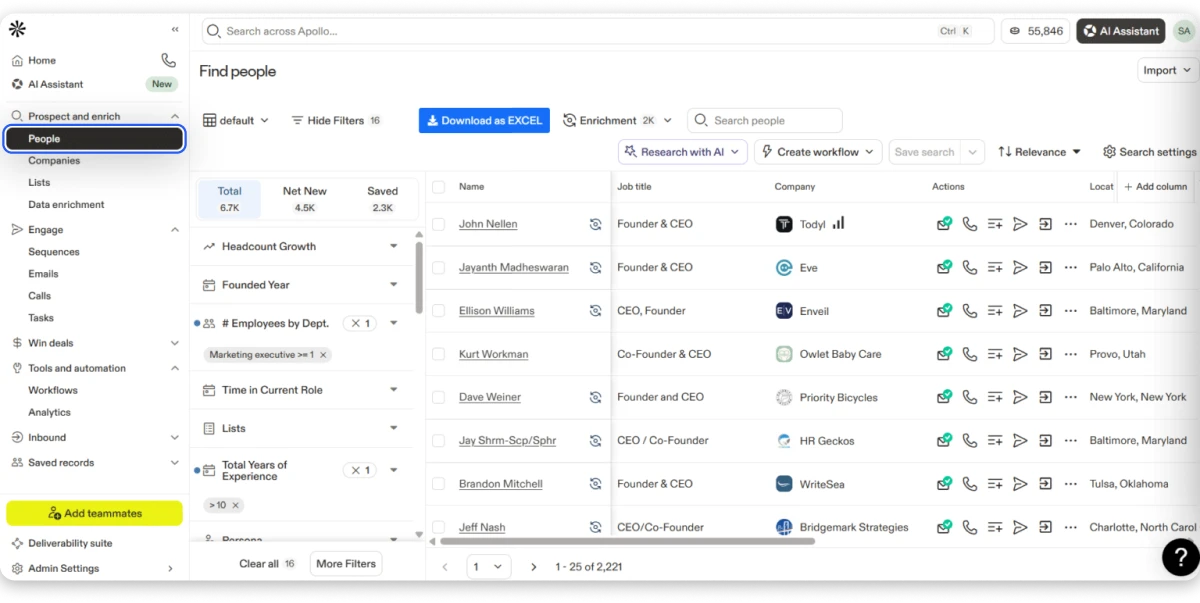
- Apollo was the fastest tool I tested for building a prospect list. I had a filtered list ready in just 16 minutes.
- The 65+ search filters made it easy to narrow down prospects based on specific criteria.
- Job Change Alerts were a useful addition, helping identify contacts who had recently moved companies.
- The biggest drawback was email accuracy. While Apollo advertises 98% verified emails, my test found 76% verified email accuracy.
- That gap can translate into more bounced emails and lower deliverability during real outreach campaigns.
Strength:
- Fast and easy to use, with powerful search filters and built-in data enrichment and outreach in one platform. It’s a great fit for SMBs looking to prospect and run outreach without switching tools.
Weakness:
- Email accuracy falls short of Apollo’s marketing claims.
What Apollo Users Say About Data Accuracy
👍 Liked: Big database and fast, with deep filters for building lists
👎 Complained About:
- “Verified” emails that still bounce, hurting campaign performance
- Weak international and European data
- Occasional outdated titles and missing direct dials
How Accurate Is ZoomInfo’s B2B Database?
ZoomInfo runs on a 500M+ profile database with 100M+ companies and 135M+ direct dials. It is backed by 300+ human researchers plus ML verification. It’s the broadest single-source database in this comparison.
My Hands-On Experience With Zoominfo’s Data Accuracy:
- ZoomInfo had the stronger overall database in my testing, especially when it came to phone data.
- It delivered the highest mobile phone match rate (69%) and direct dial match rate (74%) among the tools I evaluated.
- Enterprise records were particularly strong, with a 94% match rate in my sample.
- However, data quality wasn’t consistent across every segment. For companies with fewer than 50 employees, the match rate dropped to 82%.
- Overall verified email accuracy came in at 83%, which was lower than what ZoomInfo’s marketing materials suggest.
Strength:
- Excellent US enterprise coverage with industry-leading mobile and direct dial data.
- Best suited for North American mid-market and enterprise prospecting.
Weakness:
- Data quality tends to decline for SMBs and international markets.
- The 95% accuracy guarantee covers company affiliation, not email, phone, or job title accuracy.
What ZoomInfo Users Say
👍 Liked:
- Best-in-class US enterprise coverage and direct dials
- Strong intent data, funding alerts, and buying signals
- Deep firmographics and org charts
👎 Complained about:
- Data decay: contacts who left months ago still show as current
- Weak SMB, startup, and international coverage
- High cost and rigid annual contracts
Who Wins 🏆for Data Accuracy Race?
ZoomInfo wins for database depth and phone coverage, while Apollo takes the lead on affordability, speed, and SMB email coverage.
Neither exceeded the mid-80s for verified email accuracy in my testing, and both showed weaker coverage outside the US.
The reason is simple: both rely primarily on their own proprietary databases. If a contact isn’t available or up to date in that database, there’s no fallback source, which can result in stale contact details or missing records.
How Does Saleshandy Stand Out 💪 as a Better B2B Database Alternative?
Unlike Apollo and ZoomInfo, which rely on a single database, Saleshandy checks 9 trusted data sources to find verified contact details.
Plus, it has the largest and most accurate database of 852M+ contacts and 42M+ companies. It gives you access to a much larger prospect pool than Apollo or ZoomInfo.
In my testing, it achieved a 94% match rate and 92% verified email accuracy, the highest among the tools I evaluated.
Two things stood out to me:
- You only use credits for verified contacts. Unverified results don’t cost you credits.
- AI Search (Sage) lets you describe your ideal customer in plain English and automatically builds the prospect list for you.
If data accuracy and deliverability matter more than database size to you, then Saleshandy is the stronger choice.
Worth reading: If Apollo’s data accuracy is a dealbreaker for your outreach, I’ve documented 12 tested Apollo alternatives with higher verified email accuracy.
Which Tool Has Better Intent Data and Buying Signals?
The clear answer is ZoomInfo wins this one. Its intent data is deeper, better connected to its own database, and enriched with G2 buyer intent, WebSights visitor tracking, and Scoops trigger events.
Apollo covers the basics well and includes intent on all plans, which is genuinely useful for smaller teams, but it isn’t in the same league for enterprise ABM.
How Strong Is Apollo’s Intent Data?
Apollo includes Bombora-powered intent data on every paid plan. You can track 15,000+ intent topics across product categories, competitors, and services, then filter accounts using weekly intent scores from 0–100.
My Hands-On Experience With Apollo’s Intent Data & Buying Signals
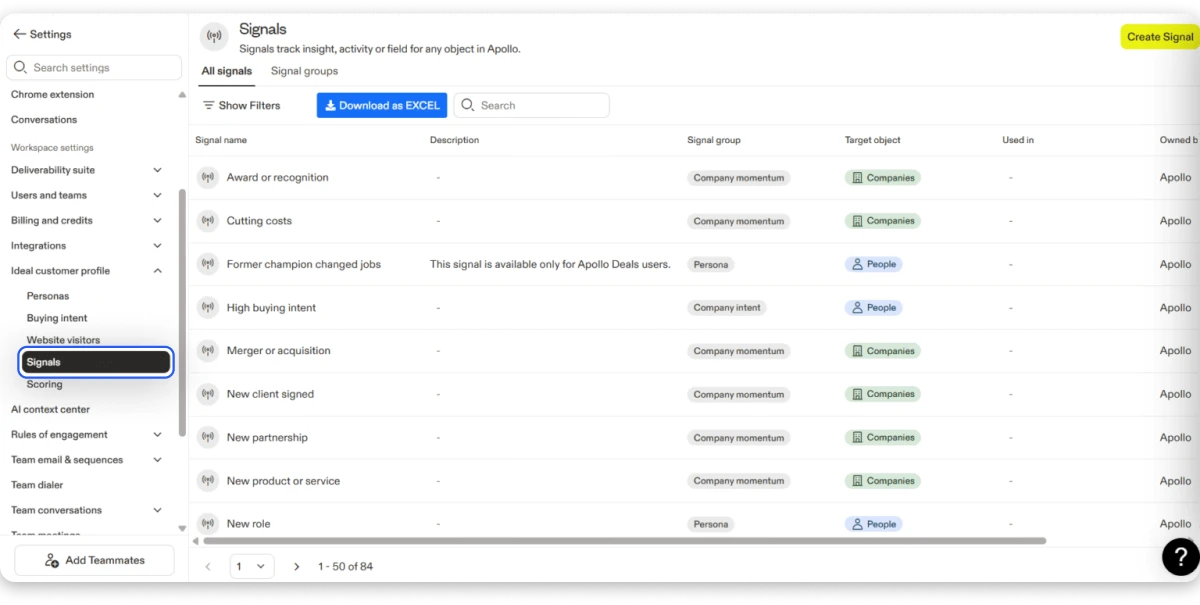
- Setting up intent topics took only a few minutes.
- I could easily layer intent filters into my existing people searches.
- Weekly intent scores helped prioritise high-interest accounts for outreach.
- Intent filters worked seamlessly with Apollo’s sequences.
- The biggest limitation was the Basic plan’s 6-topic limit. Broader tracking requires a higher-tier plan.
- Since Bombora provides account-level (not contact-level) signals, some high-intent accounts still needed manual qualification.
Strength
- Included on all paid plans, easy to set up, and tightly integrated with Apollo’s prospecting and outreach tools.
Weakness
- Limited topic tracking on lower plans and less comprehensive than enterprise intent platforms.
What Apollo Users Say About Its Intent Data
👍 Liked
- Intent, contacts, and sequences in one platform
- Affordable access to buying intent on lower-tier plans
- Easy to add intent filters to ICP-based prospect searches
👎 Complained About
- Less intent depth than enterprise platforms like 6sense
- Topic limits on lower-tier plans (6 on Basic)
- Some intent signals require manual qualification before outreach
How Strong Is ZoomInfo’s Intent Data?
ZoomInfo combines Bombora intent, proprietary web activity, WebSights, and Scoops to help sales teams identify accounts actively researching solutions and ready to buy.
My Hands-On Experience With ZoomInfo’s Intent Data:
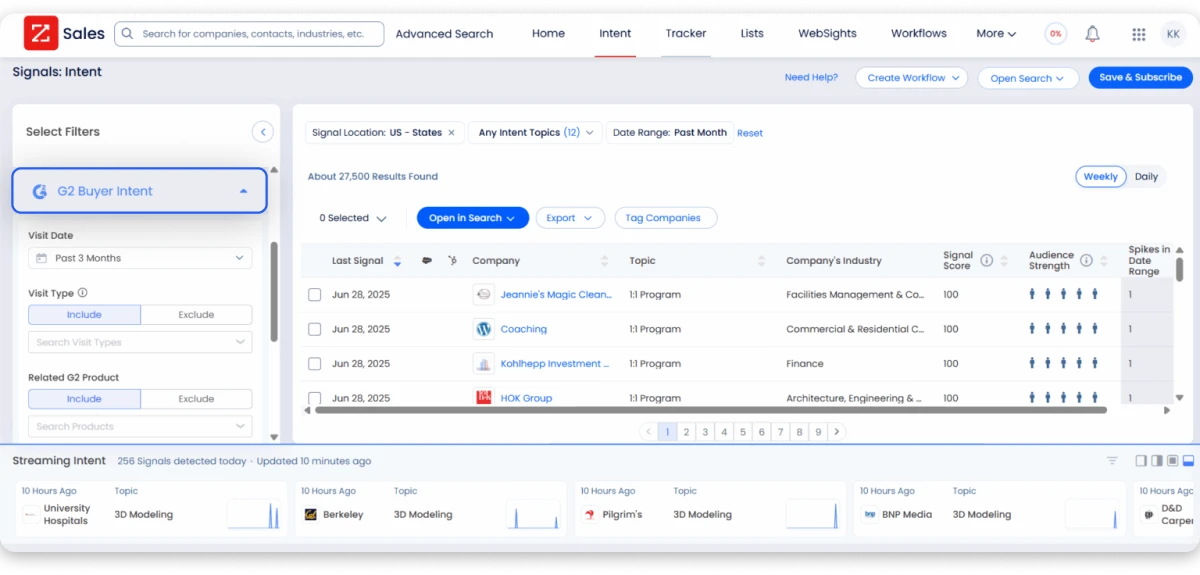
- ZoomInfo tracks 4,500+ intent topics, with deeper coverage for enterprise use cases than Apollo.
- G2 Buyer Intent was the standout feature, making it easy to identify accounts researching competitors.
- WebSights identifies individual website visitors, not just companies, enabling more targeted follow-ups.
- Scoops delivered the highest-quality buying signals, including job changes, funding rounds, and expansion news.
- The biggest downside is pricing. Most advanced intent features are sold as premium add-ons, which can significantly increase the overall cost.
Strength
- Comprehensive intent platform with multiple signal sources, human-verified buying triggers, and person-level visitor tracking.
Weakness
- Premium pricing, with advanced intent features available as paid add-ons.
What ZoomInfo Users Say About Its Intent Data
👍 Liked
- G2 Buyer Intent helps identify accounts researching competitors.
- WebSights identifies people, not just companies, visiting your website.
- Scoops provides actionable buying signals like job changes, funding, and M&A activity.
👎 Complained About
- Advanced intent features significantly increase the subscription cost.
- Some intent signals still require manual qualification before outreach.
- Topic spikes don’t always indicate an active buying cycle.
Who Wins 🏆 the Intent Data Comparison?
ZoomInfo wins for enterprise intent data. Its combination of Bombora, G2 Buyer Intent, WebSights, and Scoops delivers deeper buying signals than Apollo.
Apollo is the better value for SMBs, with Bombora-powered intent included on every paid plan and no extra intent subscription required.
How Does Saleshandy Approach Buying Signals?
Saleshandy doesn’t offer third-party intent data like Bombora. Instead, it helps you prospect using real buying signals, including:
- Hiring activity
- Funding rounds
- Job changes
- Tech stack filters
These signals are built into Lead Finder and don’t require an additional add-on.
If you rely on topic-level intent, ZoomInfo is the stronger choice. If you prospect based on hiring, funding, and job-change signals, Saleshandy offers a simpler and more affordable alternative with an 852M+ contact database.
Apollo Vs ZoomInfo: Which One Offers Better Email Warm-Up and Deliverability Features?
Neither Apollo nor ZoomInfo has a proper email warm-up.
Apollo shifted to a volume-pacing feature called Inbox Ramp Up (still in beta), and ZoomInfo doesn’t offer warm-up at all. If deliverability matters to your outbound, this is the category where both tools fall short.
Here’s what I found after testing both and cross-checking against user reviews.
How Strong Is Apollo’s Email Warm-Up and Deliverability?
Apollo no longer offers peer-to-peer email warm-up. Instead, it provides Inbox Ramp Up, which gradually increases sending volume, along with a deliverability dashboard and built-in domain purchasing.
My Hands-On Experience With Apollo’s Deliverability Suite:
- Setting up SPF, DKIM, and DMARC was quick and straightforward.
- The deliverability dashboard made it easy to monitor bounce rates and mailbox health.
- Buying a new sending domain directly inside Apollo was convenient.
- The biggest limitation is Inbox Ramp Up. It increases sending volume but doesn’t build sender reputation like dedicated warm-up tools.
Strength: Easy domain setup, useful deliverability insights, and built-in domain purchasing.
Weakness: No true email warm-up. Teams that need stronger deliverability will likely need a separate warm-up tool.
What Apollo Users Say About Email Deliverability
👍 Liked
- Contacts, sequences, and mailbox management in one place.
- Quick and easy campaign setup.
👎 Complained About
- No true email warm-up.
- No built-in spam or inbox placement testing.
- Higher bounce rates from some database segments.
How Strong Is ZoomInfo’s Email Warm-Up and Deliverability?
ZoomInfo focuses on data quality, not email deliverability. It offers suppression lists, compliance controls, and sequence pacing, but doesn’t include email warm-up or mailbox monitoring.
My Hands-On Experience With ZoomInfo’s Deliverability:
- Better data quality naturally helped reduce bounce rates.
- Compliance features were excellent for enterprise teams.
- Sequence pacing helped spread sending volume across campaigns.
- However, there was no built-in warm-up, spam testing, or mailbox health monitoring, meaning most teams still need another deliverability tool.
Strength: Strong data hygiene and enterprise-grade compliance controls.
Weakness: No native warm-up or deliverability suite.
What ZoomInfo Users Say About Deliverability:
👍 Liked
- Verified contact data reduced bounce rates.
- Strong suppression and compliance features.
👎 Complained About
- No email warm-up.
- Requires third-party tools for deliverability.
- Some database segments still produce bounced emails.
Who Wins 🏆 the Deliverability Race?
Apollo offers more deliverability features, but Inbox Ramp Up isn’t a true warm-up solution. ZoomInfo doesn’t provide email warm-up at all.
If deliverability is important to your outbound strategy, you’ll likely need an additional warm-up platform with either tool.
How Does Saleshandy Stand Out 💪 for Warm-Up & Deliverability?
Unlike Apollo and ZoomInfo, Saleshandy includes a complete deliverability toolkit in its $34/month Starter plan.
Here’s what you get:
- Unlimited Email Warm-Up across every connected mailbox. Real peer-to-peer warm-up that builds sender reputation, not a volume ramp.
- Inbox Radar to monitor whether your emails land in Primary, Promotions, or Spam.
- Sender Rotation to spread volume across multiple sending accounts and protect any single domain.
- Sequence Score to catch deliverability issues before you hit send, not after.
- AI Bounce Detection to spot patterns early and protect sender reputation.
- ESP Matching and Spintax to keep messages varied and inbox-provider-friendly.
And the best part? You get all these features in one platform, without paying for a separate warm-up tool.
Apollo.io Vs ZoomInfo: Which Tool Handles Data Enrichment Better?
Both Apollo and ZoomInfo do enrichment well, but they solve for different buyers.
Apollo bundles enrichment into every plan and makes it easy to run. ZoomInfo runs deeper on CRM automation and enterprise data intelligence, at a much higher price. Neither can escape the same ceiling I flagged earlier: both rely on their own database as the single source of truth.
Here’s what I found after running the same 1,200-lead list through both enrichment engines.
How Strong Is Apollo’s Data Enrichment?
Apollo lets you enrich contacts through CRM sync, CSV uploads, or API.
Its standout feature is the Data Health Center, which helps identify outdated records, job changes, and missing data before they affect outreach.
My Hands-On Experience With Apollo’s Enrichment:
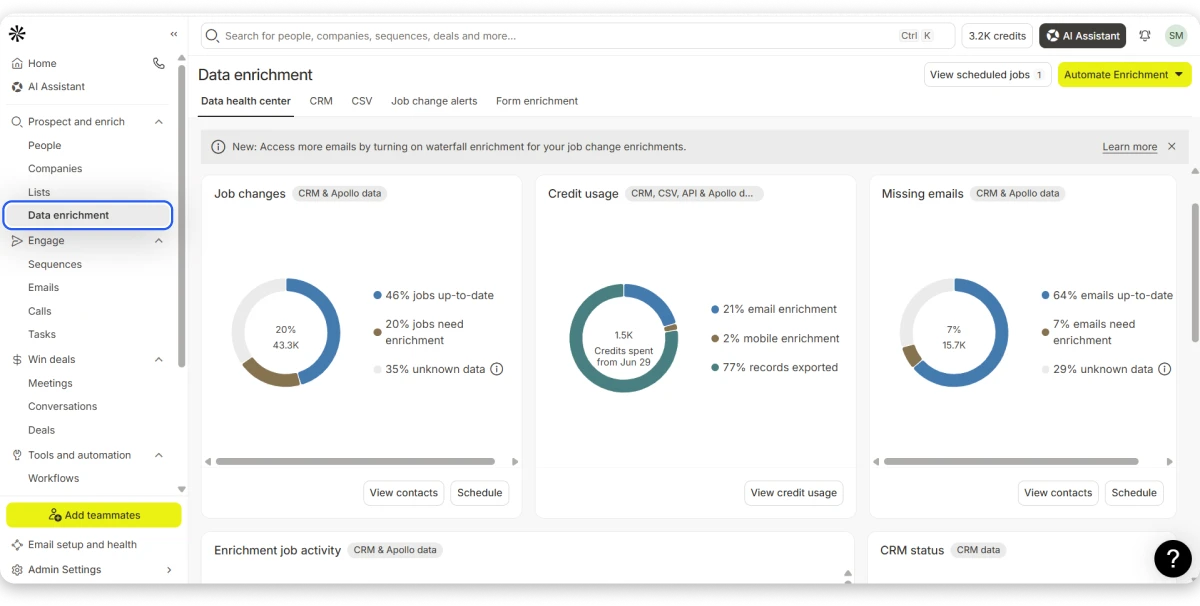
- CRM enrichment for HubSpot was fast to configure. I had it running in under 20 minutes, with scheduled updates set to daily.
- The Data Health Center was more useful than I expected. It surfaced 40+ contacts in my test batch that had changed roles in the previous 90 days.
- Deduplication worked cleanly. It caught duplicate profiles that a manual scrub would have missed.
- CSV enrichment filled in missing emails, phone numbers, and company details in a single upload.
- The biggest limitation was data quality. Since enrichment relies on Apollo’s own database, my test returned 76% verified email accuracy.
Strength: Data Health Center adds real value for CRM hygiene, especially for teams using HubSpot or Salesforce.
Weakness: Limited by Apollo’s database accuracy, you pay credits even when the enrichment returns stale or unverified data.
What Apollo Users Say About Data Enrichment
👍 Liked
- Bundled into every paid plan starting at $49/user/month
- Data Health Center catches job changes and data gaps automatically
- All-in-one flow: enrich, sequence, and dial without switching tools
👎 Complained About
- Occasional bounces and outdated direct dials require secondary verification
- Credit limits on lower plans get restrictive for high-volume enrichment
- Basic tiers have rigid CRM sync options
How Strong Is ZoomInfo’s Data Enrichment?
ZoomInfo’s enrichment is the most enterprise-grade in this comparison.
It runs through Instant Enrich (real-time API or webhook triggers) or Scheduled Enrich (batch updates).
Every record can be appended with contact data, firmographics, technographics, and layered buying signals from Bombora and Scoops.
My Hands-On Experience With ZoomInfo’s Enrichment:
- The Instant Enrich API is genuinely fast. Records hit HubSpot with full firmographic and technographic payloads within seconds of the webhook firing.
- The technographic layer (which tools each company uses) was the deepest in my test.
- Real-time CRM deduplication was strong. Auto-merged duplicates and updated stale fields on schedule.
- Bulk enrichment against my 1,200-lead list returned 83% verified accuracy.
Strength: Deepest data payload per enriched record, especially technographics and intent. Real-time API is fast and reliable for teams with technical resources.
Weakness: Cost is the highest by a wide margin. Rigid multi-year contracts. Data still decays on mid-market and remote roles, so credits get burned on stale enrichments.
What ZoomInfo Users Say About Data Enrichment
👍 Liked
- Vast database scale for direct dials, verified emails, and enterprise firmographics
- Real-time CRM automation with native Salesforce and HubSpot integrations
- Buying intent and Scoops are layered into enriched records for prioritization
👎 Complained About
- Expensive enterprise pricing with rigid multi-year agreements
- Data decay on mid-market and remote-role contacts drives wasted credits
- Support routing is slower than newer, agile enrichment tools
Who Wins 🏆 the Data Enrichment Race?
ZoomInfo wins for enterprise enrichment depth, while Apollo is a better fit for smaller teams looking for affordable CRM enrichment.
The biggest limitation is the same for both: they enrich from a single database, so if the data is missing or outdated, the enrichment quality is limited.
How Does Saleshandy Stand Out 💪 for Data Enrichment?
Unlike Apollo and ZoomInfo, Saleshandy takes a different approach to enrichment. Instead of one database, it runs two complementary layers that solve different problems.
Layer 1: Waterfall Enrichment for contact data. Checks 9 trusted data sources to find verified emails and phone numbers instead of relying on a single database.
Layer 2: AI Prospect Enrichment for context data. Uses LLM models (GPT-5, Claude, Gemini, Perplexity, or Grok) with optional web search to research each prospect and fill in personalization fields like icebreakers, company summaries, and custom research columns.
Here’s what stood out:
- Only pay for verified contacts. Unverified results don’t use your credits.
- 92% verified email accuracy in my testing, higher compared to 76% (Apollo) and 83% (ZoomInfo).
- Enrich contacts using a LinkedIn URL, name & company, company domain, API, or CSV upload.
- AI Prospect Enrichment analyzes 30+ context signals (company updates, job changes, industry shifts) and turns them into ready-to-use merge tags for hyper-personalized outreach at scale, with your choice of LLM model.
And the best part? Enriched contacts are ready to use in your outreach without needing an expensive enterprise contract.
ZoomInfo vs Apollo: Which Tool Offers the Best Sequence Automation?
Apollo has the stronger sequence builder for pure outbound teams.
ZoomInfo has the deeper signal-triggered automation, but its sequences live inside Engage and feel like a database platform with outreach bolted on.
How Strong Is Apollo’s Sequence Automation?
Apollo lets you build sequences four ways: from scratch, from a template, cloned from an existing one, or AI-generated.
Each step can be an automatic email, manual email, phone call, action item, or LinkedIn task via the Chrome extension.
My Hands-On Experience With Apollo’s Sequences:
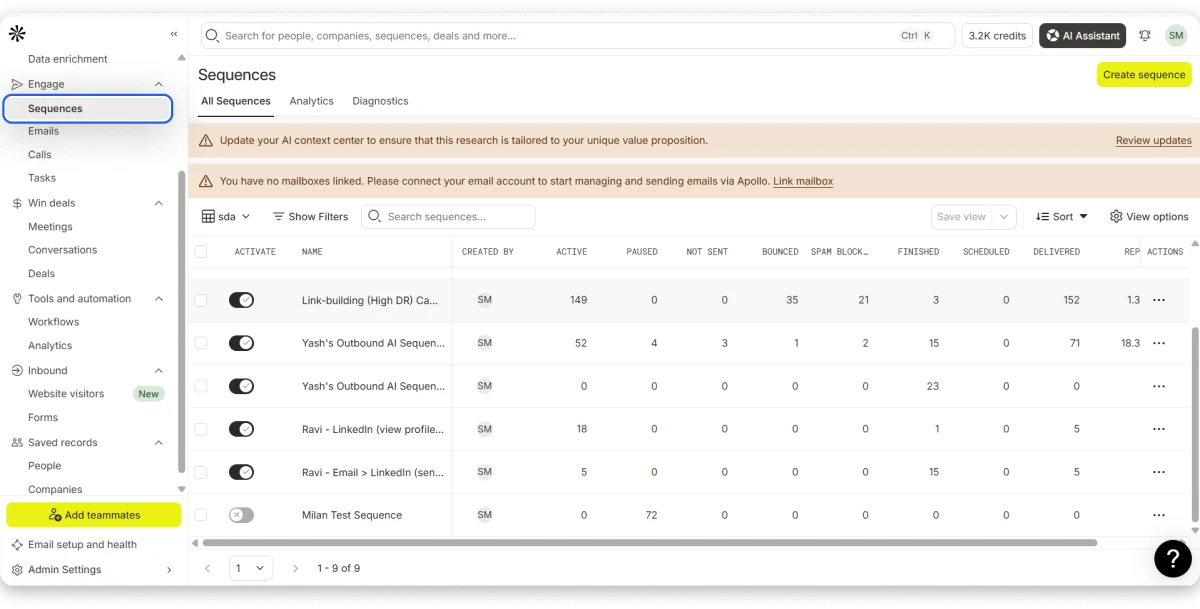
- The email editor is genuinely well-built. I could write, personalize, and preview messages in one window without switching tabs.
- The multi-channel builder is clean. Adding a LinkedIn view, a manual email, or an A/B variant to an existing step took two clicks.
- Rulesets worked as expected. I set a rule to auto-skip contacts who replied and another to move engaged leads to a follow-up sequence. Both fired correctly on the test batch.
- Sending schedules respects business hours, time zones, and holidays out of the box. That’s not trivial for teams sending into multiple regions.
- The gap is variant testing. Apollo does A/B only, not multivariate like Saleshandy. If you want to test 6 subject lines and 4 openers in parallel, you’re building 24 sequences by hand.
Strength: Clean multi-channel builder, four flexible ways to create a sequence, and native LinkedIn steps through the Chrome extension.
Weakness: A/B testing only, not multivariate. Lower-tier plans cap sequence volume and advanced features.
What Apollo Users Say About Sequence Automation
👍 Liked
- Combined workflow: database, sequences, and CRM sync in one tool
- Time-saving multi-step automation with LinkedIn integration
👎 Complained About
- Occasional bounces from outdated contact data inside otherwise good sequences
- Interface learning curve on first setup
- Cheaper plans place hard limits on sequence volume and advanced features
How Strong Is ZoomInfo’s Sequence Automation?
ZoomInfo’s sequences live inside ZoomInfo Engage and its Workflows module.
The pitch is signal-triggered: prospects auto-enroll into sequences when they show buying intent, receive funding, submit a form, or hit a Scoops trigger.
Every step syncs to Salesforce and HubSpot in real time.
My Hands-On Experience With ZoomInfo’s Sequences:
- Signal-based enrollment is the standout feature. I set a rule to enroll accounts into a specific play when they crossed a high-intent threshold, and it worked cleanly.
- Enrichment sync before send was useful. Verified emails and direct dials refresh right before the first touch, which cuts down on stale-record bounces.
- The smart pause logic caught out-of-office replies and paused sequences correctly. Small feature, real impact.
- The sequence builder itself feels less flexible than Apollo’s.
Strength:
- The best signal-triggered sequence enrollment in this comparison.
- Real-time enrichment sync before send.
- Deep CRM automation for teams already on ZoomInfo.
Weakness: The sequence builder feels rigid compared to dedicated engagement platforms. It’s locked behind enterprise pricing.
What ZoomInfo Users Say About Sequence Automation
👍 Liked:
- Signal-based enrollment ties intent data directly to outbound plays
- Fast SDR handoff from database search to active sequence
- Multi-channel outreach with dialer and enriched data in one flow
👎 Complained About:
- Sequence logic feels less flexible than standalone engagement tools
- Cost and packaging complexity for smaller teams
- Interface clutter when navigating between search and sequences
Who Wins 🏆 the Sequence Automation Comparison?
Apollo wins for building and managing sequences thanks to its cleaner interface and easier workflow.
ZoomInfo is better if your team relies heavily on intent-driven, signal-based automation.
How Does Saleshandy Stand Out 💪 for Sequence Automation?
Saleshandy was built for outbound teams, so the sequence engine includes features that Apollo charges extra for or that ZoomInfo doesn’t offer natively.
Here’s what stood out to me:
- Native sender rotation across unlimited connected mailboxes to protect sender reputation. Apollo requires an add-on, while ZoomInfo doesn’t offer it.
- Multichannel sequences with Email, LinkedIn, Calls, and WhatsApp in a single workflow.
You also get:
- Sending interval control for more natural sending patterns.
- Auto follow-ups with reply-based auto-stop.
- Sub-sequences that automatically move prospects into the next workflow based on their behaviour.
- Unified Inbox to manage replies from all connected mailboxes in one place.
- Sequence Score to catch deliverability issues before launching a campaign.
And the best part? These features are available from $34/month, without enterprise contracts or paid add-ons.
ZoomInfo vs Apollo.io: Which One Offers the Best Personalization Features?
Honestly, Apollo has the deeper personalization toolkit for outbound teams that write their own copy.
ZoomInfo has a more sophisticated AI research layer through Copilot, which drafts messages grounded in real-time signals.
How Strong Is Apollo’s Personalization?
Apollo gives you three tiers of personalization:
- Basic Dynamic Variables ({{first_name}}, {{job_title}})
- Advanced Conditional Variables ({{#if first_name}}…{{#else}}…{{#endif}}
- Custom Dynamic Variables that pull from custom contact or account fields.
My Hands-On Experience With Apollo’s Personalization:
- The AI Writing Assistant generated personalized subject lines and email copy in seconds. I could adjust the tone and constraints, and the drafts felt natural.
- Conditional variables solved missing-field issues. I set fallbacks, so emails never started with “Hi”.
- Custom dynamic variables let me pull specific account fields (target competitor, current stack, funding stage) directly into copy.
- Vidyard integration for personalized videos is a genuine differentiator.
Strength: Deepest hands-on personalization toolkit with AI writing, conditional logic, custom fields, and Vidyard.
Weakness: A Steeper learning curve on advanced features is steep for new users.
What Apollo Users Say About Personalization
👍 Liked:
- Custom sequences with multi-step email and LinkedIn touches
- Granular 65+ filters that make persona-level segmentation easy
- AI Writing Assistant and enrichment together cut down manual research hours
👎 Complained About:
- Advanced features take time to learn.
- Credit limits get restrictive for high-volume users
How Strong Is ZoomInfo’s Personalization?
ZoomInfo’s personalization runs through ZoomInfo Copilot and the AI Emailer.
Instead of variables and templates, you point it at an account, and it drafts a message grounded in live intent data, earnings calls, hiring signals, and Scoops trigger events.
The Account AI Customization layer lets you plug in qualification frameworks (MEDDIC, SPIN, BANT), and Buying Groups identification maps out decision-makers and influencers inside a target account automatically.
My Hands-On Experience With ZoomInfo’s Personalization:
- The AI Emailer is genuinely impressive. Drafts came back grounded in specific account details (a recent funding round, a competitor mention on an earnings call) that would have taken 20 minutes of manual research to surface.
- Copilot Chat answered account-specific questions and surfaced talking points on the fly.
- Buying Groups mapping auto-mapped 4 to 6 stakeholders per account with role context.
Strength: The most sophisticated AI research layer, and drafts are grounded in live signals from earnings, hiring, and intent data, not just database fields.
Weakness: Rigid personalization rules, no native video, and locked behind enterprise pricing.
What ZoomInfo Users Say About Personalization
👍 Liked:
- AI Docs and AI Emailer draft personalized messages using live CRM and intent data
- Speed and efficiency: cuts hours of manual account research before outreach
👎 Complained About:
- Occasional data inaccuracies still slip into AI-drafted outputs
- High contract costs with steep escalations for growing teams
Who Wins 🏆 the Personalization Race?
Apollo wins if you prefer writing and controlling your own personalized outreach.
ZoomInfo wins if you want AI to generate messages using live intent and account signals.
Neither supports true multivariate testing, so experimentation is limited compared to dedicated outreach platforms.
How Does Saleshandy Stand Out 💪 for Personalization?
Saleshandy combines the best of both approaches. You get the control Apollo offers and AI-powered personalization similar to ZoomInfo, all in one plan.
Here’s what stood out:
- AI Sequence Copilot creates fully personalized sequences using your ICP, offer, and live signals like hiring, funding, or job changes. You describe the prospect and the goal, and it drafts your subject lines, openers, and follow-ups.
- AI Prospect Enrichment researches each contact using your choice of LLM (GPT-5, Claude, Gemini, Perplexity, or Grok) and fills in personalization fields like icebreakers, company summaries, and role context, so every email reads like you spent 20 minutes researching the person.
- Spintax and AI variants create multiple versions of each message automatically, keeping personalization varied across recipients without triggering duplicate-content filters.
- Merge tags with fallback logic to prevent blank fields from breaking your send.
Once your personalization is set, A-Z Testing runs up to 26 variants in one sequence to find which version of your personalized copy actually converts. Apollo caps you at A/B. ZoomInfo’s testing is more limited.
Which Tool Has Better AI Beyond Prospecting?
I’ve already covered the AI features that touch data, sequences, and personalization above.
What separates Apollo and ZoomInfo on AI after the initial outreach is a shorter list.
Apollo ships two AI features outside the core sequence engine. Conversation Intelligence records video calls, surfaces objections, and drafts post-meeting follow-ups.
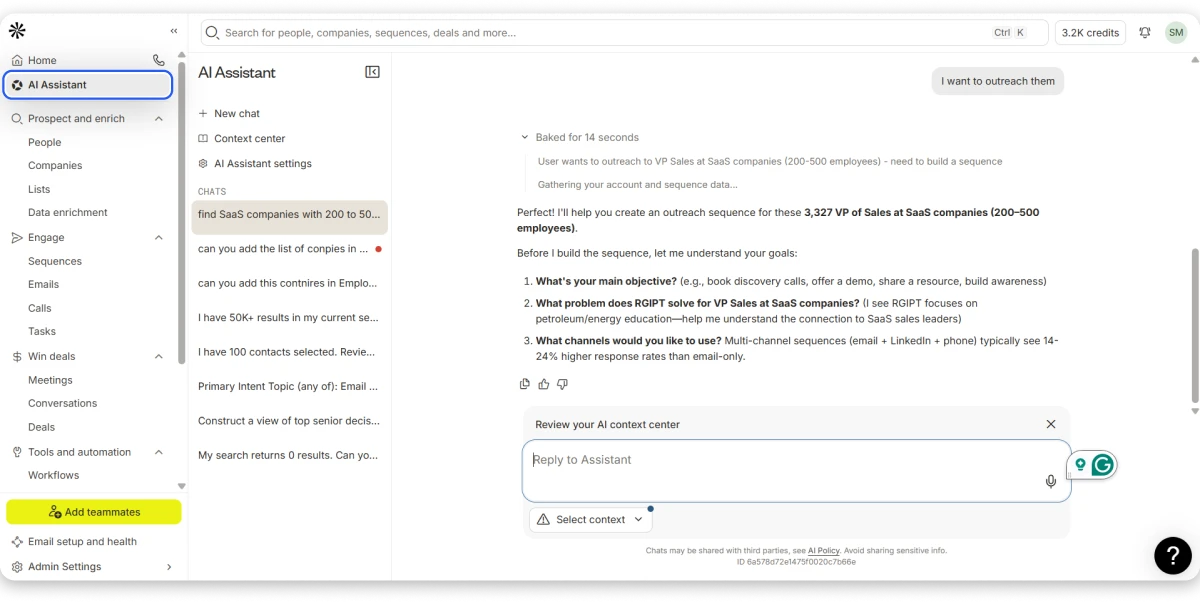
Use case: for teams that run demos and discovery calls, not just cold outbound.
ZoomInfo Copilot goes deeper on the deal side. Risk and deal alerts flag stalled or single-threaded opportunities and push them into Slack, Teams, or the CRM automatically. Copilot Chat answers account-level questions on demand.
Use case: Both are built for sales managers monitoring pipeline health.
Saleshandy focuses its AI on the outreach workflow itself: AI Sequence Copilot for building sequences, AI Prospect Enrichment for researching contacts, and AI Reply Categorization for managing responses. The AI lives inside the outreach engine rather than on top of it.
Who Wins 🏆 the AI Race?
It depends on where in your funnel you need AI to work.
- Apollo wins for post-call intelligence and meeting follow-ups.
- ZoomInfo wins for pipeline monitoring and deal risk alerts.
- Saleshandy wins for AI-powered outreach execution: sequence building, prospect research, and reply management.
Which Tool Manages Replies Better?
To be honest, neither tool ships proper reply management for a modern outbound stack.
Apollo has a unified inbox. But it is tied to sequence analytics and doesn’t work cleanly across mailboxes.
ZoomInfo doesn’t have a real unified inbox at all: replies live inside Engage’s activity feed, which reads more like a CRM log than an inbox.
How Strong Is Apollo’s Reply Management?
Apollo manages replies through All Replies and Email Tracking.
It uses AI to categorize replies into Interested, Meeting, Out-of-Office, and Unsubscribed, and can pause sequences automatically.
My Hands-On Experience With Apollo’s Reply Management:
- The AI reply categorization is genuinely useful. Auto-sorting into interested vs OOO vs unsubscribe saved real time on the first pass through the inbox.
- Slack alerts on positive replies meant I didn’t have to babysit the inbox to catch a warm lead.
- Auto-pause on out-of-office replies worked reliably.
- The biggest gap is the inbox. It’s tied to individual sequences, not all connected mailboxes.
- Reply All and Forward work, but only inside a sequence.
Strength: Strong AI reply categorization and Slack alerts for high-value responses.
Weakness: No true cross-mailbox unified inbox. Reply management sits inside each sequence rather than as a first-class inbox surface.
How Strong Is ZoomInfo’s Reply Management?
ZoomInfo doesn’t have a proper reply management product.
Replies flow into ZoomInfo Engage, which sits inside the sales engagement suite and displays them as CRM activity logs rather than a threaded inbox.
Reply data auto-syncs to Salesforce and HubSpot, which is genuinely useful for enterprise CRM teams, but it’s a different workflow.
My Hands-On Experience With ZoomInfo’s Reply Handling:
- Reply activity syncs to CRM automatically with rich context (account, deal stage, previous touches). Solid for account executives working on an existing pipeline.
- Copilot’s risk and deal alerts catch stalled or single-threaded opportunities and push notifications to Slack or Teams.
- The biggest limitation is that there’s no unified inbox view or AI reply categorization, so many teams still need another outreach tool.
Strength: Deep CRM sync and pipeline-level alerts through ZoomInfo Copilot.
Weakness: No native unified inbox, and Reply Management is CRM-centric, not outbound-centric, which forces most teams to use a second tool.
Who Wins 🏆 the Reply Management Race?
Apollo wins this comparison. AI reply categorization, Slack alerts, and automatic sequence pausing make it more useful for outbound teams.
ZoomInfo is built around CRM activity rather than reply management.
How Does Saleshandy Stand Out 💪 for Reply Management?
Saleshandy’s Unified Inbox brings every prospect conversation into one place and uses AI to sort them so you act on the right replies first.
Here’s what stood out to me:
- AI reply categorization labels every incoming reply as Interested, Positive, Negative, or Out-of-Office, so you skip the manual sorting and jump straight to warm leads.
- One inbox across all connected mailboxes. Reply, Reply All, and Forward work natively without switching between accounts.
- Prospect details alongside every thread. Notes, deal stage, and contact history appear next to the conversation, not in a separate CRM tab.
- Mobile apps (iOS + Android) for catching warm replies on the go.
You also get:
- AI reply categorization.
- Auto-pause and auto-stop on replies.
- Real-time Slack and email alerts.
- Thread history across every connected mailbox.
You get all of this at a starting price of $25/month.
Which One Has Better Reporting and Analytics?
ZoomInfo has a more sophisticated reporting suite for enterprise sales operations, especially for pipeline attribution and revenue impact.
Apollo has more accessible dashboards for individual reps and outbound teams.
Neither is built as an outreach-first analytics tool, and both share the same rigidity that reviewers keep flagging.
How Strong Is Apollo’s Reporting?
Apollo’s reporting covers email performance, call activity, sequences, meetings, and website visitors.
The AI Assistant lets you ask for a report in plain English and generates the visualization automatically.
Website visitor tracking is bundled on select plans. It shows daily visitor volume and top visiting companies.
My Hands-On Experience With Apollo’s Reporting:
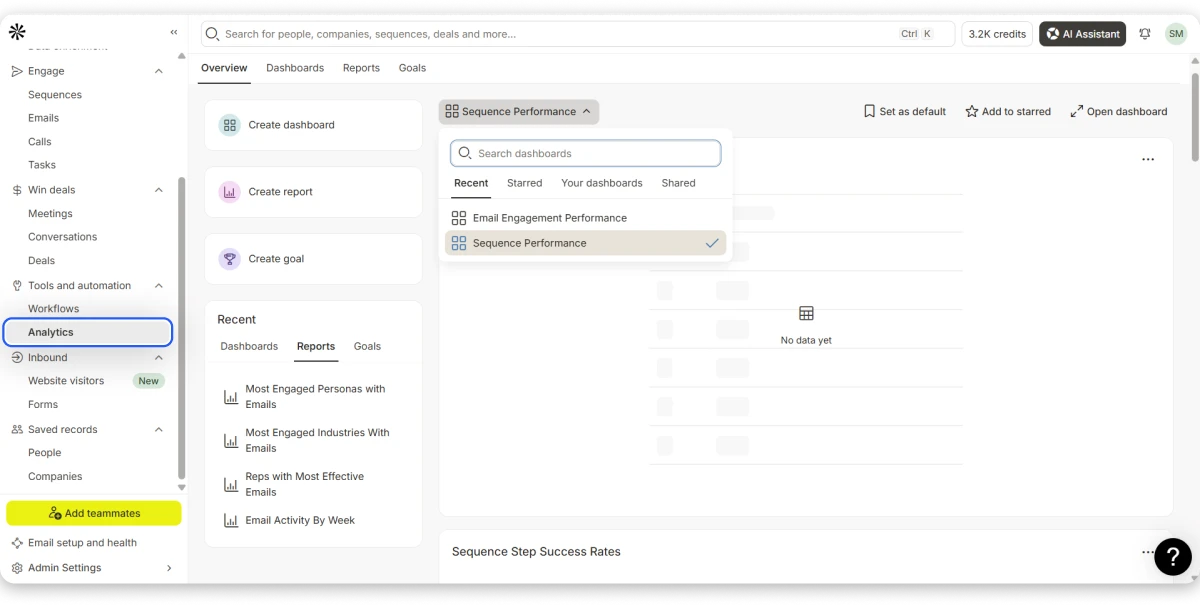
- The pre-built sequence reports are exactly what an outbound rep needs on day one. Opens, replies, meeting-booked rates, all filterable by date and sequence.
- The AI Assistant worked well for quick “show me last month’s reply rate by rep” queries. It was useful when I didn’t want to build a custom dashboard from scratch.
- Custom dashboards gave me some flexibility, but they’re still limited compared to a BI tool.
- The biggest gap is mailbox-level reporting. I couldn’t easily see which mailbox or domain was affecting deliverability.
Strength: Solid sequence and rep-level reporting with an AI Assistant that speeds up ad-hoc queries.
Weakness: Rigid and limited customization compared to dedicated BI tools, and no true per-mailbox deliverability audit.
What Apollo Users Say About Reporting
👍 Liked
- Activity and sequence data unified with the contact database; no separate BI needed, which is good.
- AI Assistant surfaces performance gaps in natural language
👎 Complained About
- Native reporting feels rigid
- Limited advanced customization
- Deeper insights often require exporting to Google Sheets
How Strong Is ZoomInfo’s Reporting?
ZoomInfo’s analytics stack is genuinely enterprise-grade and centered on three dashboards:
- ROI Insights (pipeline and revenue attribution, synced daily from Salesforce or HubSpot)
- Copilot Analytics (seller efficiency and rep action on AI recommendations)
- FormComplete Analytics (web form conversion tracking)
The GTM Context Graph ties CRM data, intent signals, and conversation data into a full account health view.
My Hands-On Experience With ZoomInfo’s Reporting:
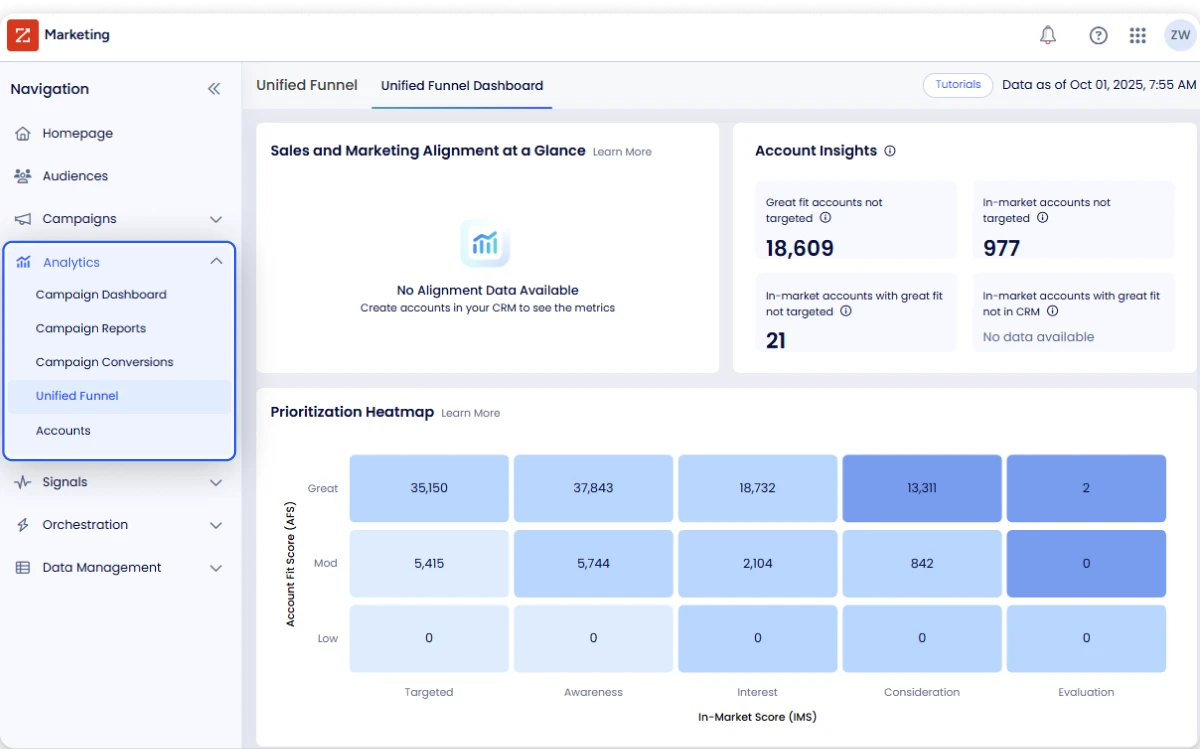
- ROI Insights is the standout dashboard. Syncing CRM data daily and attributing pipeline and revenue back to ZoomInfo activity is a legitimate C-level report, not a rep dashboard.
- Attribution filtering by sourced vs influenced pipeline let me answer questions Apollo couldn’t touch.
- Copilot Analytics tracked which AI plays reps actually acted on, which was useful for sales managers coaching pipeline discipline.
- The gap is in outbound campaign metrics. There’s no clean sequence-conversion dashboard the way Apollo has one. That data lives inside ZoomInfo Engage and doesn’t roll up cleanly at the platform level.
Strength: Best pipeline attribution and revenue-impact reporting in this comparison.
Weakness: No clean outbound campaign dashboard and steep learning curve.
What ZoomInfo Users Say About Reporting
👍 Liked
- Extensive data depth feeds rich analytics on prospect behavior and market trends
- Effective funnel tracking and ICP definition
- Intent signals tie directly into dashboards for measurable in-market activity
👎 Complained About
- Complex operational reporting requires sustained effort to master
Who Wins 🏆 the Reporting Race?
ZoomInfo wins for pipeline and revenue reporting.
Apollo wins for sequence and rep-level reporting that’s easier for outbound teams.
The biggest limitation is that neither gives a clear mailbox or domain-level deliverability view, making it harder to spot inbox issues early.
How Does Saleshandy Stand Out 💪 for Reporting?
Saleshandy splits analytics into two reports that map to how outbound teams actually work: Sequence Reports for campaign performance and Email & Domain Reports for deliverability health.
Two things separate this from Apollo’s and ZoomInfo’s reporting:
- Mailbox and domain-level reports to monitor bounces, blocks, and sender health.
- Interactive sequence reports with filters for sequences, clients, and time periods.
Which Chrome Extension Is More Useful?
Apollo wins this one cleanly, and it’s the strongest single feature Apollo has in the whole comparison.
From my experience, the Apollo Chrome Extension made prospecting much faster.
- It pulls verified emails and direct phone numbers from any LinkedIn profile or company website.
- Also, it drafts personalized emails inside Gmail using AI, enrolls contacts directly into sequences (Apollo, Outreach, or Salesloft), and pushes records into Salesforce or HubSpot.
- The extension runs firmographic insights and account history inside Google Calendar before prospect meetings.
Use Case: for SDRs living on LinkedIn all day, it’s a genuine productivity multiplier.
The ZoomInfo Chrome Extension matches most of the feature set: verified contact data, LinkedIn and Sales Navigator parsing, org chart visibility, and one-click CRM export.
- What sets it apart is buying signals surfaced in the sidebar: active intent, funding alerts, and company news for whichever page you’re on.
Use Case: for account executives working with named accounts, context matters more than raw prospecting speed.
My Honest Recommendation: If your team prospects on LinkedIn, Apollo’s extension is more useful. If your team runs named-account ABM, ZoomInfo’s is.
Which Tool Integrates Better With Your CRM and Tech Stack?
ZoomInfo goes deepest for enterprise Salesforce and Microsoft Dynamics workflows.
Apollo covers the same core CRMs with a cleaner setup for SMB teams.
And Saleshandy matches the CRM essentials, adds Zapier’s 9,000-app catalog, and is the only tool here that integrates natively with LLMs through both MCP and CLI.
Apollo integrates natively with Salesforce, HubSpot, Zoho, and Microsoft Dynamics. Emails, calls, meetings, and sequence activity sync automatically, and sequences can trigger based on CRM updates.
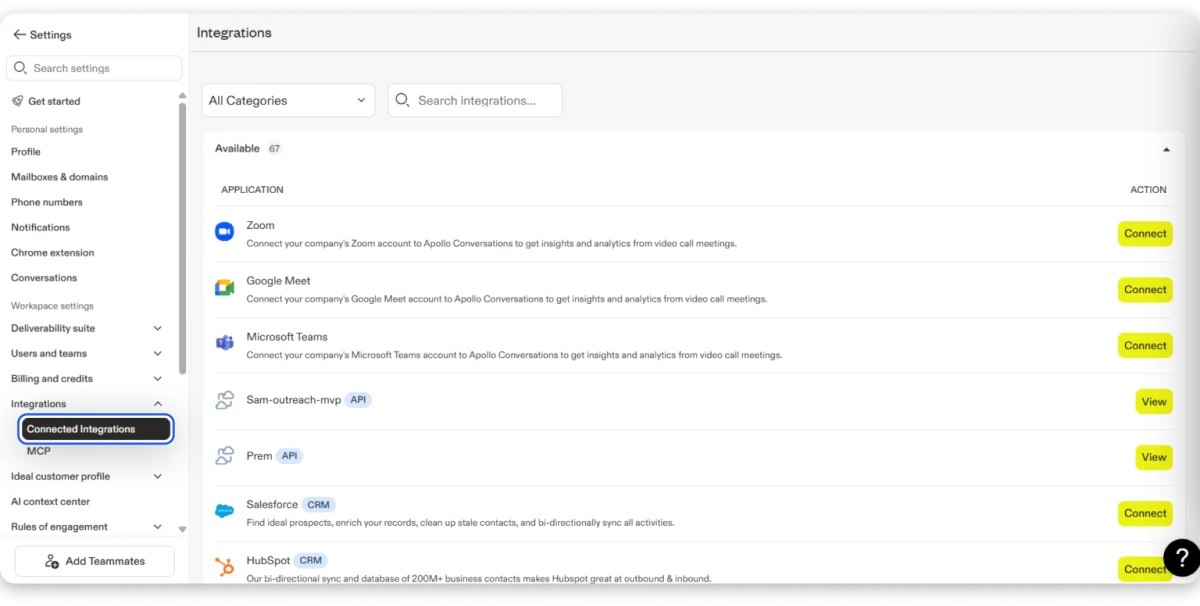
Apollo also offers MCP, connecting its database to ChatGPT, Claude, and Perplexity for LLM-powered prospecting.
ZoomInfo goes further for enterprise teams. It supports advanced Salesforce field mapping, Microsoft Dynamics 365, one-click CRM export, and surfaces intent signals inside the CRM. If your sales team lives in Salesforce, it’s the strongest option. ZoomInfo does not offer MCP or CLI access.
Saleshandy integrates with HubSpot, Salesforce, Zoho, and Pipedrive, plus Gmail and Outlook. What stood out to me was native Pipedrive support (Apollo and ZoomInfo rely on Zapier), native Zapier integration for 9,000+ apps, and both MCP and CLI for LLM and terminal-based automation.
MCP connects Saleshandy natively to AI tools like Claude, ChatGPT, Cursor, and n8n, supporting 40+ outreach actions through natural language. CLI runs the same workflows from the terminal with near-zero token overhead, ideal for RevOps teams building automation scripts or CI/CD pipelines. Saleshandy is the only tool in this comparison that offers both.
Who Wins 🏆 the Integration Race?
- ZoomInfo wins for enterprise teams on Salesforce or Microsoft Dynamics.
- pollo wins for SMB teams on HubSpot, and matches Saleshandy on LLM integration through MCP.
- Saleshandy wins for Pipedrive users, Zapier-powered workflows, and teams building LLM or terminal-based automation with both MCP and CLI.
Which One Offers Better Customer Support?
Apollo’s Customer Support
- Strength: Helpful knowledge base and self-serve documentation.
- Weakness: Human support can be slow, with many users reporting chatbot loops before reaching an agent.
ZoomInfo’s Customer Support
- Strength: Dedicated Customer Success Managers (CSMs) receive consistently positive feedback from enterprise customers.
- Weakness: Billing, auto-renewal, and contract changes are common complaints in user reviews.
Who Wins 🏆 Customer Support?
Neither is a clear winner.
- Apollo is better if you’re comfortable solving issues through documentation.
- ZoomInfo offers stronger support, but mainly for enterprise customers with dedicated CSMs.
My Honest Take: The support quality improves as you spend more. If you’re an SMB or mid-market team, expect to rely mostly on self-service with either platform.
Also useful: If you’re evaluating ZoomInfo but the pricing model gives you pause, I’ve broken down 10 ZoomInfo alternatives that publish pricing openly and start at a fraction of the cost.
Apollo Vs. ZoomInfo: Detailed Cost Breakdown (Verified in July 2026)
I broke pricing into six honest questions to answer, because the way each tool structures its cost tells you as much about the buyer it’s built for as the price itself.
How Is Pricing Structured for Apollo and ZoomInfo?
Deep dive: For a full teardown of Apollo’s plan structure, credits, and hidden costs, I’ve written a complete breakdown at Apollo.io pricing explained.
Apollo vs ZoomInfo: Which One Is More Transparent About Pricing?
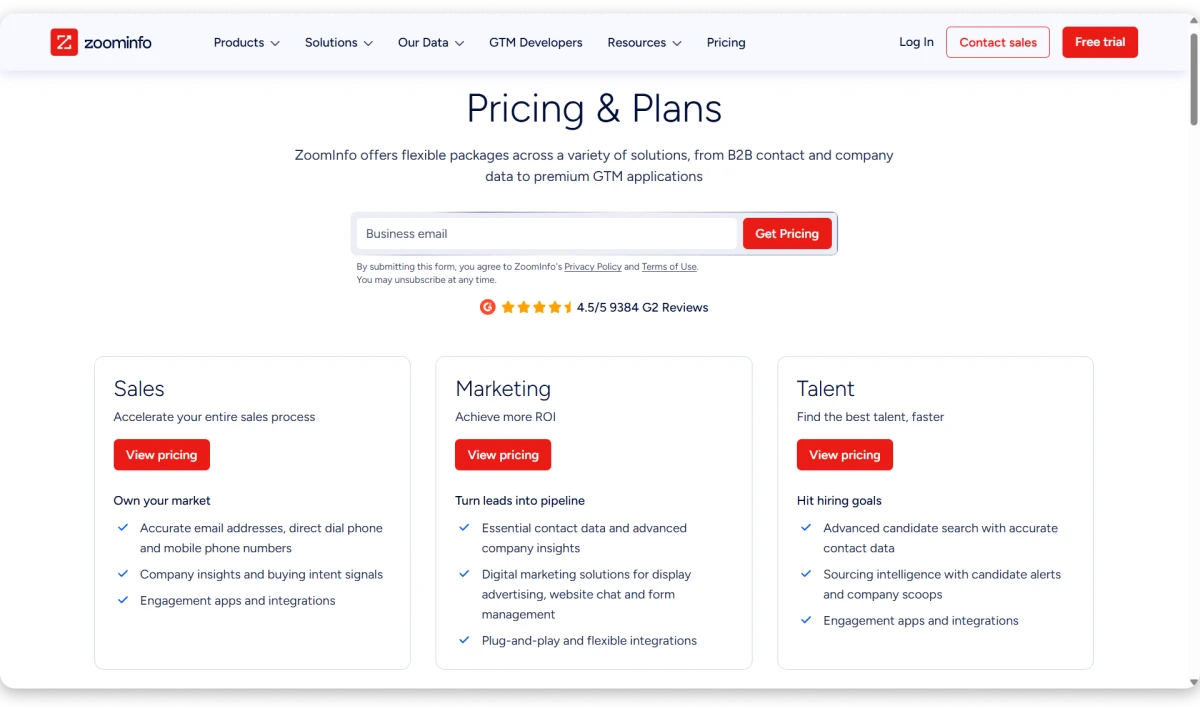
Apollo and Saleshandy publish their pricing. ZoomInfo doesn’t.
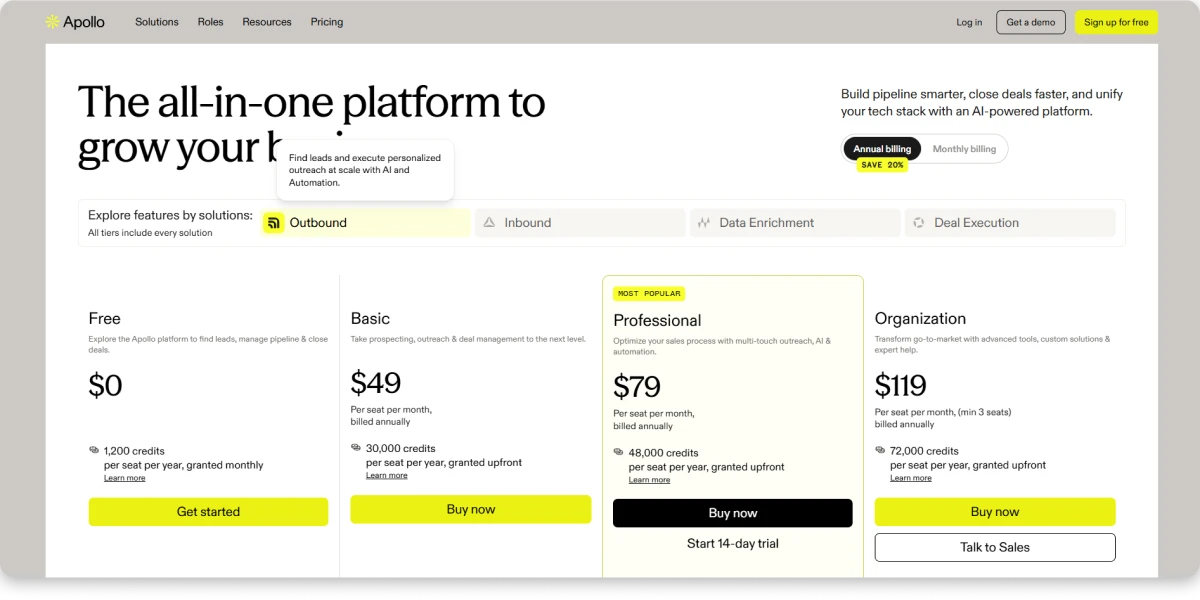
- Apollo lists all plans ($49, $79, and $119/user/month), feature limits, credits, and add-ons on its pricing page. You can compare plans without speaking to sales.
- ZoomInfo lists its plans but doesn’t disclose pricing. Costs depend on features, seats, and credit usage, so you’ll need to book a sales call. Vendr estimates the median annual contract at $32,000.
- Saleshandy also publishes all pricing upfront, including Outreach, Lead Finder, and Dialer. No sales call is required to know the pricing.
What Do You Actually Pay Per Verified Contact?
The subscription price doesn’t tell the full story. What matters is how much you pay for each verified contact you can actually use.
The biggest difference is how credits are charged. Apollo and ZoomInfo deduct credits whether the contact is verified or not. Saleshandy only deducts a credit when it returns a verified contact. That means you’re paying for usable contacts, not lookup attempts.
So which one gives you better value? It depends on your team size and sales motion.
1 to 20 reps: Saleshandy offers the best value for outbound & lead finding at $34/month. Apollo is a good choice if you want data and outreach in one platform. ZoomInfo is hard to justify at this stage.
20 to 100 reps: Apollo Professional and Saleshandy are the strong value players for outbound teams. ZoomInfo makes sense if you’re selling to enterprise accounts and need deeper data and intent signals.
100+ reps: ZoomInfo is the better fit for enterprise data, intent, and AI workflows. Saleshandy pairs well as an outreach platform without enterprise-level pricing.
What Does Onboarding and Support Cost You?
- Apollo: Low-cost to get started with a free plan and self-serve onboarding. Human support improves on higher-tier plans, while lower-tier users often report slower response times and chatbot-first support.
- ZoomInfo: Onboarding typically costs ~$2,000–$20,000, depending on your plan. Enterprise customers get white-glove onboarding and a dedicated Customer Success Manager, while lower-tier users report slower support.
- Saleshandy: Onboarding is included with every plan, and support is available to all customers without requiring an enterprise contract.
Key Takeaway:
Support quality generally improves as you pay more. Saleshandy is the only one that includes human support for every customer, without enterprise-tier pricing.
Apollo vs. ZoomInfo: Which Is Worth Your Time and Money in 2026?
After running both against 1,200 leads and testing every feature that matters, the honest verdict is this: they solve different problems for different buyers.
Choose Apollo if:
- You’re an SMB or growing team on HubSpot or Salesforce
- You want data plus outreach in one bundle at published pricing
- Your reps live on LinkedIn and need the strongest Chrome extension
Choose ZoomInfo if:
- You sell into the US enterprise and need the deepest phone data
- Intent, org charts, and pipeline attribution matter more than cost
- You have a budget for a $15K+ annual contract
But here’s what the test kept showing: both hit the same accuracy ceiling in the low 80s, and neither was built for outreach-first workflows.
If you want higher reply rates without doubling your stack, there’s a third path worth considering.
One where you get:
- 92% verified email accuracy, so your bounce rate drops and your sender reputation holds
- $0.08 cost per verified contact, so every credit turns into a real conversation, not a stale record
- Data plus outreach plus deliverability in one flat-rate platform, no per-seat surprises
- 852M+ verified contacts across 9 waterfall sources, with credits deducted only when a contact is verified
Try Saleshandy free for 7 days. No credit card required. Run it on your own list and decide after seeing the results.
Start Booking More Meetings with Saleshandy →
FAQs About Apollo Vs. ZoomInfo
1. What is the best alternative to Apollo and ZoomInfo?
Saleshandy is the strongest alternative for teams that need verified data and outreach in one platform. It runs on an 852M+ contact database with Waterfall Enrichment across 9 providers, returned 92% verified email accuracy in my test, and bundles email, LinkedIn, dialer, and WhatsApp sequences from $34/month with no per-seat pricing.
2. Can I try Apollo or ZoomInfo for free?
Apollo offers a free plan with 900 credits per year plus a 14-day trial on paid plans. ZoomInfo does not offer a self-serve free plan. Their trial requires submitting a form and speaking with a sales rep. Apollo lets you evaluate the product before any conversation; ZoomInfo does not.
3. Can Apollo replace ZoomInfo?
Yes, for SMB and mid-market teams, Apollo replaces ZoomInfo cleanly. Apollo covers contact data, sequences, dialer, and CRM sync at $49-119/user/month versus ZoomInfo’s ~$32,000 median annual contract (per Vendr benchmark data). Where Apollo falls short is enterprise phone data, intent depth, and org-chart coverage, which is where ZoomInfo still leads.
Only if you sell into US enterprise accounts and rely on phone-heavy outbound. ZoomInfo’s 135M+ direct dials, intent data through Bombora, and Copilot pipeline attribution justify the ~$32K median contract for enterprise sales teams. For SMBs and mid-market teams, the ROI rarely holds up against alternatives priced at a fraction of the cost.
5. What should I evaluate when choosing between Apollo and ZoomInfo?
Evaluate five things: verified data accuracy (test both on your ICP), phone match rate if you cold call, pricing transparency and contract flexibility, CRM integration depth, and deliverability tooling. Apollo wins on transparency, cost, and outbound workflow. ZoomInfo wins on enterprise data depth, intent, and phone coverage.
6. Does ZoomInfo have a free plan?
No, ZoomInfo does not have a free plan. Their pricing page offers a trial, but it requires submitting a form and speaking with sales. The published tiers (Professional, Copilot Advanced, Copilot Enterprise for sales) all require an annual contract. Apollo, in contrast, offers a real self-serve free tier with 900 credits per year.