


 Anil Salvi
 Contents
- 1 Sales Intelligence Tools – TOC
- 2 TL;DR — Quick Recommendations
- 3 What Is a Sales Intelligence Tool?
- 4 Sales Intelligence Tools Comparison Table
- 5 How I Evaluated These Tools
- 6 12 Best Sales Intelligence Tools Tested & Reviewed
- 7 How to Choose the Right Sales Intelligence Tool
- 8 Frequently Asked Questions
- 8.1 1. What Is the Best Free Sales Intelligence Tool?
- 8.2 2. What Is the Difference Between CRM and Sales Intelligence?
- 8.3 3. How Much Do Sales Intelligence Tools Cost?
- 8.4 4. Which Sales Intelligence Tool Is Best for Small Teams?
- 8.5 5. Do Sales Intelligence Tools Comply With GDPR?
- 8.6 6. Can I Use a Sales Intelligence Tool Without a CRM?
- 8.7 7. What Is the 10-3-1 Rule in Sales?
I have been building in the outbound space for years now.
And if there is one pattern I keep seeing across sales teams, it is this: they buy a sales intelligence tool expecting it to fix their pipeline.
But what they actually get is a database and a whole lot of manual work after that.
The workflow usually looks the same.
They export contacts from one tool and import them into another for outreach.
Campaigns go out from somewhere else entirely.
Replies get tracked in a spreadsheet that someone on the team swears they will keep updated.
That is still how most outbound teams operate in 2026.
Not because better options do not exist, but because most tools were built to solve one piece of the puzzle, not the whole thing.
I have had a front-row seat watching how these tools perform when real teams put them to work. Some are genuinely great and have kept improving year after year.
Others have not changed much but still show up on every “best of” list because they were early to the game.
This is my honest breakdown of the best 12 sales intelligence tools worth knowing about this year.
I have grouped them by what they are actually built for, called out where they shine, and flagged where they fall short.
Sales Intelligence Tools – TOC
TL;DR — Quick Recommendations
If you are short on time, here is who I would recommend based on use case:
What Is a Sales Intelligence Tool?
A sales intelligence tool gives sales teams the data and insights they need to find, qualify, and engage the right prospects.
Instead of cold guessing, you get specific information that tells you who to contact, when to reach out, and what to say.
These tools typically provide some combination of:
- Contact data — verified emails, phone numbers, job titles, and seniority levels
- Firmographic data — company size, revenue, industry, location, and funding stage
- Technographic data — the software and tools a company currently uses
- Intent data — buying signals like content consumption, hiring patterns, funding rounds, and job changes
- Engagement data — email opens, replies, website visits, and click activity
The best tools in 2026 combine multiple data types with the ability to act on them.
Finding data is one half of the job. Knowing what to do with it is where the real value sits.
Sales Intelligence Tools Comparison Table
Here is a side-by-side view of the top tools I tested. This should give you a quick snapshot before reading the full breakdown.
| Tool | Best For | Database Size | Built in Outreach | CRM | Starting Price |
|---|---|---|---|---|---|
| Saleshandy Lead Finder | All in one outbound | 800M+ contacts, 60M+ companies | ✔ | ✔ | $49/mo |
| ZoomInfo | Enterprise data | 100M+ companies, 500M+ contacts | ✖ | ✖ | Custom ($15K+/yr) |
| Apollo.io | SMB all in one | 275M+ contacts | ✔ | ✔ | $49/user/mo |
| Cognism | GDPR compliant data | Global, EMEA strong | ✖ | ✖ | Custom |
| LinkedIn Sales Navigator | Social selling | LinkedIn network | ✖ | ✔ | ~$99/mo |
| 6sense | Intent based ABM | Account level | ✖ | ✖ | Custom |
| Lusha | Contact enrichment | 100M+ contacts | ✔ | ✖ | $36/user/mo |
| Clay | Data workflows | 100+ providers | ✖ | ✖ | $134/mo |
| HubSpot Sales Hub | CRM and intelligence | CRM based | ✔ | ✔ | $15/mo |
| Bombora | Surging intent data | Company level | ✖ | ✖ | Custom |
| Gong | Conversation intelligence | Call recordings | ✖ | ✖ | Custom |
| Clearbit (Breeze) | Marketing enrichment | Company level | ✖ | ✖ | Custom |
How I Evaluated These Tools
I looked at each tool across several factors:
- Data accuracy and coverage: database size, verification methods, global reach
- Pricing transparency: per user vs flat rate models, credit systems, hidden costs
- Integration depth: CRM sync, outreach tools, workflow compatibility
- Ease of daily use: how quickly a rep can go from search to outreach
- Intent and signal quality: depth of buying signals and how actionable they are
- Action capability: whether the tool helps you act on data or just stores it
12 Best Sales Intelligence Tools Tested & Reviewed
These tools combine lead data with outreach and pipeline management. If you want to find prospects AND contact them from one platform, start here.
1. Saleshandy Lead Finder
Saleshandy Lead Finder started as a cold email tool, but it has grown into a full outbound platform.
The Lead Finder sits on top of an 800M+ verified B2B contact database covering 60M+ companies globally.
But the size of the database is not what makes it interesting. It is how the data is organized.
You get two separate tabs — People and Company — each with its own independent filters and real-time results.
On the People tab, you search for individual contacts by
- job title
- seniority
- department
- location
- skills
- social profiles
On the Company tab, you search at the organization level by
- revenue
- employee count
- industry
- SIC/NAICS codes
- technographics
- funding data
What this means in practice is that you can find a company that fits your ICP first, and then look up the right decision-makers inside it.
You can move between both tabs without losing your filters, which keeps the workflow tight when you are building targeted lists.
This is also where the sales intelligence angle separates Saleshandy from a basic contact database.
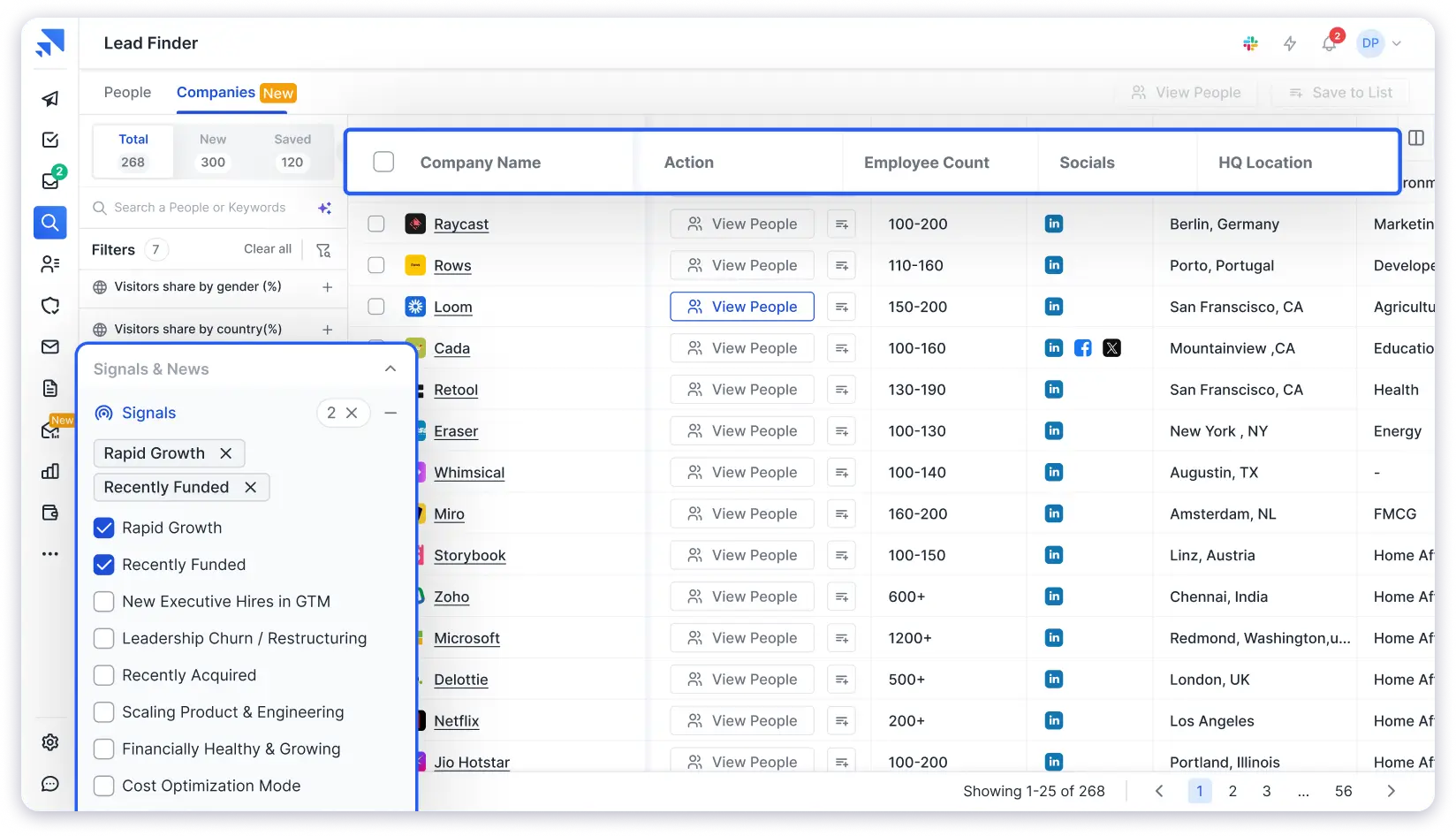
The platform pulls real-time buying signals like recent
- funding rounds
- leadership changes
- company news
- hiring activity
- technology adoption.
To put that in context — if a company just raised a Series B and hired three new SDRs in the last month, that tells you they are scaling outbound and probably evaluating tools right now.
That kind of timing is the difference between cold outreach and relevant outreach.
The data itself goes through real-time verification before you ever see it.
Every contact is verified at the moment you reveal it, and if an email or phone number cannot be verified, you are not charged any credits.
That alone saves a lot of wasted spend compared to tools that charge you upfront and let you figure out the bounces later.
One thing that surprised me is the coverage.
Most sales intelligence tools focus heavily on B2B SaaS, tech, and enterprise verticals.
Saleshandy covers those, but it also has strong data for industries that others tend to ignore — dentistry, plumbing, construction, real estate, legal services, and other local or service-based businesses.
If your outreach targets B2C or niche B2B industries, most tools on this list will leave you with thin results. Saleshandy does not have that gap.
Building those lists is also faster than most tools I have seen. Instead of manually setting 10 filters, you can describe your ideal prospect in plain English.
Something like “VP of Sales at SaaS companies in the US with 50 to 200 employees that recently raised funding.” Saleshandy applies the right filters automatically. It saves real time when you are running multiple campaigns.
Now, here is the part that actually matters for daily workflow.
The entire flow from finding a lead to tracking their reply happens in one place.
Most tools on this list give you data and then step away. Saleshandy connects that data straight into cold email sequences, sender rotation, and a visual CRM pipeline.
Pricing Plans
- Lead Finder = $49/month
- Lead Pro = $79/month
- Custom Plans
2. Apollo.io
Apollo.io gives you access to 275M+ verified contacts and 60M+ companies, bundled with email sequences, a built-in dialer, and LinkedIn outreach.
Its AI-guided account discovery analyzes your closed deals and finds similar accounts that match the same patterns.
It also tracks intent data across 6 to 12 topics depending on your plan, helping you focus on accounts already researching solutions in your category.
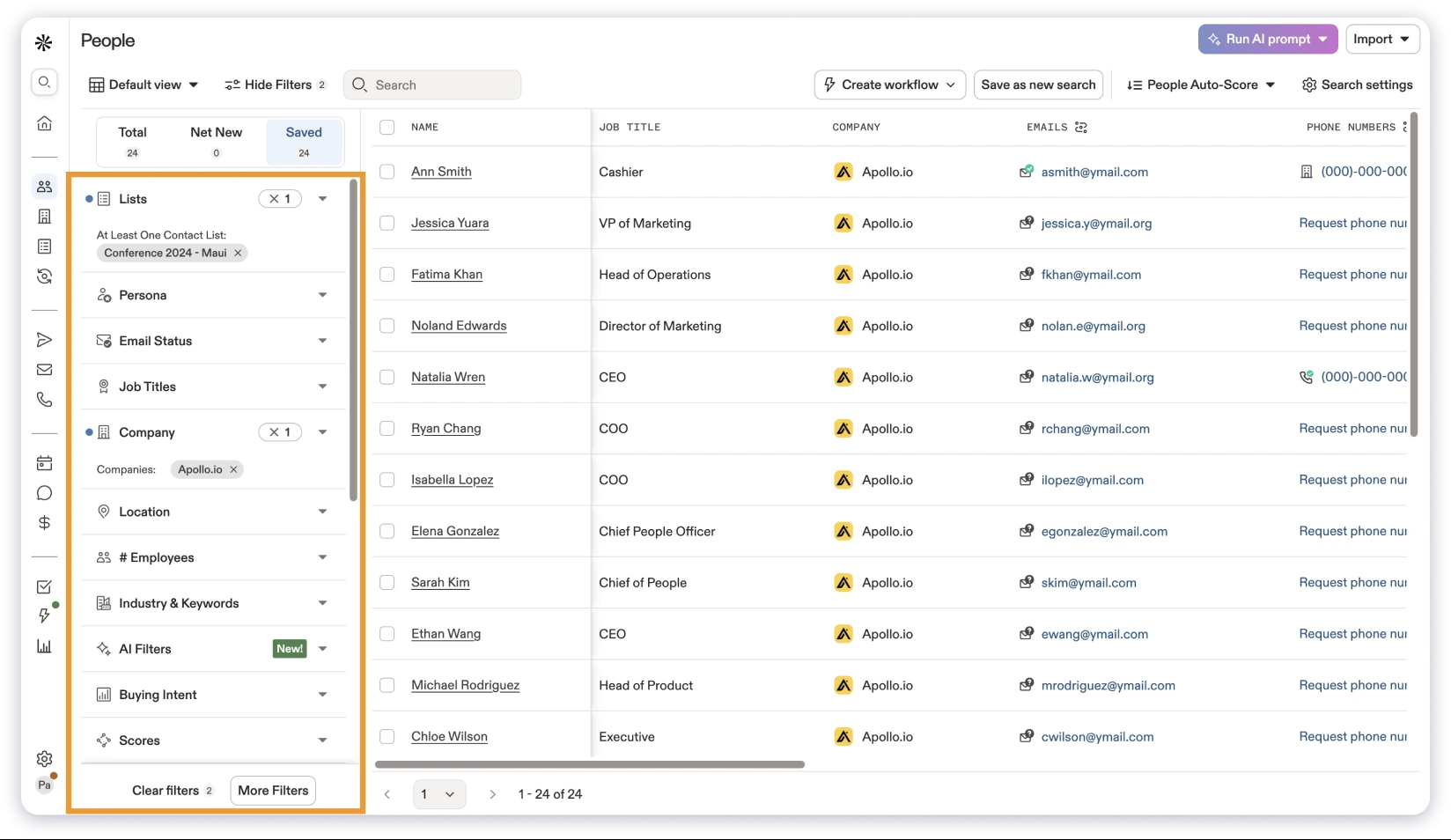
Lead scoring assigns priority based on fit and engagement so reps can work smarter instead of going top to bottom through a flat list.
G2 rated Apollo 4.7/5 and named it the top AI-native sales intelligence platform in their 2026 awards.
Pricing
Free plan available (100 credits). Paid plans start at $49/user/month (billed annually).
3. HubSpot Sales Hub
HubSpot Sales Hub is a CRM-first platform that has added intelligence features over time.
The biggest shift came when HubSpot acquired Clearbit and rebranded it as Breeze Intelligence, which now powers company enrichment, buyer intent signals, and AI-powered recommendations directly inside HubSpot.
When a lead enters your pipeline, HubSpot automatically enriches that record with company size, revenue, industry, technographic data, and intent signals without switching to a separate tool.

The key difference from standalone tools is that HubSpot’s intelligence enriches and prioritizes leads already in your system rather than helping you find new prospects.
For teams running inbound-heavy motions alongside outbound, the combination of CRM, intelligence, and marketing under one roof is hard to beat.
Pricing
- Free CRM available
- Paid Sales Hub plans start at $15/mo
- Breeze Intelligence is an add-on with credit-based pricing
4. ZoomInfo
ZoomInfo is the industry benchmark for B2B data depth. The database covers 100M+ company profiles and 500M+ contact profiles, but what sets it apart is not just size.
You get detailed org charts showing reporting structures, technographic data revealing what tools a company uses, and buyer intent signals that identify when an account is actively researching solutions in your category.
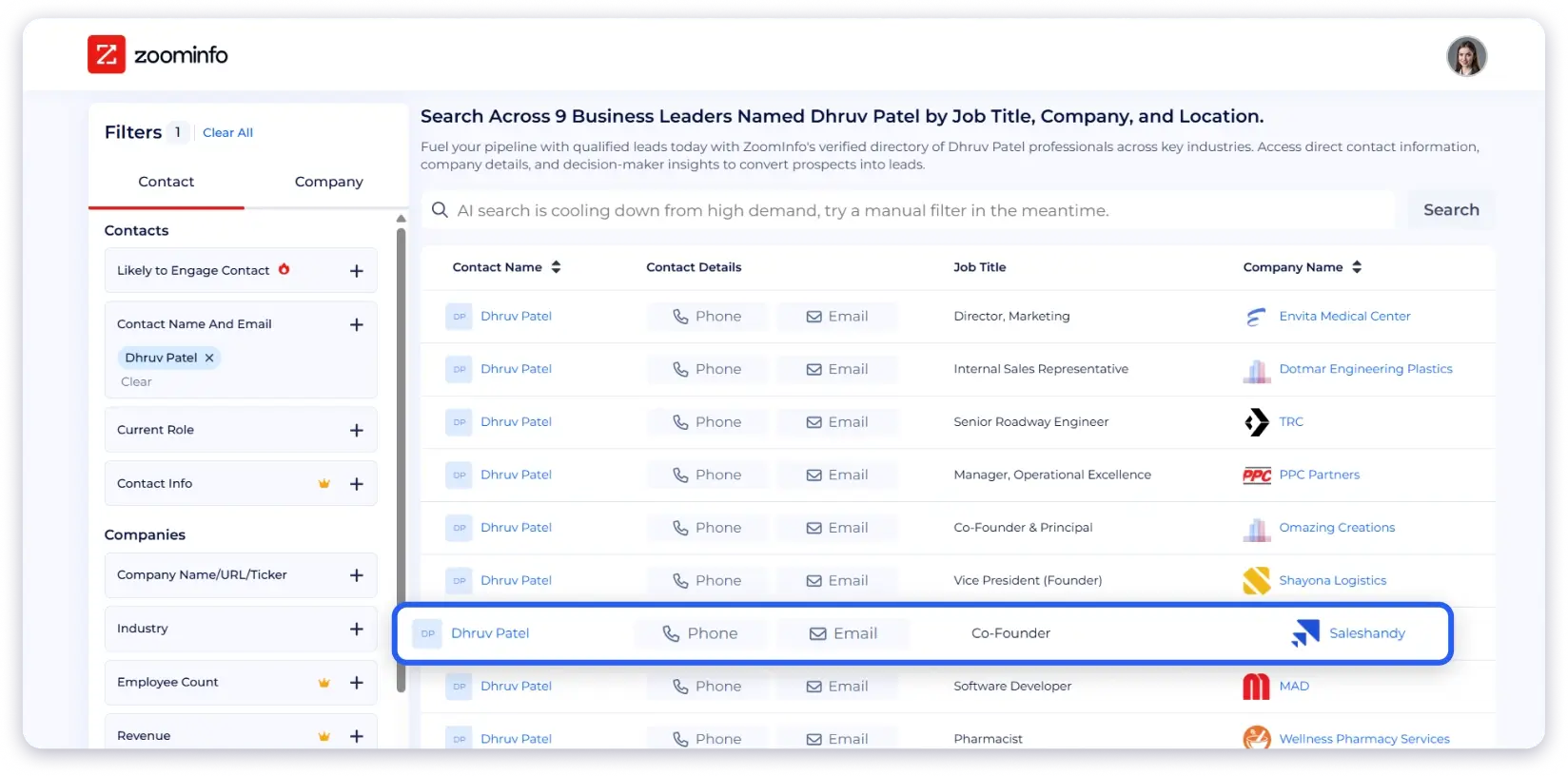
The intent data processes millions of signals monthly, so if a target account starts consuming content about “cold email automation,” ZoomInfo flags it as an intent surge and your reps can prioritize based on timing, not just ICP fit.
ZoomInfo Copilot uses AI to recommend who to contact, when, and what messaging to use.
Combined with Chorus for conversation intelligence, enterprise ABM teams get a full picture of what is happening before, during, and after sales conversations.
Pricing
Custom quotes based on team size and features.
Typically starts at $15,000-25,000+/year. International data requires the Data Passport add-on at extra cost.
5. Cognism
Cognism approaches sales intelligence from a compliance-first angle.
Their headline feature is Diamond Data, where mobile phone numbers are individually verified by real people calling those numbers to confirm they are active and belong to the right person.
That matters because if your outbound relies on cold calling, verified numbers that actually ring through to the right person save reps hours of wasted dials and significantly improve connect rates.
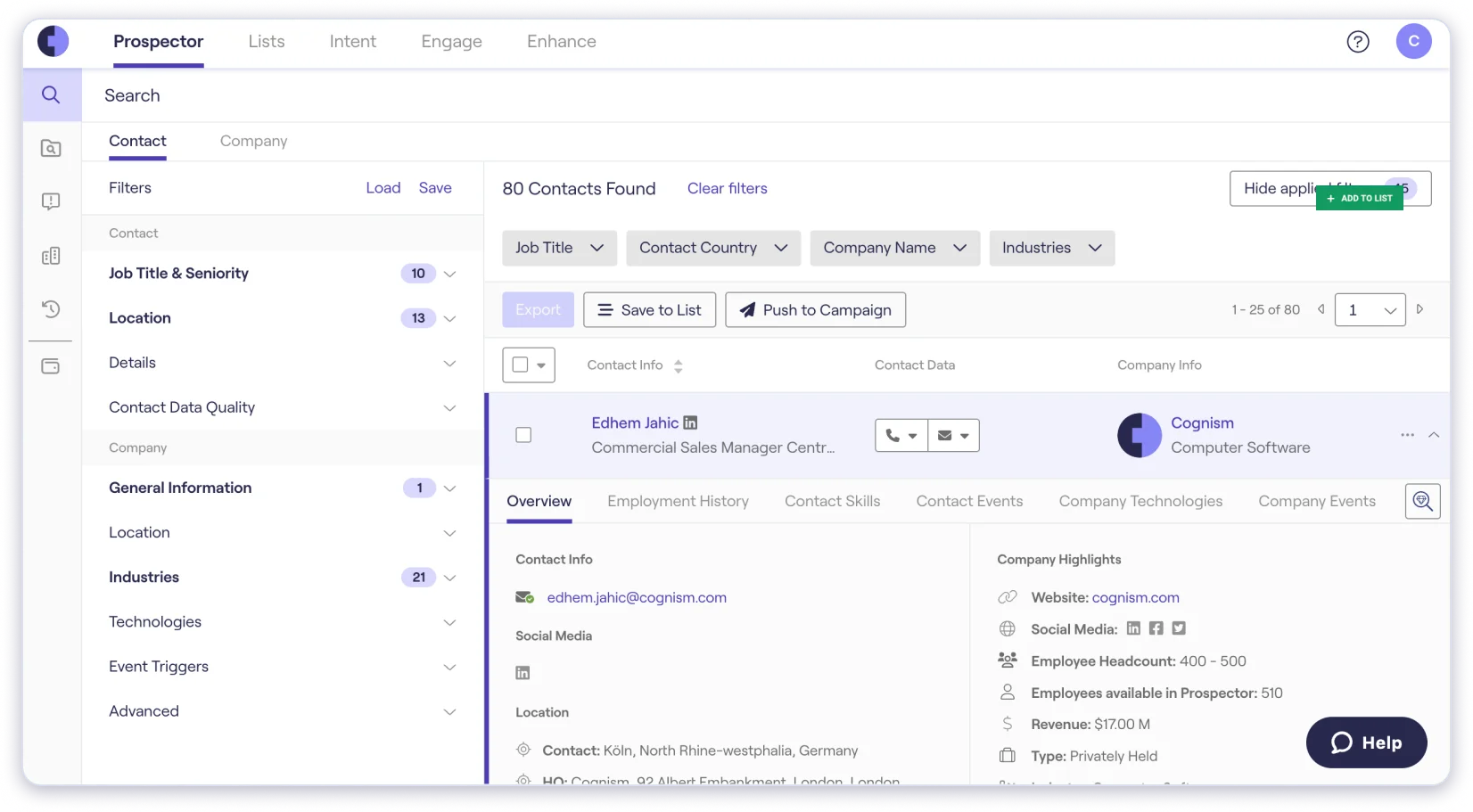
Cognism also checks contacts against 15+ Do-Not-Call lists across multiple countries, more than any other provider I have come across, which gives teams confidence to call into regulated European markets without legal exposure.
On the intelligence side, Cognism integrates Bombora intent data directly into the platform so you can see which target accounts are actively researching relevant topics, and their Sales Companion uses AI to surface relevant prospects based on intent and engagement patterns.
Pricing
Custom pricing with two packages (Grow and Elevate). No public pricing page.
6. Lusha
Lusha is built for speed. You find a prospect on LinkedIn, click the Chrome extension, and get their direct dial and verified email in seconds.
Beyond basic lookups, higher plans include intent data that flags when accounts are researching relevant topics and job change alerts that tell you when a contact moves to a new company.

People in new roles are more likely to evaluate tools in their first 90 days, making job changes one of the best timing signals for outreach.
The platform also includes basic email sequences and CRM integrations, though most teams use Lusha as a secondary data source alongside a primary tool rather than as their main platform.
Pricing
- Free plan (5 credits/month).
- Paid plans start at $36/user/month.
7. 6sense
6sense solves a different problem than most tools on this list.
While contact databases help you find people, 6sense helps you figure out which companies are actually ready to buy right now.
It tracks anonymous buying behavior across the web — content consumption, website visits, search activity — and matches that behavior to specific accounts.

It then identifies where each account sits in the buying journey (awareness, consideration, or decision stage) so your reps know whether to educate, nurture, or push for a meeting.
Since most B2B buyers are 60-70% through their decision process before talking to a vendor, this visibility into the invisible part of the buying journey is what makes 6sense valuable for enterprise teams.
The platform also includes predictive analytics for pipeline forecasting and account-based advertising to target in-market accounts across channels.
Pricing
- Enterprise-level
- Custom quotes only
8. Bombora
Bombora is not a prospecting tool or a contact database. It measures which companies are actively researching specific topics and flags when that activity surges above their normal baseline.
It works through a data cooperative with thousands of B2B media websites and content publishers.
When employees at a company consume significantly more content about a topic than their historical average, Bombora triggers a “surge” signal that tells your team that company is actively researching something related to what you sell.
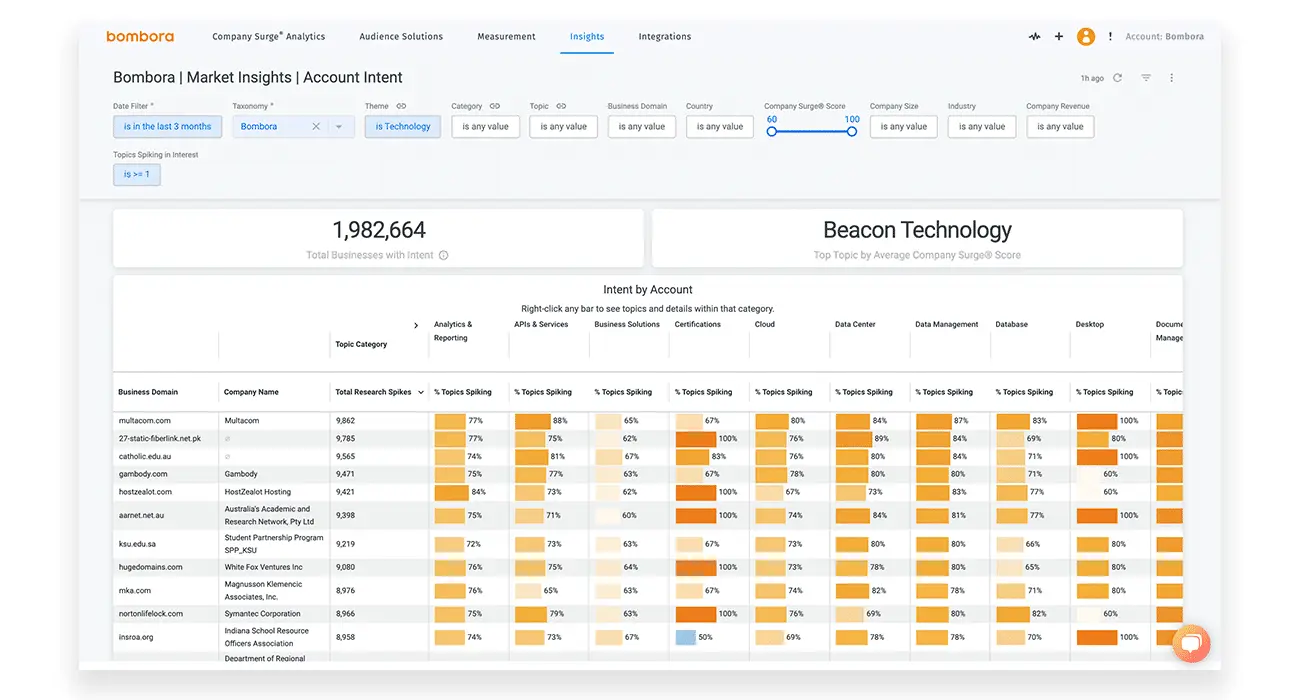
You can layer these signals into your CRM, sales engagement tool, or ad platform to prioritize accounts showing real buying behavior.
Bombora is also the intent engine behind several other tools on this list — Cognism, ZoomInfo, and others license Bombora data and bundle it into their platforms, so you may already be getting these signals without realizing it.
Pricing
Custom quotes. Typically sold as a data feed or integration add-on.
LinkedIn Sales Navigator has one advantage no other tool can replicate — the data is maintained by the prospects themselves.
When someone changes jobs, updates their title, or joins a new company, that update happens in real time because the person made it.
With 50+ search filters covering job title, company size, industry, geography, and years in role, you can build highly targeted prospect lists.
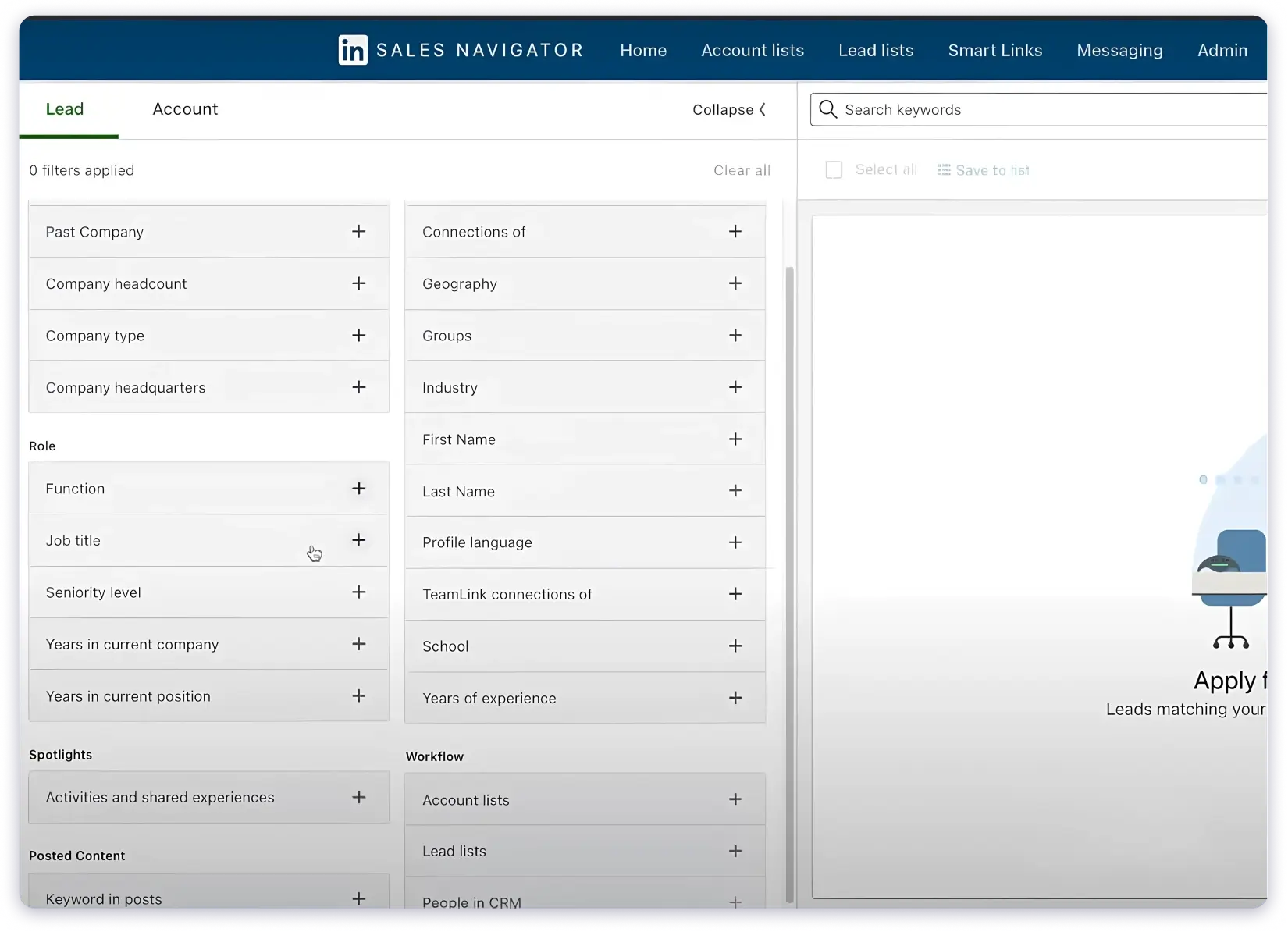
The real intelligence value comes from job change alerts, which are one of the strongest timing signals available.
When a VP of Sales starts at a new company, they are evaluating tools and open to conversations in a way they would not be six months later.
Sales Navigator also shows buyer intent signals based on LinkedIn engagement and offers Account IQ with AI-generated company summaries on higher plans.
The biggest gap is that LinkedIn does not give you email addresses or phone numbers, so you always need a data provider like Saleshandy or Lusha alongside it for actual outreach.
Pricing
- Core plan starts around $99/month.
- Advanced and Advanced Plus plans offer CRM sync and team features at higher pricing.
10. Clay
Clay takes a completely different approach to sales intelligence.
Instead of offering its own database, it connects over 100 data providers into a single workflow builder where you create enrichment sequences that pull from multiple sources and apply custom logic.
For example, you can find companies that recently raised funding from Crunchbase, identify the VP of Sales from Apollo, verify their email from Hunter, and generate a personalized opening line using AI — all in one workflow.

Clay also runs waterfall enrichment automatically, falling back to the next data provider if the first one does not have a verified result, which gives you higher coverage and accuracy than any single database.
The AI-powered personalization reads company websites and generates messaging that references specific details about the prospect’s business. This combination is why growth teams at companies like Notion and Ramp use Clay for scaled outbound.
Pricing
- Starts at $134/month
- Pricing scales based on credits and data usage.
11. Clearbit (Now Breeze Intelligence by HubSpot)
Clearbit was one of the original players in real-time data enrichment, instantly enriching lead records with company data like industry, employee count, revenue, tech stack, and funding information.
HubSpot acquired Clearbit in late 2023 and rebranded it as Breeze Intelligence, so if you are a new user, you can only access it through HubSpot.
The intelligence Breeze provides is about understanding who is in your pipeline and whether they are worth pursuing.
It can de-anonymize website traffic to show which companies are visiting, what pages they view, and how often they return.
It also shortens forms by auto-filling fields it already knows about a visitor, reducing friction on landing pages and increasing conversion rates.
For marketing-led sales motions where lead quality matters more than volume, this enrichment is valuable for spending time on the right leads.
Pricing
Available as a HubSpot add-on. Credit-based pricing model.
12. Gong
Gong is a different kind of sales intelligence.
While every other tool on this list helps you find and engage prospects before the conversation starts, Gong helps you get more out of conversations that are already happening.
It records, transcribes, and analyzes sales calls and video meetings, tracking things like talk-to-listen ratios, competitor mentions, objection frequency, and what language top performers use differently from average reps.
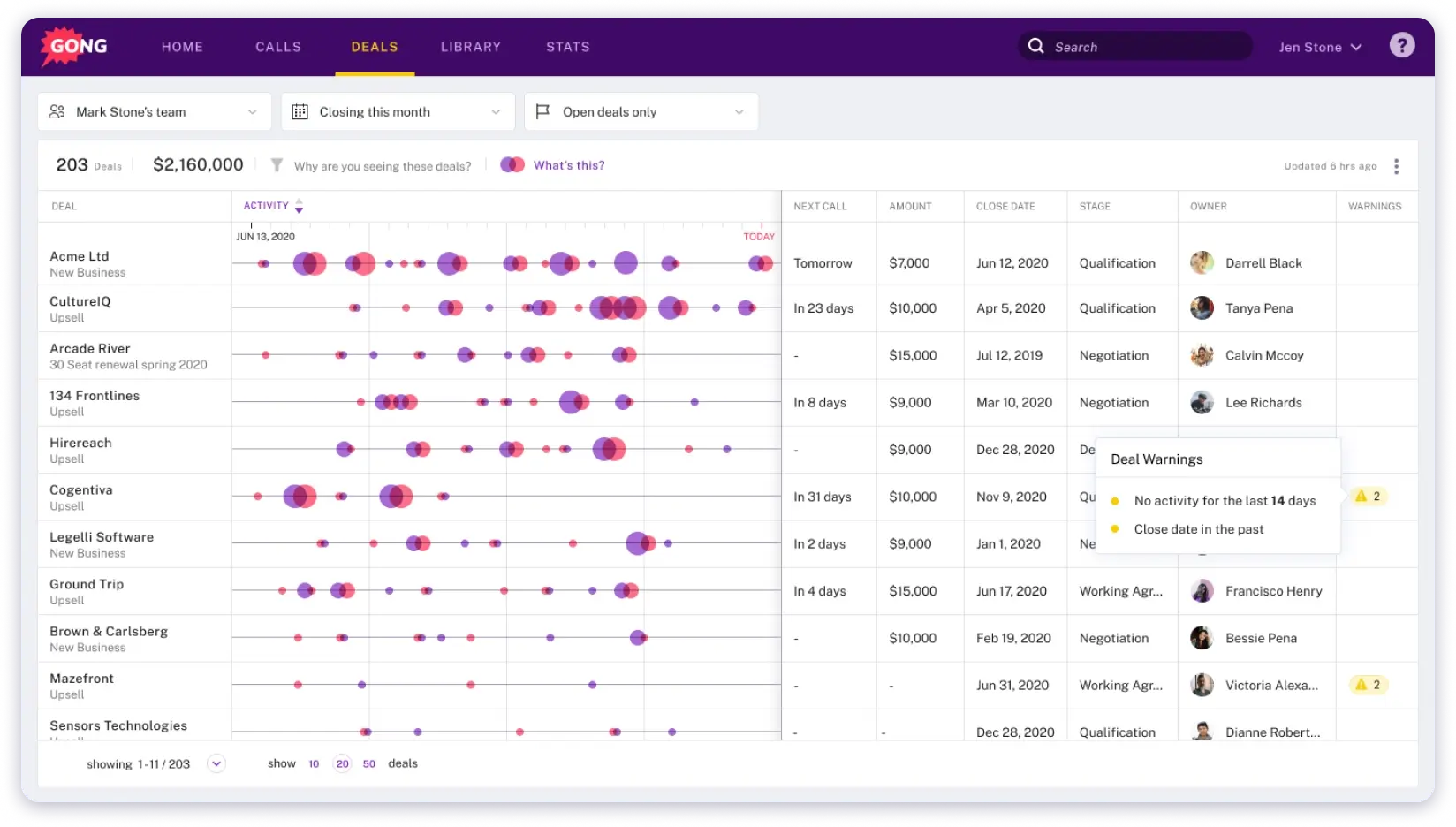
For managers, this means coaching based on real call data instead of second-hand deal updates.
Gong also flags deal risks automatically — if a deal has gone quiet, a stakeholder has stopped engaging, or a competitor was mentioned in a recent call, it alerts you before the deal slips.
I include Gong on this list because the best contact data and intent signals mean nothing if your team cannot convert conversations into revenue. Gong closes that loop.
Pricing
Custom quotes based on team size.
How to Choose the Right Sales Intelligence Tool
The “best” tool depends entirely on how your team sells. Here is a quick framework.
If you are an SDR or outbound rep: You need fast access to verified contact data and the ability to launch outreach immediately. Saleshandy gives you data, sequences, and a CRM in one tool. Apollo is a strong alternative if you want a free starting point.
If you are a sales leader or VP, You need pipeline visibility, team performance tracking, and reliable data coverage. ZoomInfo is the enterprise standard. Saleshandy CRM gives outbound teams execution clarity at a fraction of the cost.
If you are a founder or small team, you need affordable pricing without per-user charges. Saleshandy offers flat-rate pricing starting at $25/month for cold email and $49/month for Lead Finder with no seat limits. Apollo has a free tier to get started.
If you sell into Europe, You need GDPR-compliant data with verified phone numbers. Cognism is the clear leader here.
If you run ABM campaigns, You need account-level intent data and multi-stakeholder tracking. 6sense or Bombora layered with ZoomInfo is the standard enterprise ABM stack.
If you are an agency managing multiple clients, You need multi-client management, scalable outreach, and organized pipelines per client. Saleshandy supports unlimited clients and team members with whitelabel capabilities.
Frequently Asked Questions
1. What Is the Best Free Sales Intelligence Tool?
Apollo.io offers the most generous free plan with 100 credits and basic engagement features. Saleshandy provides a 7-day free trial with 50 free credits to test its full 800M+ database. Lusha also has a free tier with 5 credits per month. Each has different strengths, so the best free option depends on whether you need a database, outreach, or enrichment.
2. What Is the Difference Between CRM and Sales Intelligence?
A CRM stores and manages existing customer relationships. It tracks deals, logs interactions, and provides pipeline reporting. Sales intelligence finds new prospects and provides the data and signals to engage them. Some tools like Saleshandy combine both. The Lead Finder gives you intelligence, and the built-in CRM manages your prospect pipeline.
3. How Much Do Sales Intelligence Tools Cost?
Pricing ranges widely. Saleshandy Lead Finder starts at $49/month (billed annually) with 30,000 credits per year. Cold email outreach starts at $25/month. Mid-range tools like Apollo start at $49/user/month. Enterprise platforms like ZoomInfo typically start at $15,000+/year with custom contracts. The key difference is per-user vs. flat-rate pricing. Per-user costs add up quickly as your team grows.
4. Which Sales Intelligence Tool Is Best for Small Teams?
Saleshandy and Apollo.io are strong choices for small teams. Saleshandy has no per-user pricing, and includes data, outreach, and CRM in one platform. Apollo offers a free tier with 100 credits. For teams under 10 people, either tool provides enough to run a full outbound operation without enterprise contracts.
5. Do Sales Intelligence Tools Comply With GDPR?
Compliance varies by provider. Cognism leads in GDPR compliance with phone-verified European data and checks against 15+ DNC lists. Saleshandy is GDPR compliant and SOC 2 Type II certified. Apollo complies with major regulations but has faced some scrutiny on data sourcing. Always verify compliance certifications before purchasing, especially for European markets.
6. Can I Use a Sales Intelligence Tool Without a CRM?
Yes. Saleshandy includes a built-in outbound CRM with Kanban pipeline, activity timeline, and task management. Apollo also has basic CRM features. If you use a standalone data tool like ZoomInfo, Cognism, or Lusha, you will need a separate CRM integration to manage your pipeline.
7. What Is the 10-3-1 Rule in Sales?
The 10-3-1 rule is a simple sales benchmark. For every 10 prospects you contact, roughly 3 will show interest, and 1 will convert into a customer or meeting. Sales intelligence tools improve this ratio by helping you target better-fit prospects from the start. Better data means fewer wasted touches and higher conversion rates per outreach campaign.