

 Anil Salvi
 Contents
- 1 Reach Small Business Owners – TOC
- 2 TL;DR: The 3 Best Ways to Reach Small Business Owners
- 3 12 Proven Ways to Reach Small Business Owners in 2026
- 3.1 1. Cold Email Outreach
- 3.2 2. LinkedIn and Social Media Outreach
- 3.3 3. Content Marketing
- 3.4 4. Local Networking and Events
- 3.5 5. Referral and Word-of-Mouth Programs
- 3.6 6. Paid Advertising
- 3.7 7. Partnerships and Strategic Alliances
- 3.8 8. Local Directories and Listings
- 3.9 9. Online Communities and Participation in Forums
- 3.10 10. Cold Calling and SMS Outreach
- 3.11 11. Email Newsletters and Campaigns
- 3.12 12. Podcast Guesting and PR Outreach
- 4 Use the Best Way to Reach Small Business Owners
- 5 FAQs About Reaching Small Business Owners
If you want to reach small business owners, choosing the right path comes first.
The confusion usually comes from having too many options at once.
Email, LinkedIn, calls, events, and partnerships all seem like reasonable choices. Trying to use all of them together spreads effort and slows progress.
A few common challenges businesses face while reaching small business owners include:
- Not knowing which channels owners actually pay attention to
- Limited time and budget to test multiple approaches
- Reaching owners at the wrong stage or moment
- Following advice that does not match their business context
With so many options, it can feel confusing and challenging.
That is why, in this blog post, I have shared 12 ways to reach small business owners.
Let’s get started.
Reach Small Business Owners – TOC
TL;DR: The 3 Best Ways to Reach Small Business Owners
Want to have a quick overview of useful ways? Here are the most useful ways to get started.
- Cold Email Outreach — Email helps you contact owners directly. Using a tool like Saleshandy makes it easier to find the correct emails and send messages without delivery issues.
- LinkedIn Outreach — Owners often check LinkedIn before replying. A proper profile and a thoughtful message increase the likelihood of replies.
- Referrals — An introduction from another business owner builds trust before the first conversation starts.
12 Proven Ways to Reach Small Business Owners in 2026
Let’s understand all 12 ways to reach small business owners in detail.
- Cold Email Outreach
- LinkedIn and Social Media Outreach
- Content Marketing
- Local Networking and Events
- Referral and Word-of-Mouth Programs
- Paid Advertising
- Partnerships and Strategic Alliances
- Local Directories and Listings
- Online Communities and Participation in Forums
- Cold Calling and SMS Outreach
- Email Newsletters and Campaigns
- Podcast Guesting and PR Outreach
1. Cold Email Outreach
You already know how cold email outreach works. If small business owners are not replying, the issue usually sits in the setup.
In most cases, the problem is not the email copy itself.
It comes from using the wrong tool, working with inaccurate leads, or skipping key steps in the cold email process.
Such things happen often. Many businesses start sending emails before fixing the basics.
Out of all the cold email tools I have worked with, Saleshandy stands out because of how it handles core outreach tasks.

It is built around lead accuracy and proper execution, without complicating the process.
Saleshandy supports cold email outreach by offering:
- a B2B Lead Finder with 800M+ professionals and 60M+ company records
- filters to target owners by role, industry, company size, and location
- verified email addresses that reduce bounces and protect deliverability
- unlimited email accounts, teams, and clients without extra charges
This matters when you contact small business owners directly. Inaccurate data and bounced emails prevent messages from reaching inboxes.
When emails do not reach inboxes, replies do not happen.
2. LinkedIn and Social Media Outreach
Social media helps you reach small business owners before you speak to them directly.
Most owners do not respond to outreach without checking who you are first.
They look at profiles, recent posts, and activity to decide whether you are worth replying to.
LinkedIn works best for this purpose. Small business owners use it to stay informed, connect with peers, and evaluate vendors.
After a cold email or call, LinkedIn is often the first place they visit to verify you.
If your profile does not explain what you do and who you help, outreach weakens.
- Owners want to understand your relevance within a few minutes.
- Your headline, About section, and recent posts support that decision.
How to Use LinkedIn to Reach Small Business Owners
LinkedIn helps in two ways: visibility and conversation.
Visibility builds familiarity. Conversation opens the door. So, you do not need constant posting.
You need posts that reflect real business situations owners relate to.
Content that works well includes short experiences, small case studies, common mistakes, or lessons from working with clients.
If an email finder tool cannot locate an address, you can use a Chrome extension like Saleshandy.

It fetches email details directly from LinkedIn profiles or company websites in a few clicks.
A connection request should explain why you reached out. It should avoid selling and focus on relevance to their business.
Actions that help you reach owners on LinkedIn:
- Keep your profile aligned with the problems you solve
- Post work-based insights or observations
- Share results or learning from real projects
- Send personalized connection requests with context
- Start conversations instead of pitching services
At first, your goal on LinkedIn is not to close a deal, but it is to make owners comfortable engaging with you.
3. Content Marketing
Content writing and digital presence help when you want small business owners to take the next step.
Before responding to emails or calls, many owners look you up online.
Any business that wants to invest wants to understand who you are, what you offer, and whether it fits their needs.
If your online presence feels incomplete, outreach loses momentum. I look at content as part of the outreach process, not a separate activity.
A website and supporting content should answer basic questions without forcing effort.
Blogs should reflect real business situations, not marketing language. This helps owners build trust before any direct conversation.
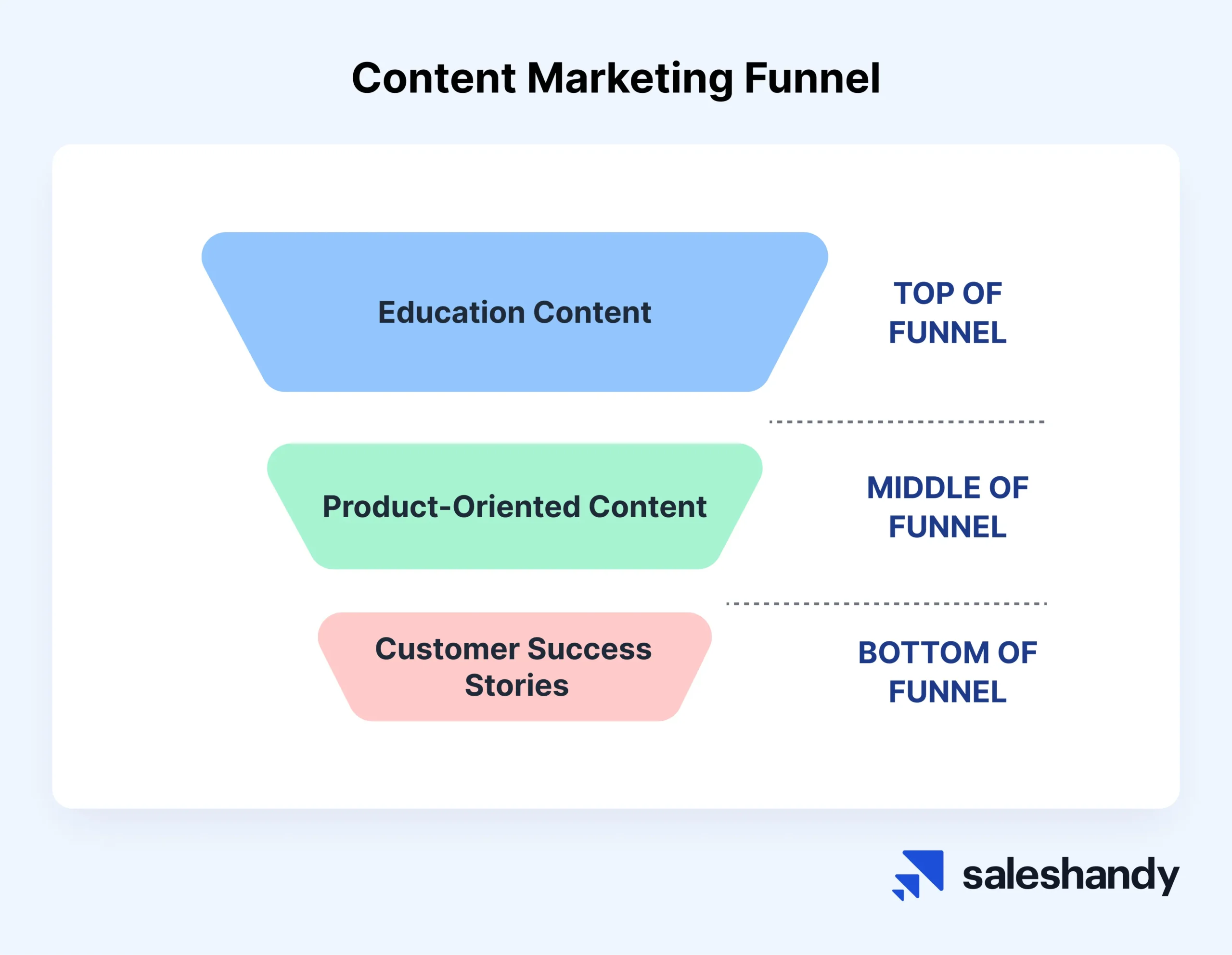
Action items to build content that supports reaching small business owners:
- Build a website that explains your offer and audience simply
- Publish blogs around common problems owners face
- Write about processes, decisions, and trade-offs
- Show how your solution fits into daily business work
- Link content naturally in emails and follow-ups
- Keep your digital presence consistent across channels
As a result, content works quietly in the background. It supports outreach by reducing doubts and setting expectations.
When content does its job, reaching small business owners becomes easier.
4. Local Networking and Events
Networking events give you a chance to meet small business owners in person or in small groups.
These settings make conversations feel natural and less transactional. When owners meet you face-to-face, trust builds much faster than online.
I recommend prioritising in-person events where small business owners usually attend.
This includes local chamber meetups, industry trade shows, and retail or business award events.
These places attract owners who are open to conversations and new connections.
Some well-known events where small business owners often participate include:
- Dreamforce
- Small Business Expo
- National Small Business Conference
- International Council for Small Businesses
At these events, the goal is not to hand out as many business cards as possible. Focus on having meaningful conversations with a few people.
Ask about their business, listen carefully, and understand their challenges.
After the event, wait a few days before following up. Send a short LinkedIn request or email that references your conversation, such as:
“It was great talking with you about [topic]. I wanted to share the resource I mentioned. Would be happy to reconnect next week.”
This keeps the follow-up personal and makes the next conversation easier.
5. Referral and Word-of-Mouth Programs
Referrals are one of the easiest ways to reach small business owners. They work because the introduction comes from someone they already trust.
That trust makes the first conversation feel comfortable. The best time to ask for referrals is after you have delivered real value.
When a client is happy with the outcome, they are more open to recommending you. A simple and honest ask works better than any formal process.
You only need to make sure that your request is natural and respectful. Or you can ask during a follow-up call or message who you want to be introduced to.
Always ask before using a testimonial or name as a reference. When done the right way, referrals bring conversations that start on positive ground.
6. Paid Advertising
Paid advertising helps when you want controlled visibility among small business owners.
It lets you decide who sees your message, rather than relying on organic reach.
Choosing the right platform makes a big difference. Because each platform works better for a specific type of business and intent.
Platforms and where they work best:
- LinkedIn Ads – owners, founders, and senior decision-makers
- Facebook / Instagram Ads – local businesses like restaurants, salons, and service providers
- Google Ads (Search) – owners actively searching for solutions
Paid ads work better when you offer value instead of selling directly.
A useful tip is to offer a free guide, checklist, or resource for common problems that perform well.
Used properly, paid ads support other outreach channels. They help small business owners recognize your brand before you contact them.
7. Partnerships and Strategic Alliances
Strategic partnerships help you reach small business owners through people they already trust.
Instead of cold outreach, you get introduced through a business they work with.
The idea is to partner with businesses that serve the same clients but do not compete with you.
You can look for services that naturally connect with your offering. When the fit makes sense, referrals feel helpful.
When you approach a potential partner, focus on shared value. Make sure you are clear about how both sides benefit and keep expectations simple.
Partnerships work best when intentions stay honest and practical.
A good example is how Saleshandy integrates with CRM and automation tools to support shared users.
These partnerships help businesses manage outreach and data without extra effort. Such strategic partnerships take time, but they scale trust faster than most channels.
As a result, partnerships help you reach small business owners through relationships.
8. Local Directories and Listings
Local directories help you reach small business owners where they already expect to be found. These owners use such platforms to manage visibility, check competitors, and look for services.
That makes local listings a reliable starting point for discovery and outreach.
The first thing you should keep updated is your Google Business Profile.
An updated profile with photos, posts, and accurate details builds credibility quickly. Many owners check this before responding to emails or calls.
Beyond Google, different regions rely on different directories. There are common local directories used across regions.
United States and Canada
- Yelp
- Better Business Bureau
- Yellow Pages
- Apple Maps
Australia
- TrueLocal
- Yellow Pages Australia
- LocalSearch
Europe
- Yell
- Thomson Local
- PagesJaunes
These platforms allow you to find businesses by location, category, and size. They also help you understand how owners present themselves publicly.
Overall, in my opinion, local directories work best when combined with email, calls, or LinkedIn. They help you find owners and give context before you contact them.
9. Online Communities and Participation in Forums
Online communities are a useful way to stay connected with small business owners. LinkedIn Groups are one example, where owners ask questions and share advice.
You can also use Reddit communities to engage with small business owners. By answering questions and offering helpful input, you build trust over time.
I recommend spending time in these Reddit communities:
- r/SmallBusiness
- r/Entrepreneur
- r/Business
- r/Retail
Reddit works very differently from LinkedIn or email. People there do not like promotion, and they can spot it quickly. If you drop links or pitch your service, you will get banned or removed.
The better approach is to help first.
When a business owner asks a question, reply in the comments with useful advice.
Share what you know, explain the options, and stay focused on the problem. If the discussion goes well, you can follow up privately.
For example, you can send a simple direct message that references the conversation.
It could be something like, “I noticed their question and wanted to share more context.”
This way, you respect how Reddit works. You also build trust before taking the conversation any further.
10. Cold Calling and SMS Outreach
Cold calling and SMS outreach help you reach small business owners directly. These channels do not rely on platforms or intermediaries. Because of this, accuracy and timing matter a great deal.
Calling the wrong number or sending an irrelevant message can end the conversation immediately.
That is why reliable contact data matters more here than in any other outreach channel.
When I plan cold calling or SMS outreach, I start with phone data quality.
Using a tool like Saleshandy supports this step.
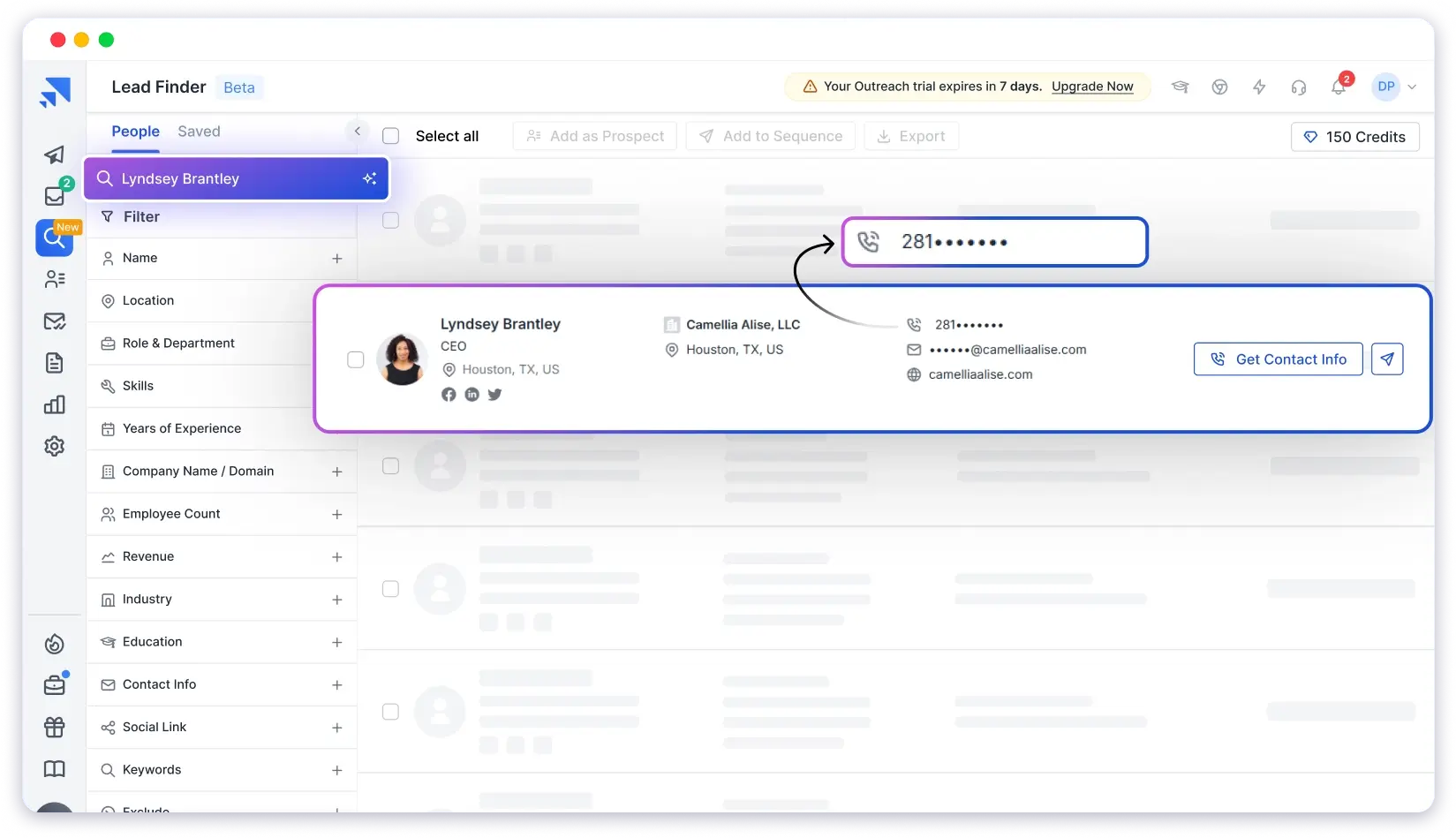
Saleshandy’s Phone Number Finder provides access to 800M+ professional contacts and 60M+ company profiles, which helps you reach the right owners.
This is important when your goal is to speak with decision-makers rather than gatekeepers.
How to Use Cold Calling and SMS to Reach Small Business Owners
Cold calling and SMS outreach should feel intentional. They work best when you respect the owner’s time and context.
Here are the action items to make calling and SMS outreach effective:
- Rely on verified phone numbers instead of scraped lists
- Target owners by role, industry, company size, and location
- Keep calls short and focused on one clear purpose
- Use SMS only when the message adds value
- Explain why you are reaching out
- Respect opt-outs and stop when there is no interest
Saleshandy helps reduce wasted effort by improving phone data quality. Accurate data leads to more relevant conversations and better outcomes.
With proper preparation, cold calling and SMS remain useful ways to reach small business owners who prefer direct communication.
You can also read our guide on finding phone numbers to get started with cold calling outreach.
11. Email Newsletters and Campaigns
Email newsletters help you reach small business owners who have chosen to stay in touch.
These are people who signed up because they found value in what you share.
That makes newsletters different from cold outreach. Building your own email list takes time.
You need sign-up forms, useful lead magnets, and a reason for owners to subscribe.
Once they join, you need to keep them interested. Your content should focus on things owners care about.

What else? You can share tips, updates, and examples related to running a business.
Apart from that, local topics often work well because owners care about what happens around them.
The best part is to avoid selling too early. Use the newsletter to share helpful ideas and build familiarity first.
When trust builds, mentioning your services feels natural. Email newsletters work well over time.
They help you stay visible and useful without pushing for quick decisions.
12. Podcast Guesting and PR Outreach
Podcast appearances help you reach small business owners without pitching. You speak on topics owners already care about and listen to regularly.
This builds trust because the recommendation comes from the host. The key is choosing the right podcast.
You need to find shows that speak to small business owners or local businesses. Make sure to pitch first the smaller and niche podcasts because they often work better than large or general ones.
Some popular podcasts in the US that attract small business owners include:
- The Small Business Radio Show
- The $100 MBA Show
- Smart Passive Income
Apart from well-known shows, industry-specific or local podcasts can be equally effective. Preparation matters more than promotion.
Share practical advice, examples, and lessons from your work. Owners who find value will look you up on their own.
Here are a few quick tips for podcast outreach:
- Appear on podcasts that target business owners
- Talk about actual problems owners face
- Avoid selling your services during the episode
- Give listeners a reason to check your work later
Podcast appearances support other outreach methods. They help business owners trust you before you contact them directly.
Use the Best Way to Reach Small Business Owners
This brings us to the end of this guide on how to reach small business owners. As you saw, the challenge is not effort. It is about choosing the right paths early.
To recap, the most effective ways to reach small business owners are:
- cold email outreach with verified data and proper setup
- LinkedIn outreach that adds context before conversations start
- referrals that come through people owners already trust
You do not need to try everything at once. Start with the channels that match your time, budget, and goals.
When cold email is part of your plan, using a tool like Saleshandy helps you manage leads, deliverability, and outreach without friction.
Pick one path, execute it well, and build from there. That is how reaching small business owners starts working.
FAQs About Reaching Small Business Owners
1. How do I build a high-quality list of small business owners?
Focus on location, size, or even revenue to create a targeted niche in your listing. You can also use a dedicated LinkedIn Sales Navigator or a B2B database like Saleshandy. These strategies can provide you with verified email addresses for your list.
2. Are cold emails still effective for reaching small businesses?
Yes, but they need to be personalised and focused on solving their challenges. Using generic sales pitches is no longer relevant. You need to conduct proper research into your small businesses and address their issues directly. Also, you will need a cold email strategy that includes follow-up emails.
Choosing the best platform depends entirely on your target SMB owner:
- LinkedIn is great for B2B services and performing professional outreach
- Facebook and Instagram are ideal for consumer-facing businesses
- X (Twitter) is mainly effective for engaging tech startup founders