




 Anil Salvi
 Contents
I’ve spoken with dozens of outbound teams about their ABM tools.
And Demandbase comes up in nearly every conversation.
It’s a strong platform.
Account identification, intent data, predictive analytics, and ad orchestration.
For large marketing teams with dedicated RevOps staff, it works.
But here’s what I keep hearing from teams who’ve outgrown it:
- Pricing runs $50K-$150K/year with long-term contracts
- Implementation takes 4-8 weeks before you see any value
- Intent data gets noisy fast due to broad keyword expansion
- Contact-level data is weak, so you still need a separate tool to find the actual person to email
- No built-in outreach. No cold email, no sequences, no dialer
That’s a lot of money for a tool that can’t tell you who to call tomorrow.
I have listed 7 alternatives for it.
Let’s get into detail!
Demandbase Alternatives – TOC
TL;DR: 3 Best Demandbase Alternatives
Not sure which one fits your team? Here’s the short version:
- Saleshandy — 852M+ database with real-time data verification, built-in cold email, CRM, and dialer. Best if you need 98% verified contacts + all in one outreach tool.
- ZoomInfo — Deepest US contact database with org charts, technographics, and intent signals. Built for enterprise sales-led teams.
- 6sense — The closest 1:1 Demandbase replacement with predictive buying-stage AI and full ABM orchestration.
But these are my personal favourites, and if you want an overview of all 7 tools, here’s what can help you.
| Tool | Database Size | Intent Data | Outreach | CRM | Best For |
|---|---|---|---|---|---|
| Saleshandy Lead Finder (Best Overall) | 852M+ | ❌ | ✅ | ✅ | B2B prospecting + outreach |
| ZoomInfo | 500M+ | ✅ | ❌ | ✅ | Enterprise data intelligence |
| 6sense | Undisclosed | ✅ | ❌ | ❌ | Full ABM replacement |
| Apollo.io | 275M+ | — | ✅ | ✅ | Budget-friendly all-in-one |
| Cognism | 400M+ | ✅ | ❌ | ❌ | EMEA + compliance-first |
| RollWorks | Undisclosed | ✅ | ❌ | ❌ | Mid-market ABM ads |
| Leadfeeder | N/A (visitor ID) | ✅ | ❌ | ❌ | Website visitor tracking |
How I Evaluated These Demandbase Alternatives
To find viable replacements, I prioritized the following:
- Database size and accuracy — Can you actually find the right contacts, and are they verified?
- Outreach capabilities — Does it let you act on the data, or do you need another tool?
- Pricing transparency — No surprise costs, complex credit traps, or hidden modules
- Time to value — Can your team start using it this week, or does it take 8 weeks to implement?
- G2 and Capterra ratings — What are actual users saying?
Now, let me break down each alternative in detail.
7 Best Demandbase Alternatives (In-Depth Review)
Here are the seven Demandbase alternatives discussed in detail based on features, pros and cons and pricing.
1. Saleshandy Lead Finder
Most teams I’ve spoken with who are leaving Demandbase aren’t looking for another ABM command centre.
They want to find the right contacts and reach out to them, and that’s it.
Saleshandy does exactly that.
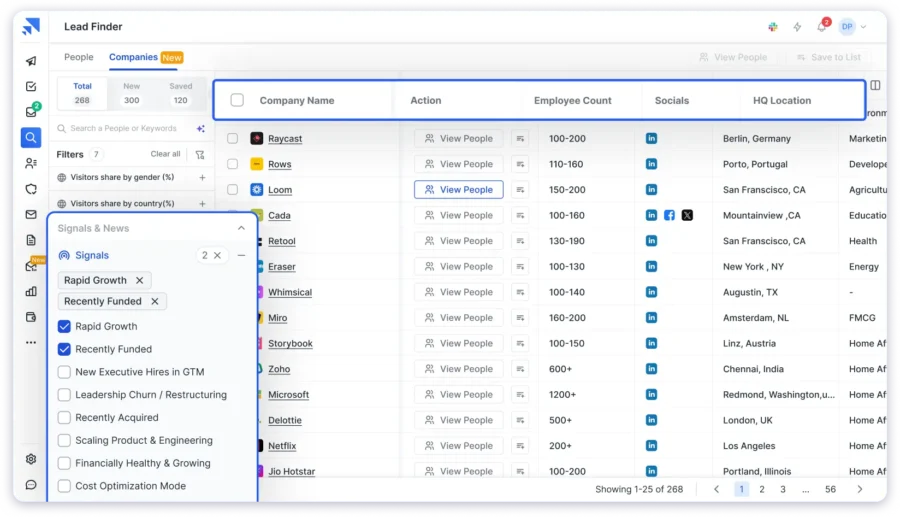
It gives you an 852M+ B2B contact database with 75+ filters, cold email automation with multi-step sequences, a built-in CRM with Kanban pipeline, and a dialer for US/Canada.
Demandbase tells you which accounts are showing intent.
Saleshandy gives you the verified contact at that account and lets you reach out through email, phone, calls and LinkedIn.
Put simply, Demandbase gives you signals, and Saleshandy gives you the person behind those signals and a way to reach them.
What I found particularly impressive is the waterfall enrichment. Saleshandy checks 9 premium data providers sequentially until it finds a verified email and phone number.
You only pay when a verified contact is delivered. That’s a much better deal than burning credits on stale data.
Key Features:
- Lead Finder with 852M+ contacts across 42M+ companies and 75+ advanced search filters.
- AI-powered lead search that describes your ICP and gets targeted results.
- Waterfall enrichment that pulls from 9 premium data providers for each contact.
- Multi-step cold email sequences with automated follow-ups and A/Z variant testing.
- Unlimited email accounts and sender rotation across all plans.
- Saleshandy CRM with Kanban-style pipeline for managing prospect progress.
- Built-in dialer for US/Canada with AI-generated call summaries.
Pros:
- It is an all-in-one cold outreach platform.
- Flat-rate pricing with no per-user charges.
- For agencies, the white-label branding and unlimited client management on Scale plans are hard to beat at this price.
- Setup takes minutes.
Cons:
- They provide only a 7-day free trial.
Pricing (Billed Annually):
- Gives a 7-day free trial and up to 50 free credits.
- Lead Starter: $49/mo (30,000 credits/year)
- Lead Pro: $79/mo (48,000 credits/year, 75+ advanced filters)
- Custom: Contact sales
2. ZoomInfo
If Demandbase is an ABM command center, ZoomInfo is a data command center.
I see it as the best alternative for teams that want to go from ABM-first to data-first, especially in the US market.
The strength here is database depth.
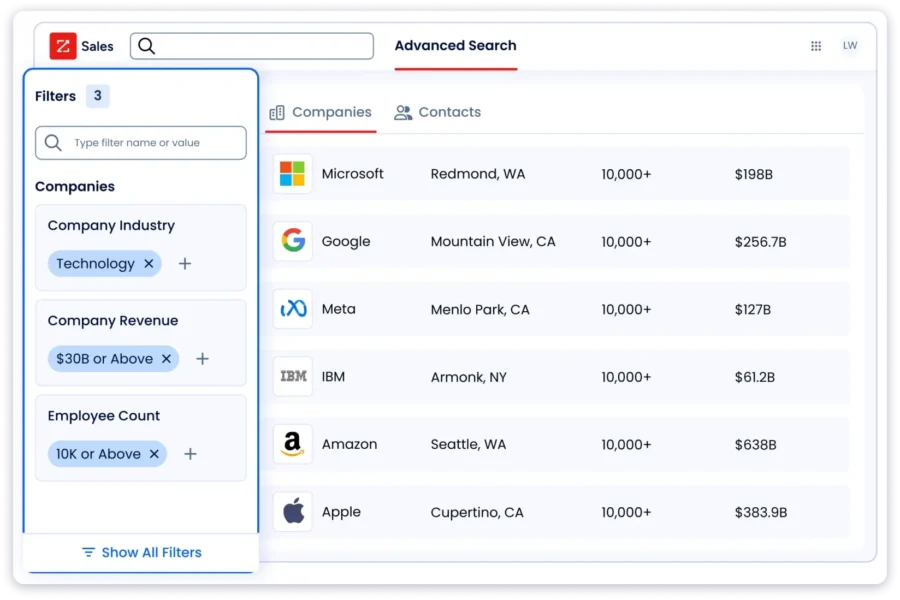
You get verified direct dials, org chart mapping that shows the full buying committee, and technographic data revealing a company’s tech stack.
And Streaming Intent that catches companies researching topics relevant to your product.
Where ZoomInfo separates from Demandbase, in my experience, it maps directly to individual contacts and daily rep workflows.
If your team cares more about “give me the VP of Engineering’s direct number” than “show me which accounts are in the consideration stage,” ZoomInfo is the better bet.
Key Features:
- 500M+ B2B contact database, 100M companies with verified direct dials and mobile numbers.
- Streaming Intent data and website visitor tracking.
- Org chart mapping with buying committee visibility.
- Advanced search filters with technographic, firmographic, and company data.
- CRM enrichment and automated workflow triggers.
- Conversation intelligence via Chorus for analyzing sales calls.
Pros:
- Strongest US contact coverage, especially for direct dials and verified mobiles.
- Data, intent, and engagement tools all live in one platform.
- More useful for daily sales execution than Demandbase’s marketing-heavy setup.
Cons:
- Pricing is complex; credits, modules, and seats stack up quickly.
- EMEA and international data are noticeably weaker than US coverage.
- Smaller teams often find it overwhelming to set up and navigate.
- Auto-renewals and contract lock-ins are a frequent complaint on G2.
Pricing:
- It has custom pricing
- Based on market data and G2 reviews, expect $15,000-$40,000+/year depending on modules, seat count, and credit volume.
3. 6sense
If you genuinely need a full ABM platform, not just a prospecting tool, 6sense is the closest 1:1 Demandbase replacement I have found.
It does account identification, intent data, buying-stage prediction, ad targeting, and revenue forecasting in one system.
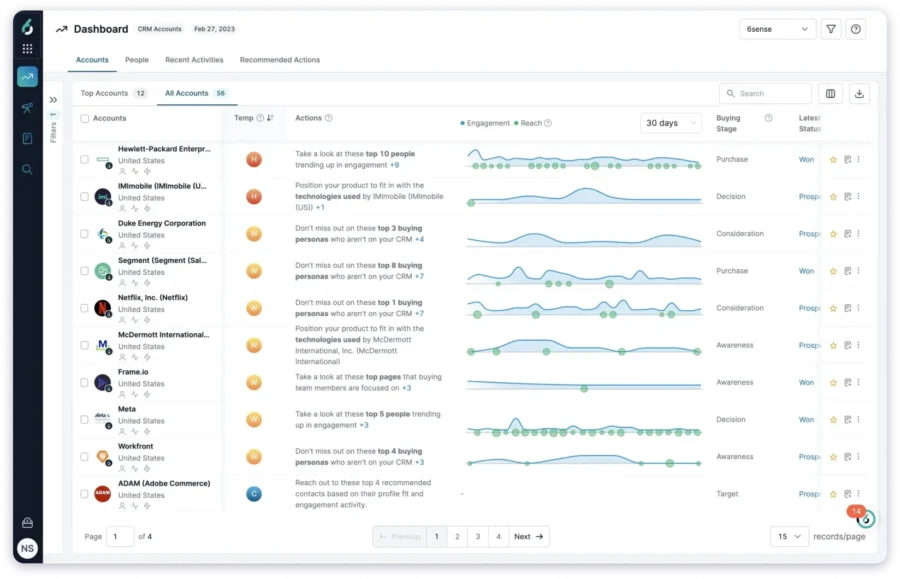
The standout is its predictive AI that classifies accounts by buying stage and gets smarter over time using your CRM data.
Teams switching from Demandbase to 6sense usually say two things: the intent signals are cleaner, and time-to-value is faster.
Key Features:
- AI-powered predictive analytics that classify accounts by buying stage.
- Account-level intent data from trillions of daily behavioural signals.
- ABM, ad orchestration, and audience targeting across display and social.
- Website visitor identification at the company level.
- Revenue AI for pipeline prediction and forecasting.
- Native integrations with Salesforce, Marketo, HubSpot, Outreach, and SalesLoft.
Pros:
- The closest thing to a full Demandbase replacement for ABM.
- Predictive models improve as they learn from your CRM data.
- Marketing and sales get a shared view of account engagement.
- Teams switching from Demandbase report larger pipelines and higher win rates.
Cons:
- Takes 4–8 weeks to implement and usually needs a dedicated RevOps admin.
- G2 reviewers rate usability around 5/10, indicating a steep learning curve.
- No email sequencing or dialer; you still need a separate outreach tool.
Pricing:
- Free plan available with 50 credits/month (too limited for real use).
- Custom Pricing for the rest of the plans.
4. Apollo.io
Apollo.io is a popular Demandbase alternative for teams that realised they don’t need full ABM at all.
It combines a 275M+ contact database with built-in email sequences, a dialer, and basic intent data at roughly 95% less cost than Demandbase.
The appeal for me is the simplicity.
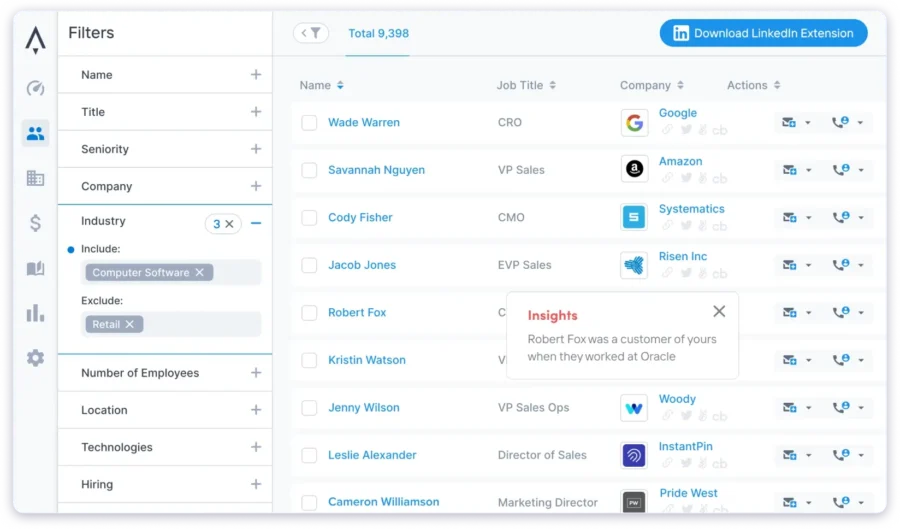
One workspace where you search contacts, build lists, launch sequences, make calls, and manage deals.
For a founder or a 5-person SDR team, that’s often everything you need.
The trade-off?
Data accuracy, getting stale and obsolete data are a few of the concerns users on G2 have mentioned, and I felt it too.
So plan to verify contacts before running high-volume campaigns.
Key Features:
- 275M+ contact database with email and phone data.
- Built-in email sequences with A/B testing (Professional and above).
- US Auto Dialer on Professional, International Dialer on Organization.
- AI lead scoring that matches contacts against your ICP.
- Basic intent data and buying signals.
- CRM with deal management and pipeline views.
- Chrome extension for LinkedIn prospecting.
Pros:
- The free plan provides good feature coverage.
- Data, outreach, CRM, and dialer in one workspace — no stack assembly needed.
- Most teams are up and running within a day or two.
Cons:
- Data accuracy sits around 65–80% based on G2 reviews, so expect some bounces at scale.
- Credits expire every billing cycle, and buying more adds up quickly.
- Deliverability requires manual attention as you scale volume.
Pricing (Billed Annually):
- Free Plan available.
- Basic: $49/UserMonth
- Professional: $79/User/Month
- Organization: $149/Month
5. Cognism
Cognism fills a gap that Demandbase and most US-centric tools don’t cover, which is compliant, accurate contact data for European markets.
The standout is Diamond Data, which gives verified mobile numbers that Cognism’s team manually validates.
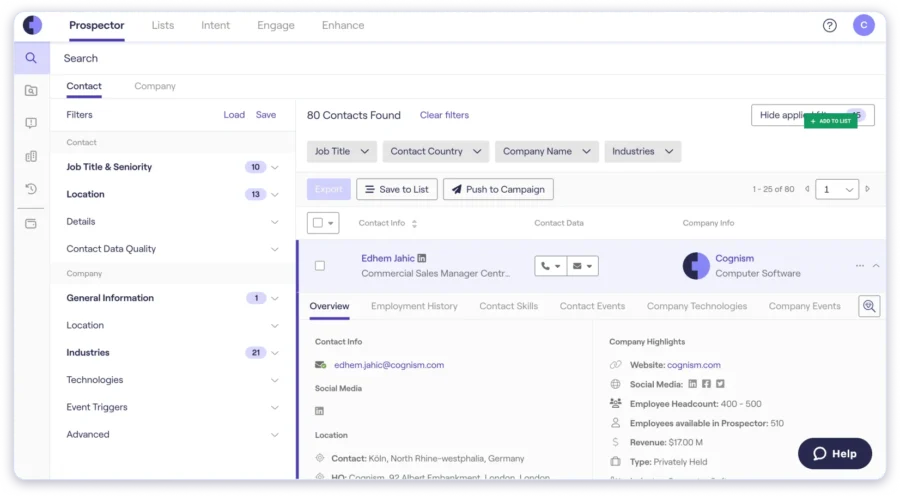
If your sales motion relies on cold calling in EMEA, a verified mobile number that connects is worth more than 100 unverified numbers that bounce.
It also integrates Bombora intent data for account-level buying signals.
Key Features:
- Diamond Data with phone-verified mobile numbers validated by Cognism’s research team.
- GDPR and CCPA compliant by design with DNC screening across 15 countries.
- Bombora intends to integrate data for account-level buying signals.
- Real-time CRM enrichment for Salesforce and HubSpot.
- Chrome extension for LinkedIn prospecting and one-click data capture.
- Global coverage with strength in EMEA and expanding US data.
Pros:
- Best data accuracy for EMEA prospecting, especially phone-verified mobiles.
- Strong CRM integrations with Salesforce, HubSpot, and Outreach.
- Cold call connect rates are consistently higher than unverified databases.
Cons:
- No public pricing; you need to talk to sales for a quote.
- APAC data coverage is weaker than EMEA and the US.
- No cold email sequences or outreach automation included.
- Smaller overall database due to prioritizing accuracy over volume.
Pricing:
- Custom quotes only, and you have to contact Cognism for a tailored plan based on your team size and target regions.
6. RollWorks
RollWorks is the leaner ABM option for teams that mainly need account-based ads and identification, not full orchestration.
It handles the basics well.
Target accounts, run display and social campaigns, track engagement, and score accounts by fit and intent.
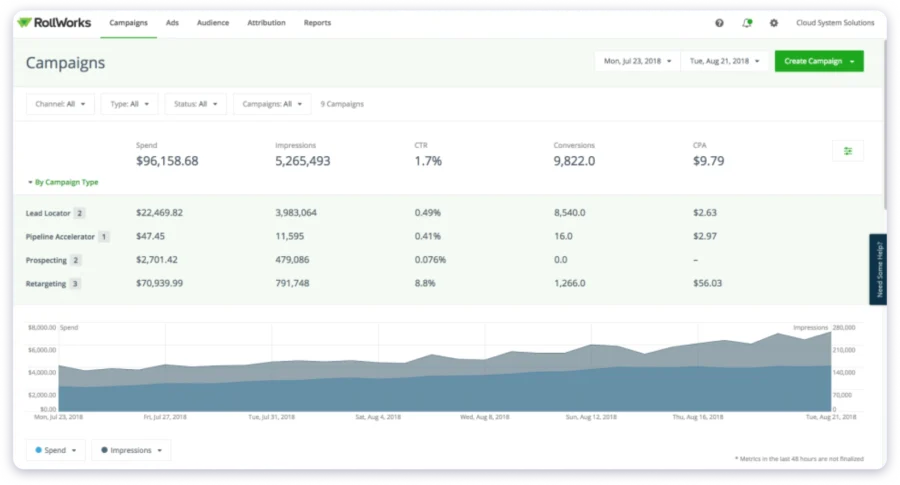
Setup is fast, HubSpot integration is the strongest I’ve seen among ABM tools, and the price point is significantly lower than Demandbase or 6sense.
The trade-off is that it’s ad-focused, so you’ll need a separate tool for contact data and outreach.
Key Features:
- ABM account identification and targeting using firmographic and intent data.
- Cross-channel ad campaigns across display and social.
- BidIQ engine for automated bid optimization.
- Pre-built ICP models for faster program setup.
- Intent data powered by the Bombora partnership.
- Account engagement scoring for tracking which accounts are interacting with your campaigns.
Pros:
- Goes live in days, not the months Demandbase or 6sense require.
- Best HubSpot integration among ABM tools.
- More affordable entry point for ABM.
- Good for teams testing ABM without committing to a full enterprise platform.
Cons:
- Limited contact data.
- Primarily built for ads, so it won’t help much with outbound email or phone outreach.
- No email sequences or sales engagement features included.
Pricing:
Custom pricing based on account volume, ad spend, and features.
7. Leadfeeder (by Dealfront)
Leadfeeder (now Dealfront) is the best Demandbase alternative for teams whose main intent signal is website traffic.
It does one thing well, which is to identify which companies visit your site and push that data to your CRM.
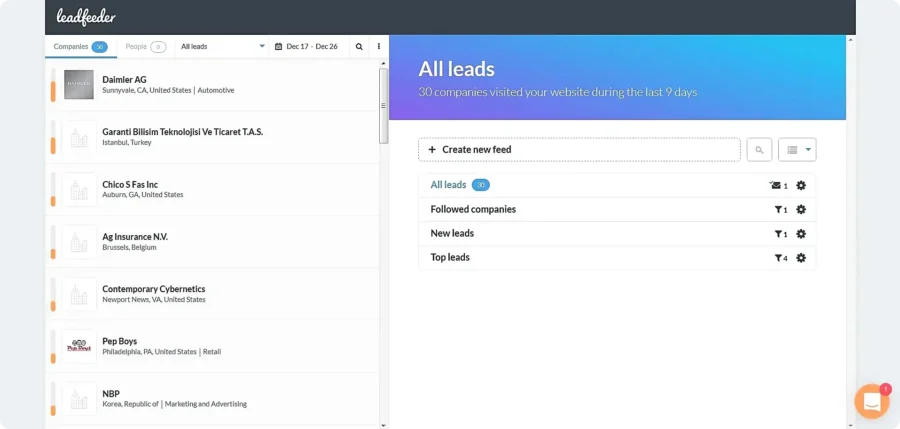
Connect Google Analytics, and you start seeing results within hours.
For teams already using an outbound tool like Saleshandy or Apollo, Leadfeeder works well as a warm-intent layer to identify who’s browsing.
Then find the right contact and reach out while interest is fresh.
Key Features:
- Website visitor identification at the company level.
- First-party intent signals from page visits, time on site, and engagement.
- Lead scoring and qualification for prioritizing high-value visitors.
- CRM integrations with Salesforce, HubSpot, Pipedrive, and more
- Custom feeds to filter and segment visitors by company attributes or behaviour.
- GDPR-compliant and fully EU-hosted.
Pros:
- The fastest time-to-value; you can see identified visitors within hours.
- Transparent pricing with a free plan for testing.
- Full GDPR compliance with EU hosting, strong for European teams.
- Works well alongside outbound tools as a warm-intent signal layer.
Cons:
- Company-level identification only; no names, emails, or phone numbers.
- Requires an active Google Analytics account to work.
- Not a full ABM or outreach platform; the feature set is intentionally narrow.
Pricing:
- Lite: Free plan
- Website Visitor Identification: € 99/month
- Platform: €399/month
Final Verdict: Which Demandbase Alternative Should You Pick?
I chose Saleshandy as the top alternative because it solves the core problem of finding verified contacts and reaching out to them, without paying $50K+ for a platform you’ll half-use.
852M+ database, multichannel outreach, CRM, and dialer in one tool starting at $25/month.
That math is hard to argue with.
But if Saleshandy doesn’t fit your workflow:
- Need full ABM with predictive intent? → 6sense
- Need deep US contact data with org charts? → ZoomInfo
- Need data + outreach on a tight budget? → Apollo.io
- Selling into Europe with compliance requirements? → Cognism
The takeaway is simple: most teams leaving Demandbase don’t need another heavyweight ABM platform.
They need contacts they can trust and a way to reach them today.
FAQs on Demandbase Alternatives
1. What Is the Best Free Alternative to Demandbase?
Apollo.io offers the strongest free plan with 1,200 annual credits and 2 active sequences.
Saleshandy gives you 50 free credits to test Lead Finder data quality. Leadfeeder has a free plan for basic website visitor identification.
2. Can Small Teams Use Demandbase Alternatives Effectively?
Yes, tools like Saleshandy and Apollo are built for teams of 1-20 people. No RevOps admin needed. Demandbase typically requires weeks of setup and ongoing management that small teams don’t have bandwidth for.
3. What Is the Cheapest Demandbase Alternative?
Saleshandy starts at $25/month (Outreach) and $49/month (Lead Finder).
Apollo starts at $49/user/month. Both are a fraction of Demandbase’s typical $50,000-$150,000+/year contracts.
4. Do Demandbase Alternatives Offer Intent Data?
Some do, 6sense has the deepest intent data with predictive buying-stage models. ZoomInfo and Cognism offer intent signals, too. Saleshandy and Apollo focus on contact accuracy and outreach instead, which works better for teams that prioritise action over signals.
5. How Do I Migrate from Demandbase to Another Platform?
Export your target account lists from Demandbase. Most alternatives offer guided onboarding for imports.
For tools like Saleshandy, you can rebuild lists in minutes using Lead Finder filters instead of migrating data. Run both tools in parallel for 1-2 months to avoid pipeline gaps.


Find Leads, Automate Outreach, Book More Meetings


Recent Articles





More Articles
- 7 CFO Email List Providers That Give You Verified Data (2026)
- How to Find CEO Email Addresses in 2026 (9 Proven Free + Paid Methods)
- How to Find Wholesale Buyers for Export in UAE, EU & US (Step-by-Step)
- How to Find Real Estate Investors & Their Verified Contact Information
- 8 Best LeadIQ Alternatives and Competitors in 2026
- 9 Best CIO Email List Providers in 2026 [Verified + Compared]
- How to Build a High-Quality Real Estate Broker Email List
- 14 Best Apollo.io Alternatives & Competitors I Tested for Prospecting (2026)
- How to Find the Email & Phone of a Company Using Their SIC Code
- 5 Ways to Find Contact Details of Import Export Companies (Paid + Free)
- 8 Best IT Decision Makers Email List Providers in 2026
- 9 Best FindThatLead Alternatives I’d Actually Recommend 2026