


 Anil Salvi
 Contents
- 1 Technographics Data Providers – TOC
- 2 TL;DR: Quick Overview
- 3 What Is Technographic Data?
- 4 Why It Matters for B2B Outbound
- 5 How I Evaluated These Providers
- 6 Quick Comparison Table
- 7 10 Best Technographic Data Providers
- 8 How to Choose the Right Technographic Data Provider
- 9 Final Verdict
- 10 FAQs on Technographics Data Providers
- 10.1 1. How do technographic data providers collect this data?
- 10.2 2. What is the difference between technographic and firmographic data?
- 10.3 3. Can I use technographic data for cold email outreach?
- 10.4 4. Which technographic data provider is best for small teams?
- 10.5 5. Is technographic data GDPR compliant?
- 10.6 6. How accurate is technographic data?
Your prospect uses HubSpot.
They just switched from Mailchimp.
Their contract renews in two months.
If you knew that before hitting send, your cold email would not sound like everyone else’s.
That’s the power of technographic data.
It shows you the exact tools a company runs, so your outreach feels timely, relevant, and intentional instead of generic.
The catch? There are dozens of providers. Some offer deep tech insights but no contacts.
Others bundle everything and price it for enterprise teams.
To make this easier, I compared 10 leading technographic data providers so you can choose the right one for your outbound strategy.
Let’s dive into detail!
Technographics Data Providers – TOC
TL;DR: Quick Overview
Here’s the short breakdown of the top options and where each one fits best.
1. Best All-in-One (Data + Outreach): Saleshandy Lead Finder, 800M+ contacts, technographic filters, built-in cold email, starts at $49/mo.
2. Best for Deep Tech Intelligence: ZoomInfo, tracks 30,000+ technologies, enterprise-grade, ~$30K+/year.
3. Best for EMEA Compliance: Cognism, GDPR-first, DNC-checked mobiles, strong coverage across Europe.
4. Best for Web Tech Detection: BuiltWith, historical tech adoption data across millions of websites.
5. Best for Intent + Technographics: Bombora, combines buying signals with tech stack data for ABM.
What Is Technographic Data?
Technographic data is information about the software and tools a company uses.
Their CRM, email marketing platform, cloud infrastructure, analytics stack, security tools, all of it.
Think of it like firmographic data, but instead of telling you how big the company is, it tells you what is running under the hood.
For B2B sales prospecting, this is powerful because you can tailor your pitch around tools they already know.
Why It Matters for B2B Outbound
There are four ways I have seen outbound teams use technographic data that actually move the needle:
- Target Competitor Users Directly: Know who uses a rival product and pitch your alternative at the right time.
- Build Sharper Lead Lists: Filter by tool combinations instead of just industry or company size.
- Write Better Cold Emails: Mentioning a prospect’s actual tech stack makes the email feel personal, not templated.
- Size Your Market Accurately: Count companies running technologies that signal they need what you sell.
How I Evaluated These Providers
Here is what I compared across all 10 tools:
- Technology Coverage – How many technologies does it track? Web-facing only or internal enterprise tools, too?
- Data Accuracy – Real-time verification or batch updates that go stale?
- Contact Data Bundled – Can you get verified emails and phones alongside tech data, or is it company-level only?
- Outreach Capability – Can you act on the data immediately, or do you need a separate tool?
- Pricing Transparency – Flat-rate, credit-based, or locked behind enterprise contracts?
- Compliance – GDPR, CCPA, SOC 2 coverage
Quick Comparison Table
Let’s understand each tool with a detailed comparison table.
| Provider | Tech Coverage | Contact Data | Starting Price | Best For |
|---|---|---|---|---|
| Saleshandy Lead Finder | 75+ filters incl. technographics | 800M+ verified contacts | $24/mo | Outbound teams needing data + outreach in budget |
| ZoomInfo | 30,000+ technologies | 260M+ contacts | $30K/yr | Enterprise GTM with deep tech intelligence |
| Cognism | EMEA tech tracking + DNC checking | Verified mobiles | Custom | EMEA-focused teams with phone outreach |
| Apollo.io | Technology filters in the database | 210M+ contacts | Free & $49/user/mo | SMB prospecting |
| BuiltWith | Millions of web technologies | No contact data | $295/mo | Market research and competitive intelligence |
| HG Insights | IT spend + contract intelligence | Limited | Custom | Enterprise sales with Fortune 5000 targets |
| Bombora | Intent signals + tech data | No | Custom | ABM marketing teams |
| SalesIntel | Human-verified tech data | Human-verified contacts | Custom | Accuracy-first teams |
| Clearbit (HubSpot) | Real-time tech enrichment | Enrichment only | Bundled with HubSpot | HubSpot ecosystem users |
| Demandbase | ABM technographic targeting | Account-level | Custom | ABM display campaigns |
10 Best Technographic Data Providers
Let’s take each tool and decode what it is, its key features, pricing, pros, and cons, so you can get a complete picture of each tool.
And pick what suits you best.
- Saleshandy Lead Finder
- ZoomInfo
- Cognism
- Apollo.io
- BuiltWith
- HG Insights
- Bombora
- SalesIntel
- Clearbit
- Demandbase
1. Saleshandy Lead Finder (Recommended and #1 Pick)
Best for: Outbound teams that want to filter leads by technology, verify contacts, and send cold emails all from one platform.
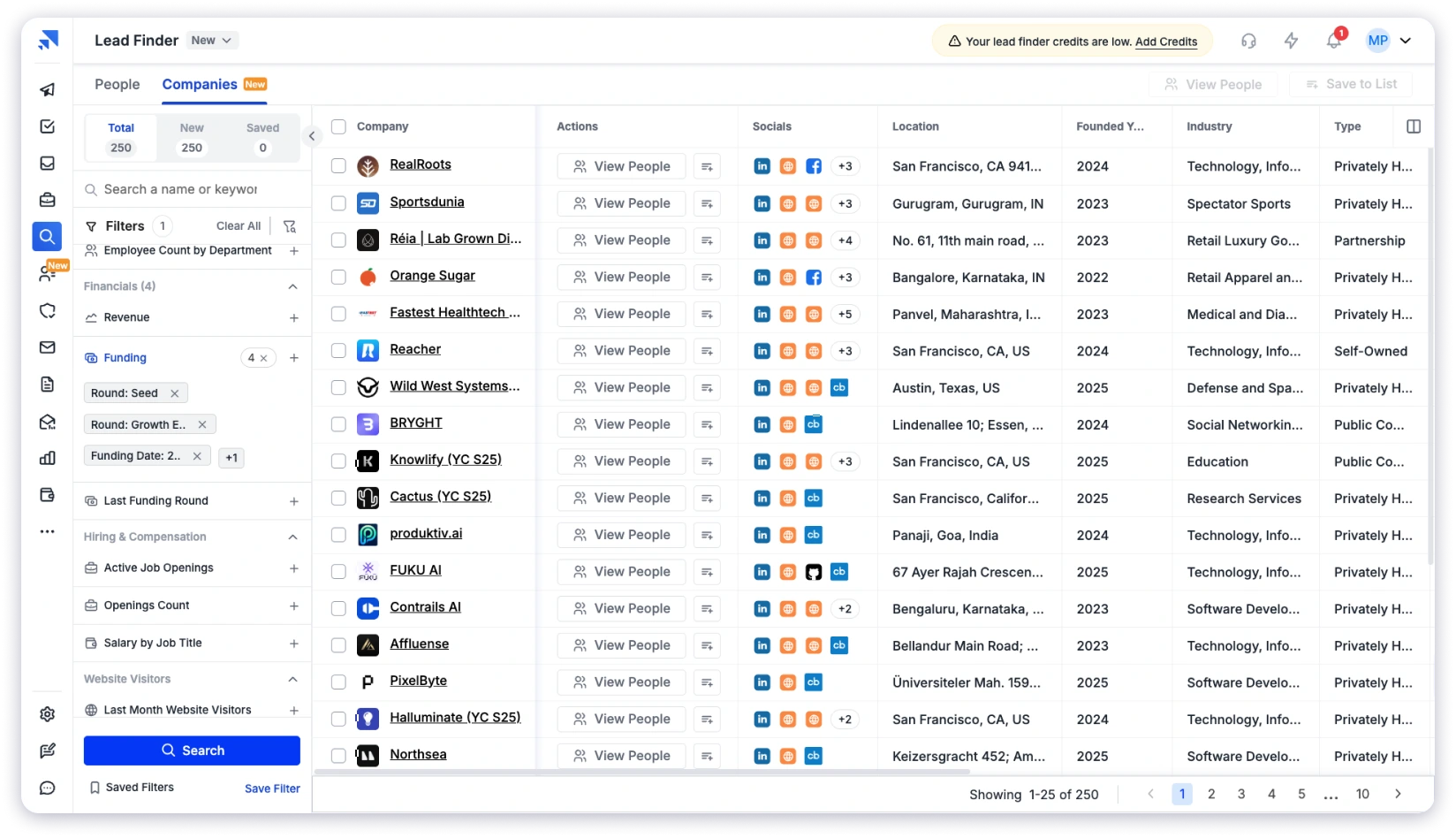
Saleshandy Lead Finder combines a database of 800M+ B2B contacts with technographic filters.
So you can build lead lists based on what technologies your prospects use and start outreach without leaving the platform.
Not only this, but they also provide buying signals, growth signals, news, website visitor filters, etc alongside technographic.
Key Technographic Features:
- 75+ filters, including technographic data filter by specific tools and software companies use
- AI Lead Search describes your ideal prospect in plain text, and AI applies filters automatically
- Real-time verification at the point of reveal credits only used for verified data
- Buying signals showing company-level intent alongside tech stack data
- One-click import into cold email sequences with sender rotation and warm-up
- Waterfall enrichment from multiple verified sources
- Built-in CRM with Kanban pipeline and prospect activity timeline
Advantages:
- Find leads by tech stack, verify, and launch campaigns without switching tools
- Flat-rate pricing, no per-user charges
- Unused credits roll over to the next billing cycle
Limitations:
- Free trial extends upto 7 days only.
Pricing:
- 7-day free trial with 50 free credits.
- Lead Starter: $49/month (annual) – 30,000 credits/year upfront
- Lead Pro: $79/month (annual) – 48,000 credits/year upfront
- Custom Plan
For a detailed breakdown of all Saleshandy plans, check out this pricing guide.
2. ZoomInfo
Best for: Enterprise GTM teams that need the deepest technology intelligence on the market with contract renewal signals and adoption timelines.
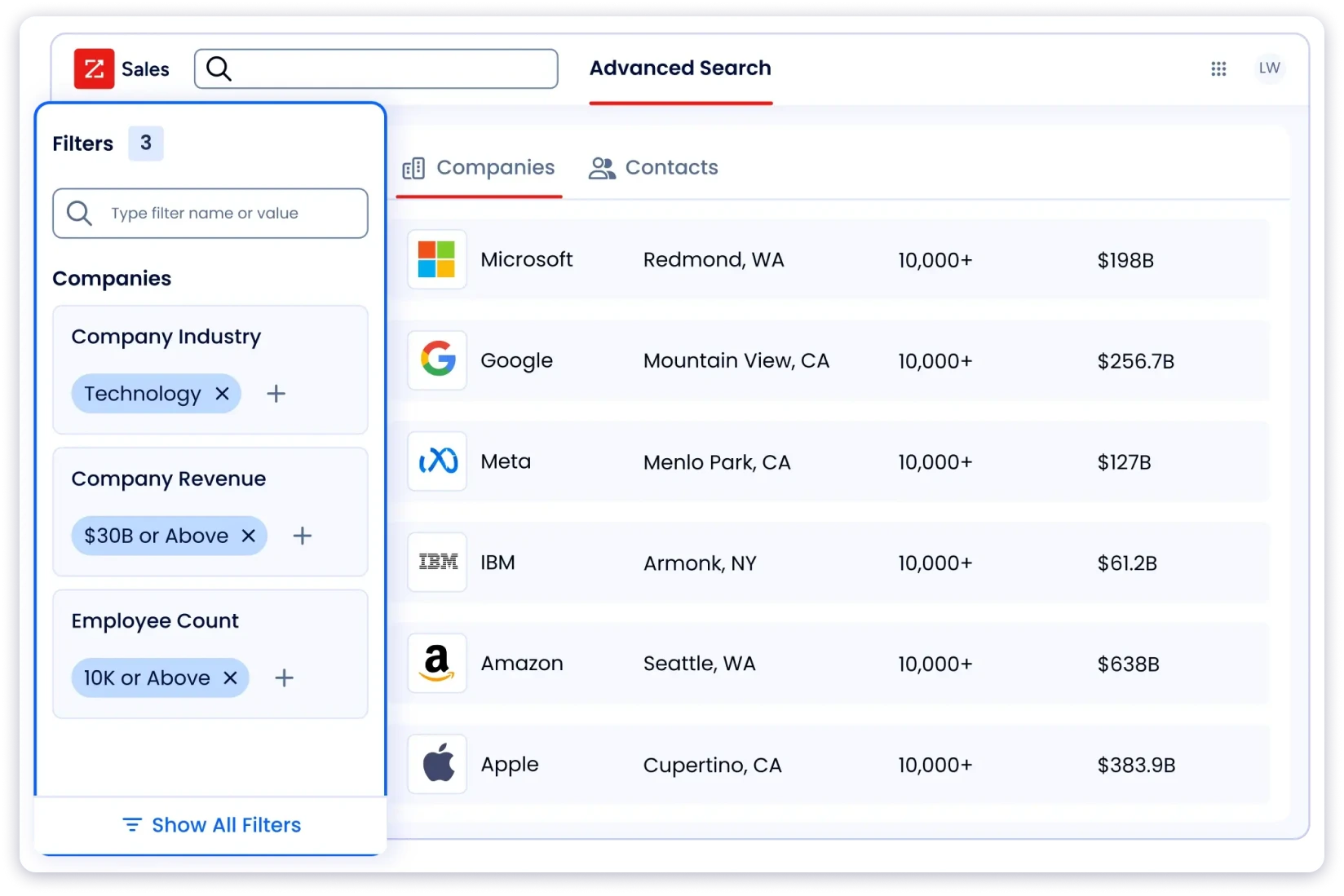
ZoomInfo tracks over 30,000 technologies and pairs that data with contact information, firmographics, and intent signals.
If you need to know exactly what software a target account runs, when they adopted it, and when contracts are up for renewal.
ZoomInfo goes deeper than anyone else.
Key Technographic Features:
- 30,000+ technologies with continuous updates and adoption timelines
- Contract renewal alerts for timing outreach around buying windows
- Department-level tech usage for account-based targeting
- AI Copilot surfaces accounts based on tech buying signals
- Native CRM integrations with Salesforce, HubSpot, and MS Dynamics
Advantages:
- Deepest technology coverage on this list
- Historical adoption data and contract intelligence are unique
- Combines technographics with intent, contacts, and firmographics
Limitations:
- $30K/year starting enterprise budgets only
- No built-in cold email, and need separate cold email software
- Lock in contracts
- Add-on pricing itself doubles pricing, and annual credits start from 5k only
- Extra charges for data verification, enrichment (these both account for $10k+)
Pricing:
Custom. Annual contracts starting at approximately $30K/year. No public free trial.
3. Cognism
Best for: Sales teams selling into Europe that need GDPR-compliant technographic data with verified phone numbers.
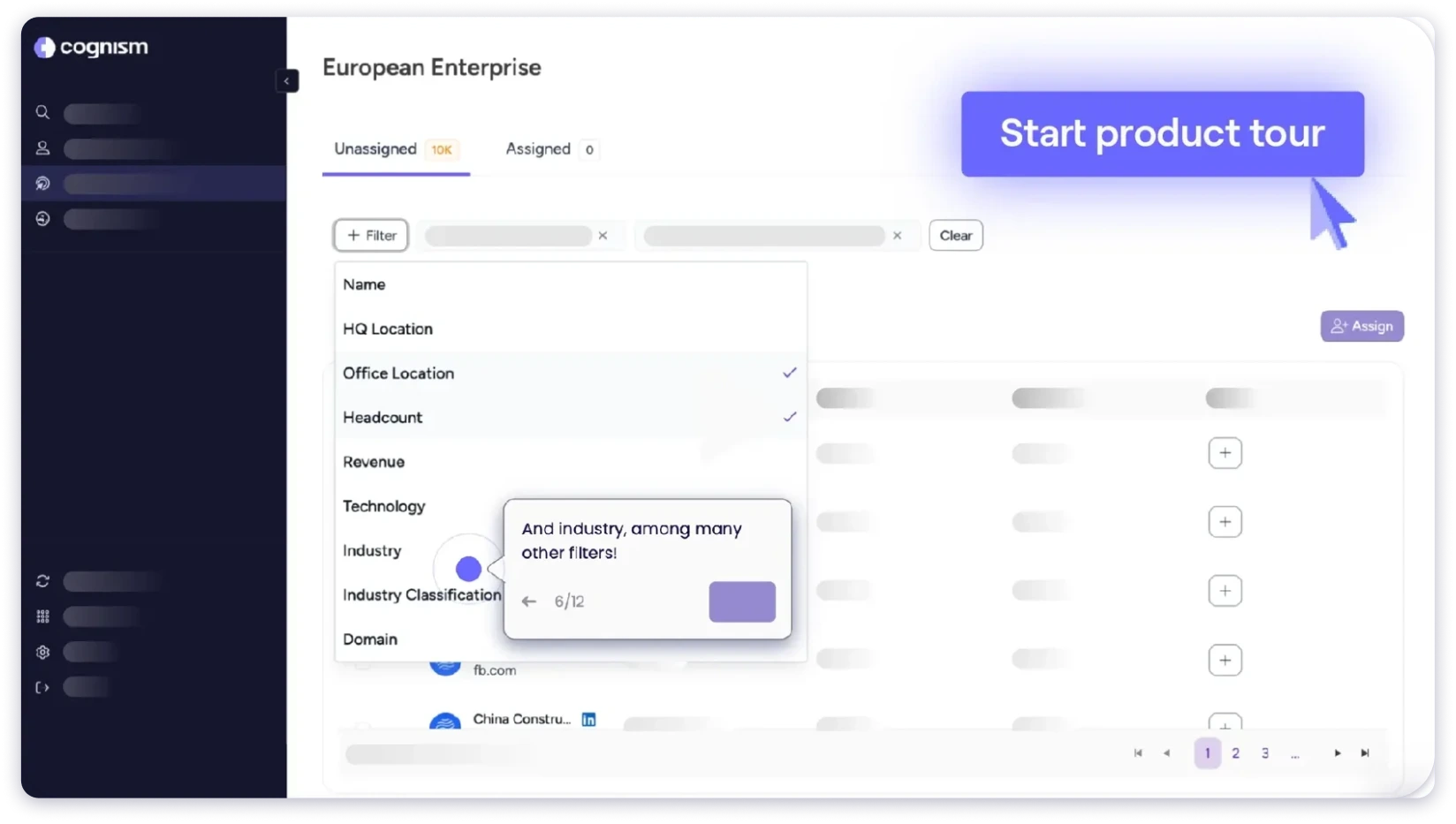
Cognism checks phone data against Do Not Call lists in 13 countries, and their Diamond Verified contacts claim an 87% connection rate.
If your outbound motion is phone-first in EMEA, Cognism was purpose-built for that use case.
Key Technographic Features:
- GDPR/CCPA compliant with DNC checking across 13 countries
- Diamond Verified mobile numbers and emails
- Bombora intends to integrate data integration
- Browser extension for on-demand tech lookups
- CRM integrations with Salesforce, HubSpot, and Pipedrive
Advantages:
- Strongest EMEA compliance story
- Verified mobiles are a real differentiator for phone outreach
- Intent + tech pairing helps prioritize accounts
Limitations:
- No transparent pricing and demo required
- Weaker US coverage
- No built-in cold email tools
Pricing:
Custom only. Fair usage policy instead of hard credit caps. Demo required.
4. Apollo.io
Best for: SMB teams that want a free starting point with technology filters and built-in email sequences.
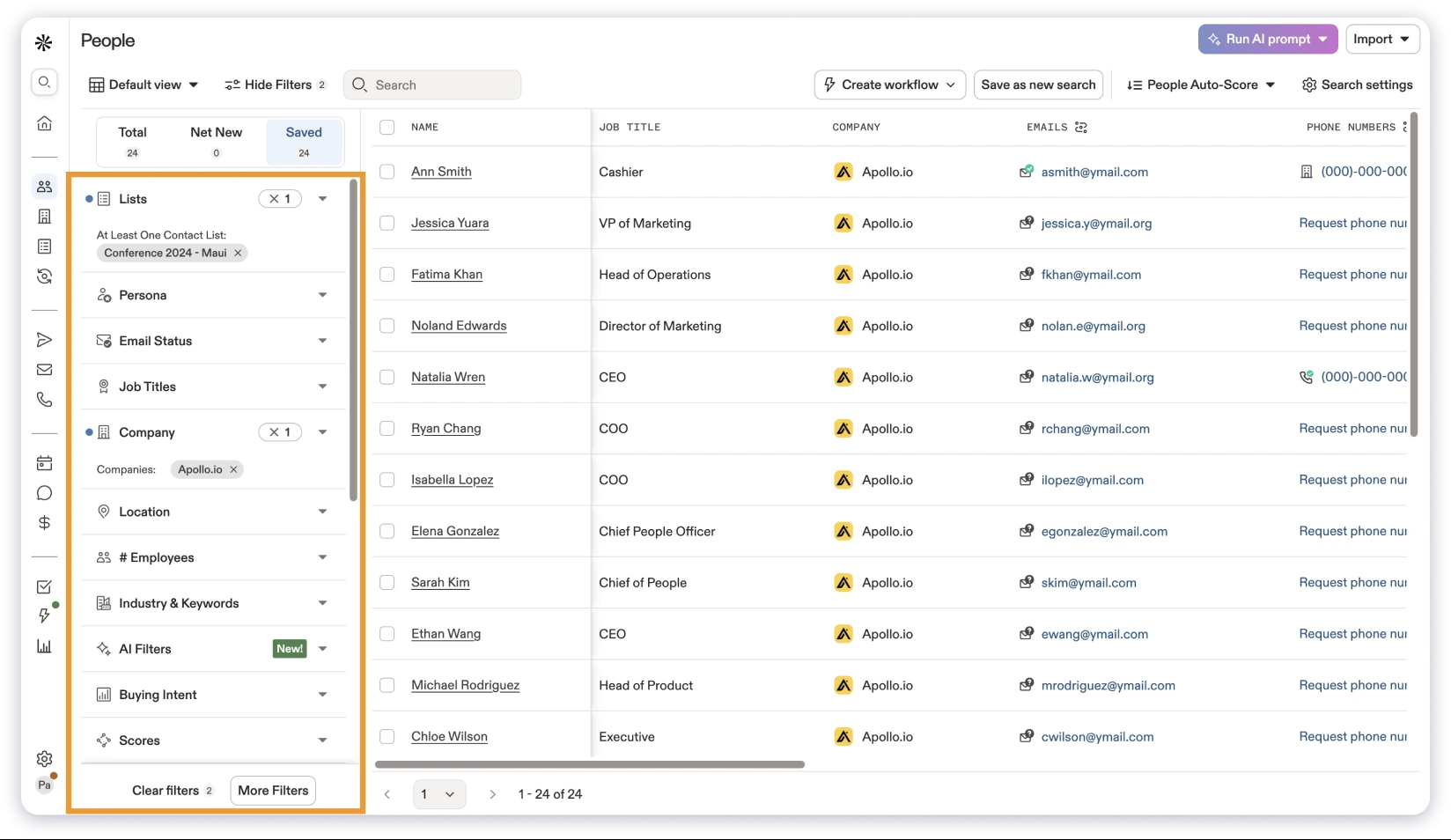
Apollo.io has a generous free tier and includes technology-based filters in its database of 210M+ contacts.
The catch is the per-user pricing and dual credit system.
Emails cost 1 credit, but phone numbers cost 8 credits each, which adds up fast at scale.
Key Technographic Features:
- Technology filters within 210M+ contact database
- Built-in email sequences and engagement tools
- Intent data from Bombora and LeadSift
- Chrome extension for LinkedIn prospecting
- CRM integrations with Salesforce and HubSpot
Advantages:
- Free plan for solo founders and small teams
- Built-in outreach and no separate tool needed
- Large user community and active development
Limitations:
- Per-user pricing adds up
- Credits expire each billing cycle, no rollover
- Advanced tech filters are locked behind higher plans
- No credit refund in case of bad data
Pricing:
- Free plan available
- Basic: $49/user/month (annual)
- Professional: $79/user/month
- Organization: $119/user/month (min 3 users)
5. BuiltWith
Best for: Market research and competitive intelligence teams that need to track web technology adoption at scale with historical data.
BuiltWith is the original technographic data platform.
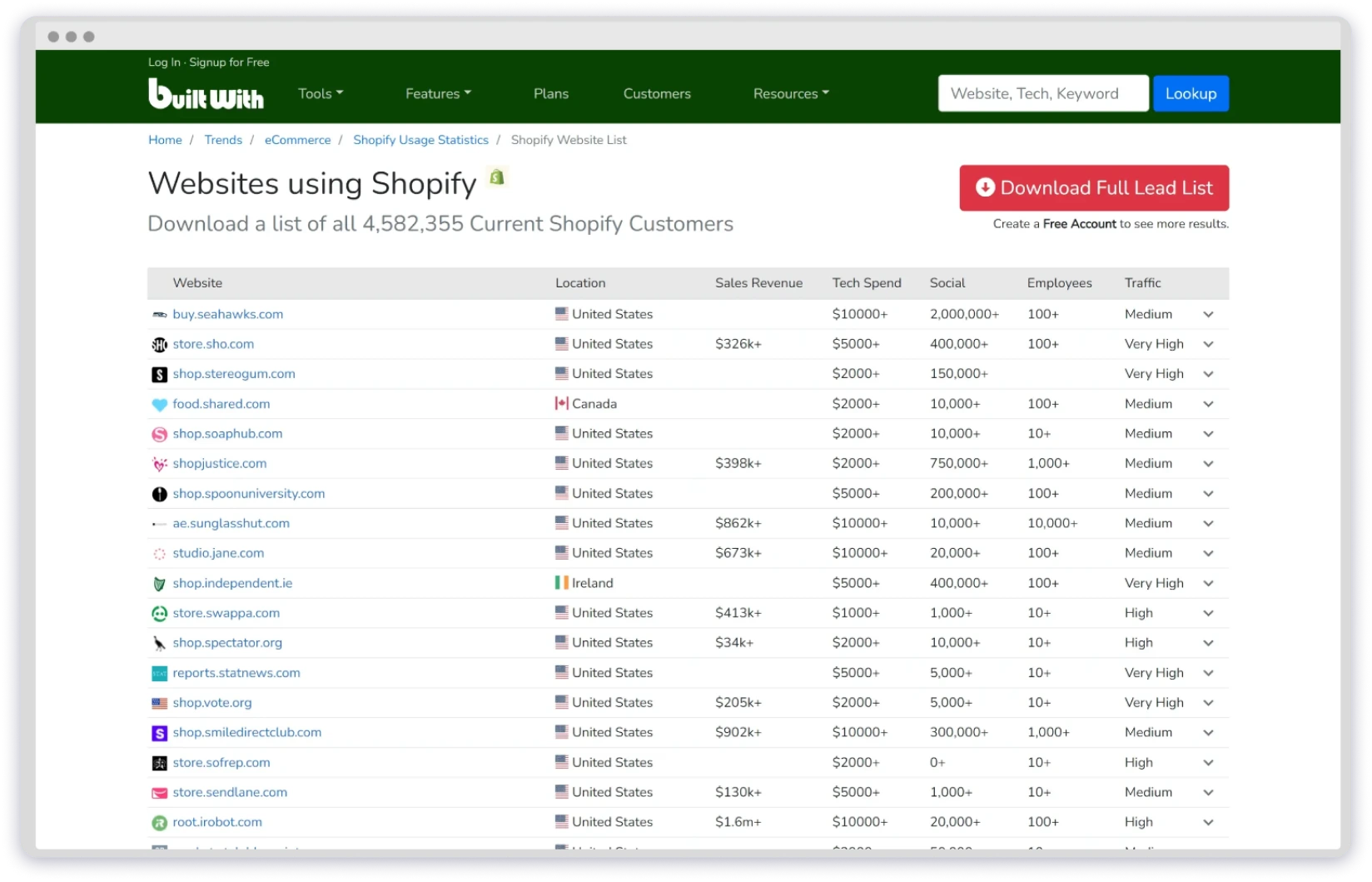
It tracks millions of web-facing technologies with historical adoption and removal timelines.
Great for market sizing, competitive analysis, and TAM modeling.
But it only covers web-facing tech and gives you zero contact data.
Key Technographic Features:
- Millions of web technologies tracked globally with historical timelines
- Market share analysis by technology category
- Lead lists of companies adopting or switching technologies
- API access and bulk exports
- 250M+ websites in database
Advantages:
- Unmatched for web tech detection and historical trends
- Ideal for competitive intelligence and TAM modeling
Limitations:
- No contact data
- Web-facing tech only, no internal enterprise software
- No outreach tools
Pricing:
- Basic: $295/month (2 technologies)
- Pro: $495/month (10 technologies)
- Enterprise: $995/month (unlimited, billed yearly).
6. HG Insights
Best for: Enterprise sales teams that need IT spend intelligence and contract renewal timing for Fortune 5000 accounts.
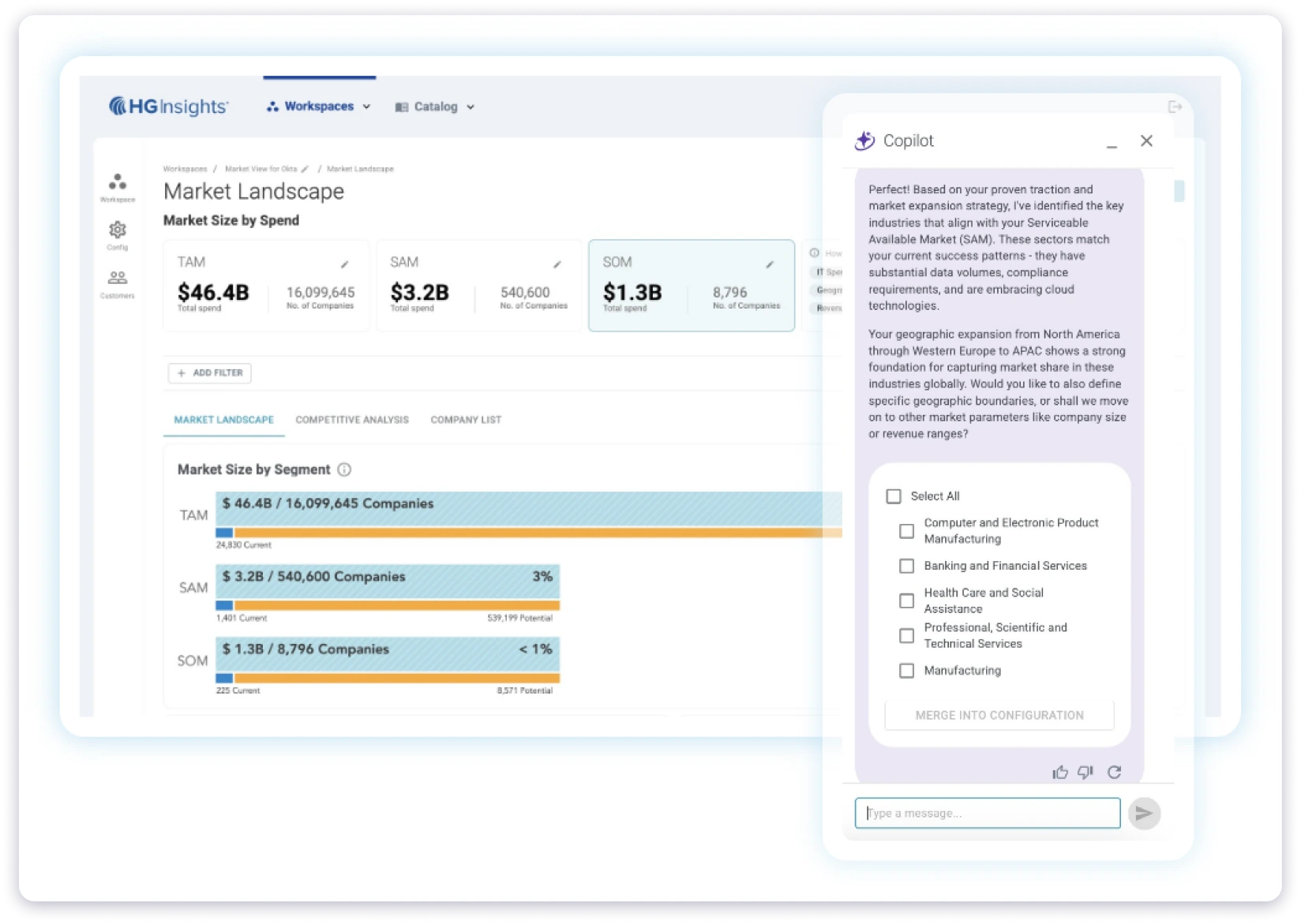
HG Insights goes deeper than most providers by tracking IT budgets, contract values, and renewal dates, not just which tools a company uses.
If you sell large enterprise deals where timing and budget alignment matter, this level of intelligence is hard to find elsewhere.
Key Technographic Features:
- IT spend data and technology budget forecasts
- Contract intelligence with renewal dates and values
- Department-level tech tracking
- TAM analysis tools for territory planning
- Salesforce integration
Advantages:
- Contract renewal timing is unique and valuable for enterprise cycles
- IT spend data helps qualify the budget before outreach
Limitations:
- No contact data or outreach tools
- Enterprise-only pricing
- Limited coverage of smaller businesses
Pricing:
Custom only. Enterprise budgets required.
7. Bombora
Best for: ABM marketing teams that want to combine buying intent signals with technology fit data.
Bombora runs a data cooperative where business publishers share anonymous browsing data.
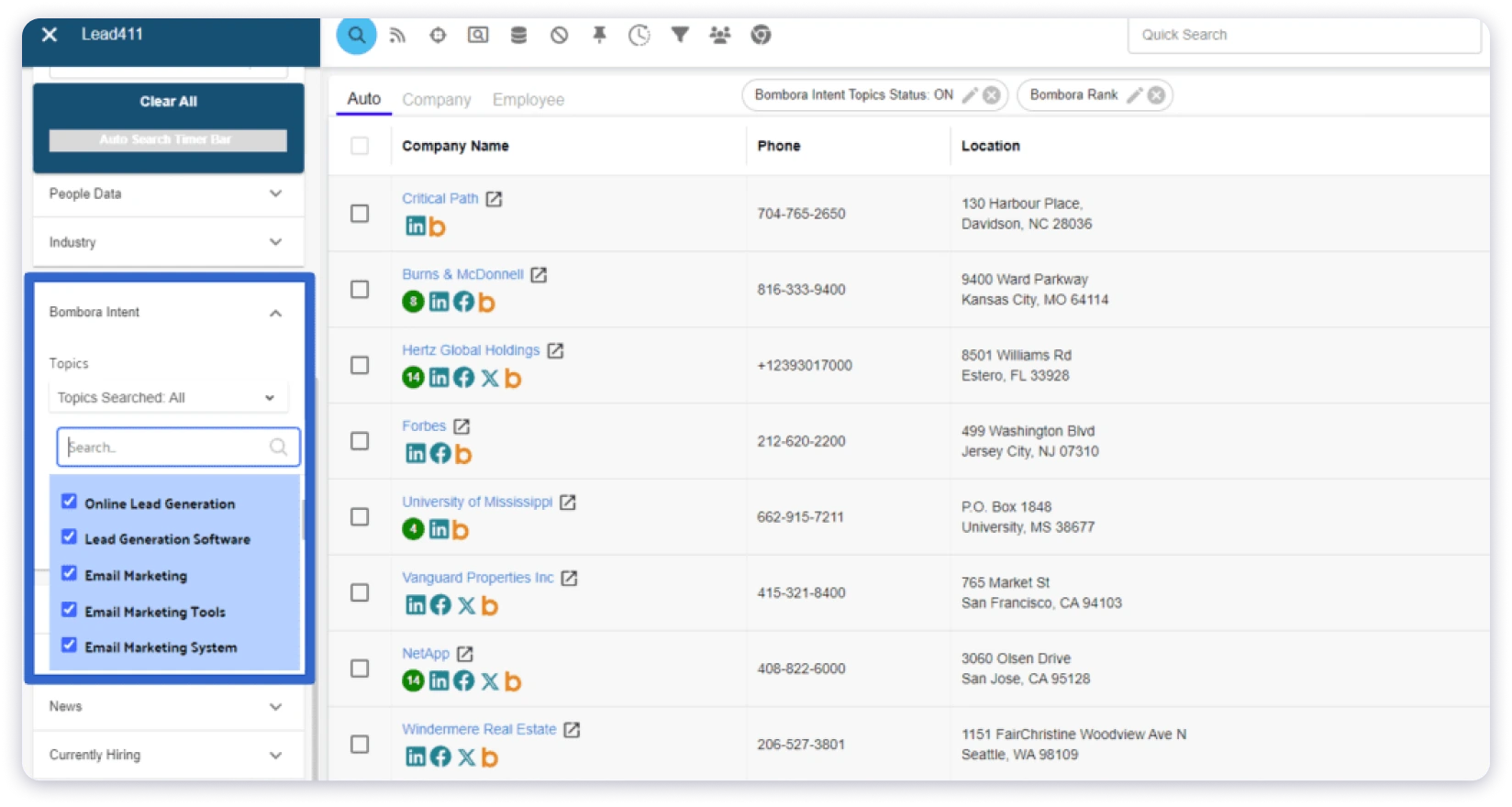
This creates intent signals that show which companies are actively researching specific technologies.
Pairing “what they use” with “what they are looking at” is powerful for account-based marketing.
Key Technographic Features:
- Company Surge intent data paired with tech stack information
- 12,000+ intent topics for tracking research intensity
- Integrations with Demandbase, 6sense, and other ABM platforms
- Account-level intent scoring
- API access for custom applications
Advantages:
- Intent + technographic pairing is highly effective for ABM
- Broad coverage through the cooperative model
- Plugs into most major ABM platforms
Limitations:
- No direct contact data
- Requires other platforms to act on the data
- Intent quality depends on cooperative coverage in your market
Pricing:
Custom pricing and are usually sold as a data layer within ABM platforms.
8. SalesIntel
Best for: Teams that prioritize data accuracy over database size and want human-verified technographic and contact data.
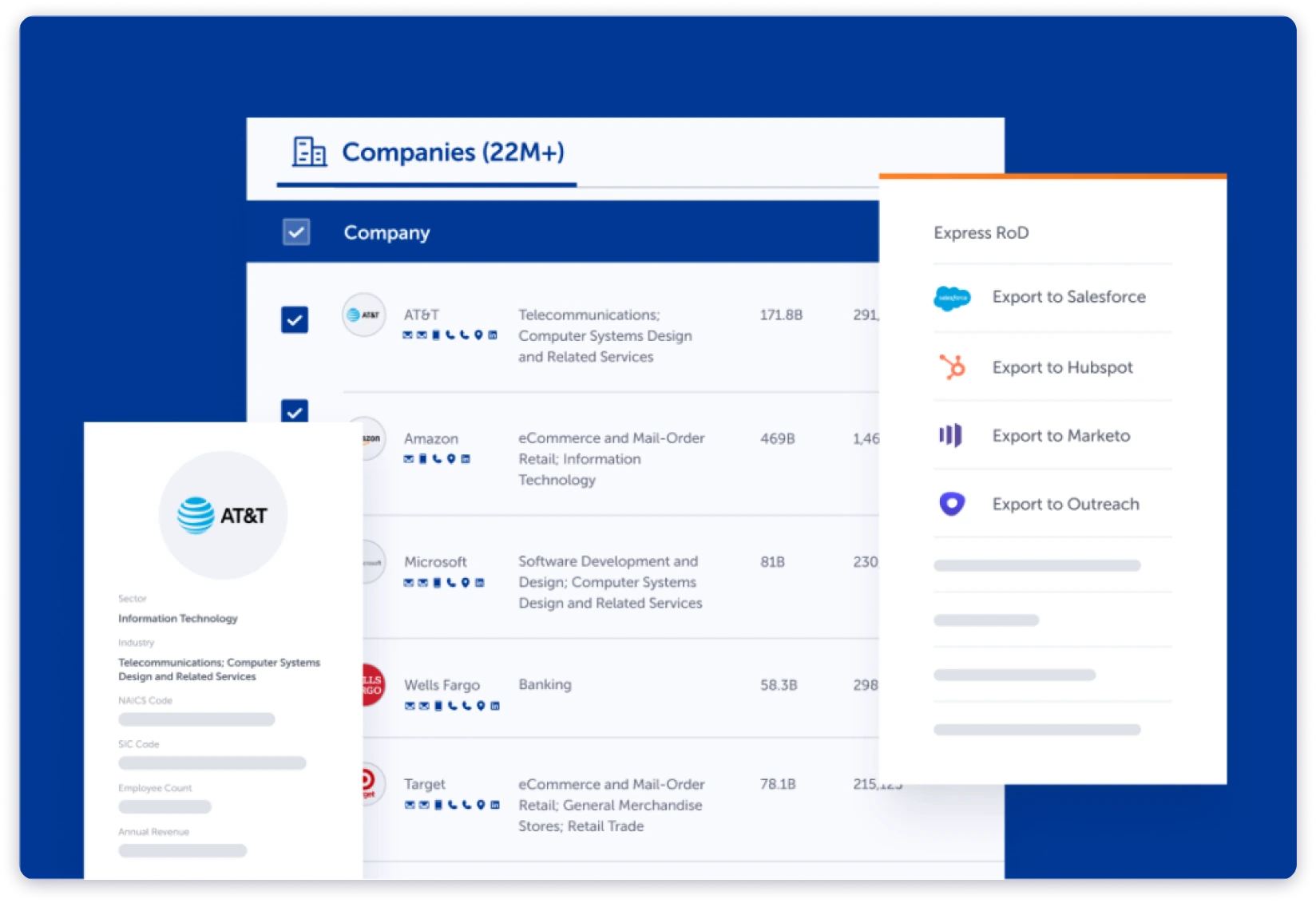
SalesIntel uses human researchers to verify contact data every 90 days.
They also offer a Research on Demand service where you can request contacts not in the database, and their team manually sources them.
The technographic data covers company tech stacks and pairs with Bombora intent signals.
Key Technographic Features:
- Human-verified contacts refreshed every 90 days
- Technographic data on company tech stacks
- Bombora intends to integrate data integration
- Research-on-demand for custom requests
- CRM integrations with Salesforce and HubSpot
Advantages:
- Human verification delivers consistently high accuracy
- Research-on-demand fills gaps that automated databases miss
Limitations:
- Smaller database than ZoomInfo or Saleshandy
- No built-in outreach tools
- Pricing not transparent
Pricing:
Custom only. Demo required.
9. Clearbit
Best for: HubSpot users who want automatic technographic enrichment inside their existing CRM without managing a separate tool.
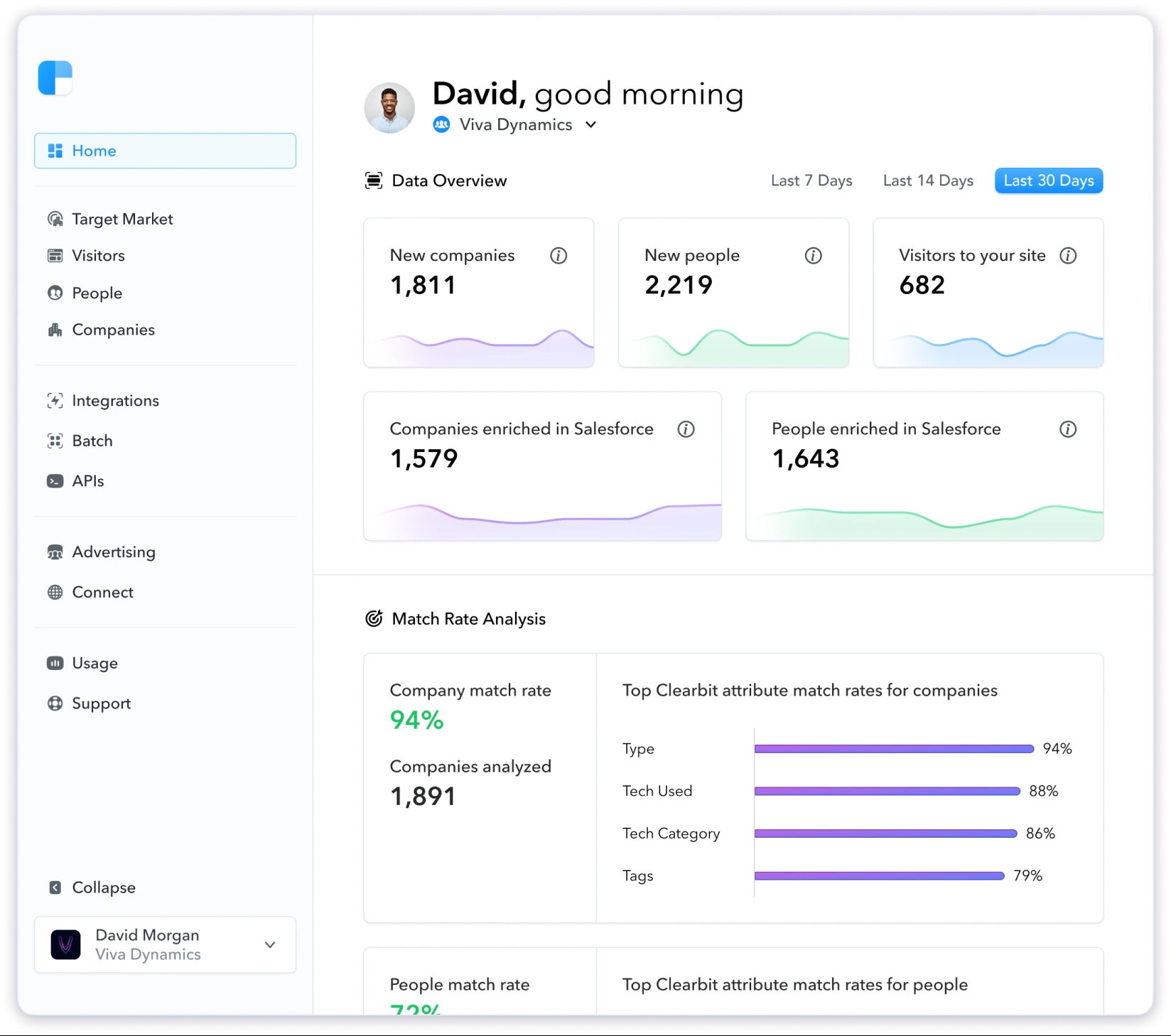
Clearbit is now fully integrated into HubSpot.
It enriches company and contact records with technographic attributes in real time via API.
If your team already lives in HubSpot, Clearbit adds tech stack intelligence without any additional workflow.
Key Technographic Features:
- Real-time technographic enrichment via API
- Native HubSpot integration
- Lead scoring and routing based on tech stack fit
- Form shortening with enriched data
Advantages:
- Works natively in HubSpot, with minimal setup
- Real-time enrichment keeps data current
Limitations:
- Limited value outside the HubSpot ecosystem
- Not built for outbound prospecting or list building
Pricing:
Bundled with HubSpot plans.
10. Demandbase
Best for: Marketing teams running display-based ABM campaigns with technographic targeting at the account level.
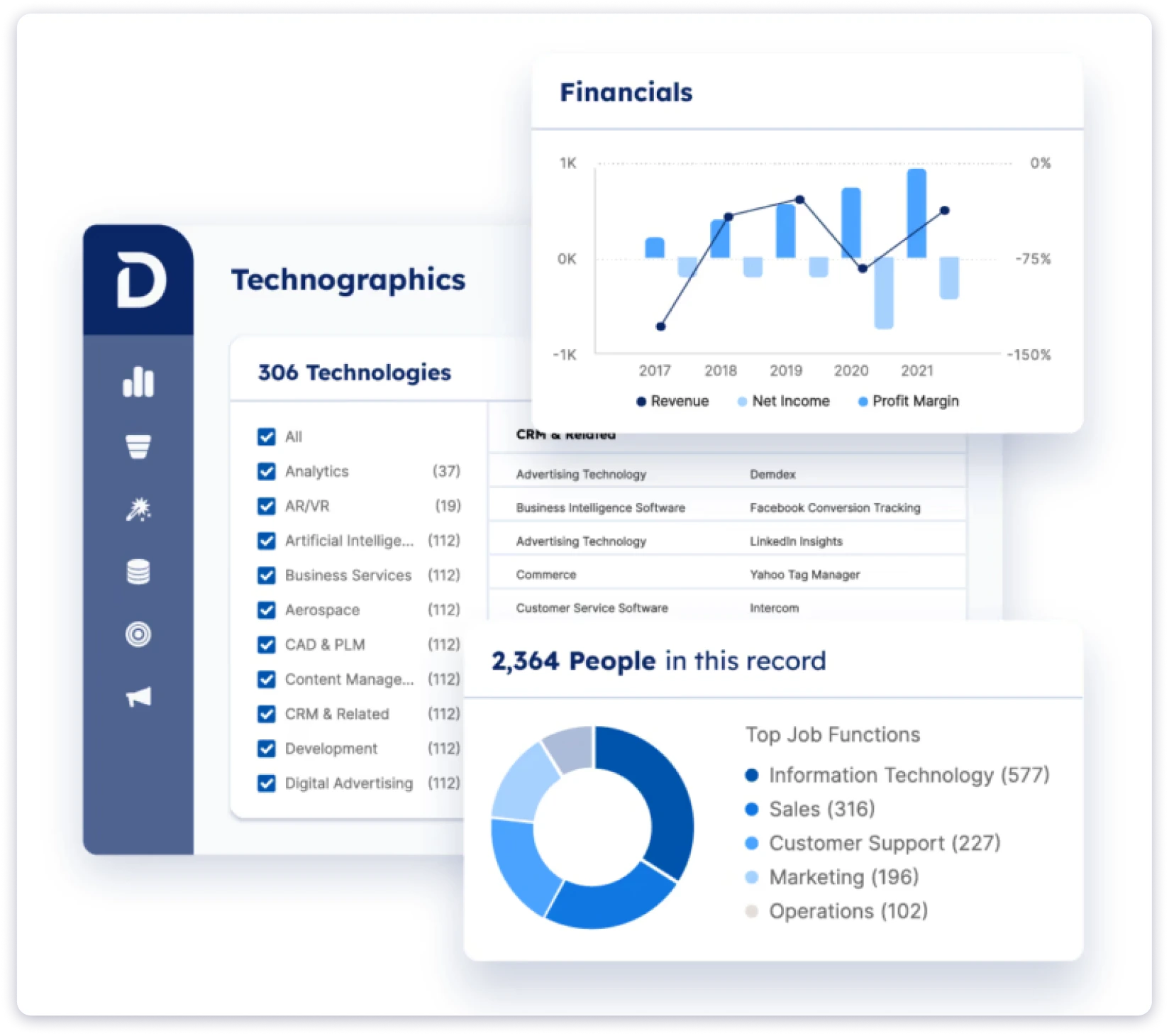
Demandbase is an ABM platform that uses tech insights to help marketers target and engage accounts through display ads and engagement workflows.
It acquired DemandMatrix specifically for technographic intelligence.
Good for ad-driven ABM, not for cold email outbound.
Key Technographic Features:
- Technology insights in ABM advertising workflows
- AI-driven account scoring based on tech fit + intent
- Display advertising with technographic targeting
- CRM and marketing automation integrations
Advantages:
- Tech targeting is built directly into ad workflows
- AI prioritization optimizes ad spend
Limitations:
- Not a data provider for outbound prospecting
- Enterprise pricing only
- No cold email capabilities
Pricing:
Custom. Enterprise contracts only.
How to Choose the Right Technographic Data Provider
It comes down to how your team actually uses the data day to day.
1. Outbound-First Teams (SDRs, Cold Emailers, Agencies):
You need contacts alongside tech filters and the ability to start outreach immediately.
Saleshandy Lead Finder or Apollo fit here.
Skip pure data providers like BuiltWith or Bombora; they give you intelligence but no way to act on it without another tool.
2. Enterprise RevOps Teams:
You need deep tech intelligence with contract timing and IT spend data.
ZoomInfo or HG Insights deliver that, but budget accordingly.
3. Selling Into Europe:
Compliance is not optional. Cognism is built for EMEA with DNC-checked mobiles.
Saleshandy also covers global markets with GDPR-compliant data sourcing.
4. Running ABM Campaigns:
Bombora for intent paired with tech data. Demandbase for display ABM.
Both feed into advertising platforms rather than direct outreach.
5. Pure Technology Research:
BuiltWith for web tech detection and historical trends.
Nothing else comes close for that specific use case.
Five questions to ask before you pick:
- Do I need contact data alongside tech data, or just company-level insights?
- Can I start outreach right away, or will I need to export to another tool?
- What is my actual budget per-user, credit-based, or flat-rate?
- Does the provider cover my target geography with verified data?
- Is the data verified in real time or in batches that go stale?
If you are building your first outbound lead list and want to explore different sales lead databases beyond technographic-specific tools, that comparison might also help you decide.
Final Verdict
If you have read this far, here is the one tip that will save you the most time: do not pick a provider based on the biggest database or the longest feature list.
Pick the one that fits how your team actually works day to day.
If your team sends cold emails, you need tech filters, contacts and outreach in one place.
If you run ABM campaigns, you need intent signals paired with tech data feeding into your ad platform.
If you are doing pure market research, you need historical adoption trends, not contact data.
The wrong provider does not just waste budget.
It adds steps to your workflow that slow everything down.
Match the tool to the motion. That is where the ROI comes from.
FAQs on Technographics Data Providers
1. How do technographic data providers collect this data?
Most use a mix of web scraping, partnerships with software vendors, public records, customer-contributed data, and AI models.
Providers like BuiltWith focus on web-facing technologies, while ZoomInfo and HG Insights also track internal enterprise software and contract data.
2. What is the difference between technographic and firmographic data?
Firmographic data covers company traits like size, revenue, industry, and location. Technographic data covers the technology that the company uses.
Outbound teams get the best results by using both together, for example, filtering by industry and company size (firmographic) plus CRM usage (technographic).
3. Can I use technographic data for cold email outreach?
Yes. Platforms like Saleshandy Lead Finder let you filter leads by tech stack and add them directly to cold email sequences within the same tool.
Other providers give you the data, but need a separate outreach platform to send emails.
4. Which technographic data provider is best for small teams?
Saleshandy Lead Finder works well for small teams and has a database of 800M+ contacts, technographic filters, and cold email automation starting at $24/month with no per-user charges.
Apollo’s free tier is another option if the budget is extremely tight.
5. Is technographic data GDPR compliant?
Depends on the provider. Cognism and Saleshandy follow GDPR-compliant data sourcing.
Always check a provider’s compliance certifications before using their data, especially if you are targeting European markets.
6. How accurate is technographic data?
It varies by provider and methodology. Premium providers with real-time verification hit 85 to 95%+ accuracy.
Cheaper platforms that rely on batch-processed, scraped data go stale quickly.
Look for providers that verify data at the point of reveal rather than on a set schedule.