

 Anil Salvi
 Contents
I spent the last few weeks doing something most “best of” blogs skip.
I signed up for, tested, and compared 40+ different sales lead databases using the same search criteria, side by side.
Most comparison posts just repackage feature pages and call it a day. That doesn’t help anyone pick the right tool.
So I ran a real test instead.
I picked a single ICP: VP-level and Director-level decision-makers at SaaS companies with 50-200 employees in the US.
Then I searched for the same audience across every tool on this list.
I looked at:
- How many results each platform returned
- How many contacts had verified emails
- Whether phone numbers were actually usable
- What additional data came back (firmographics, technographics, intent signals, etc.)
The results were eye-opening.
Some tools with massive “database size” claims returned fewer usable results than smaller, focused platforms. Others burned through my trial in minutes with garbage data.
And a few genuinely delivered.
Here’s the full breakdown of the 12 best sales databases that made it to the cut.
Top Sales Lead Database: TOC
TL;DR — Which Sales Lead Database Should You Pick?
If you’re short on time, here’s what I found after testing these tools across real outbound campaigns:
- Pick Saleshandy Lead Finder if you want the largest database (800M+ contacts), accurate data with real-time verification, and built-in cold email — all starting at $49/month.
- Pick Apollo.io if you want a feature-packed platform with strong email accuracy and 65+ filters, but don’t mind weaker phone number data.
- Pick ZoomInfo if you’re an enterprise team with budget for deep firmographics, org charts, and intent signals.
- Pick Cognism if your focus is Europe and you need GDPR-compliant, phone-verified data.
- Pick Lead411 if intent-based prospecting and unlimited search/export matter more to you than database size.
| Tool | Results | Emails | Phone | Intent | Technographics |
|---|---|---|---|---|---|
| Saleshandy Lead Finder | 3,200+ | High | Yes | Yes | Yes |
| Apollo.io | 2,800+ | High | Weak | Yes | Yes |
| ZoomInfo | 2,500+ | High | Strong | Deep | Deep |
| Cognism | 1,800+ | Good | Best | Yes | Limited |
| Lead411 | 2,100+ | Good | Inconsistent | Yes | Basic |
| UpLead | 1,400+ | High | Variable | Yes | Yes |
| Lusha | 1,200+ | Good | Inconsistent | Yes | No |
| SalesIntel | 1,600+ | High | Strong | Yes | Yes |
| Hunter.io | 900+ | Excellent | No | No | Basic |
| Seamless.AI | 2,600+ | Mixed | Large | Yes | Yes |
| ContactOut | 1,500+ | Good | Variable | No | No |
| RocketReach | 2,000+ | Mixed | Variable | No | No |
What I Evaluated (and Why Most Reviews Get This Wrong)
Before jumping into the list, here’s what I actually tested each tool on. This should also help you figure out what matters most for your use case.
- Data accuracy and freshness. A database with 500 million contacts means nothing if 30% of those emails bounce. I checked whether each tool uses real-time, batch-processed, or human-verified data.
- Database coverage vs. usable results. Everyone claims a big number. What matters is how many verified, relevant contacts you get back for your specific ICP.
- Filters and targeting. Can you narrow down by job title, revenue, tech stack, funding stage, and location? More granular filters = faster list building.
- Data types available. Some tools only give you email. Others give you email + phone + company data + intent signals + tech stack. The range matters depending on your outreach strategy.
- Built-in outreach vs. data-only. Some tools just hand you data. Others let you prospect, build sequences, and send cold emails from the same platform.
- Intent data and buying signals. The best databases don’t just tell you who someone is. They tell you when they’re likely to buy.
- Compliance. GDPR, CCPA, and DNC list screening matter, especially if you’re targeting Europe.
- Pricing transparency. I noted whether pricing is publicly available and how the cost scales with usage.
12 Best Sales Lead Databases for B2B Teams
Now, here are the 12 best sales lead databases I’d actually recommend in 2026.
1. Saleshandy Lead Finder
Saleshandy Lead Finder delivered the highest volume of verified, usable contacts in my testing.
I tested it across niche industries (renewable energy consultants in Germany, fintech founders in Southeast Asia) and it consistently returned results where other tools came up short.
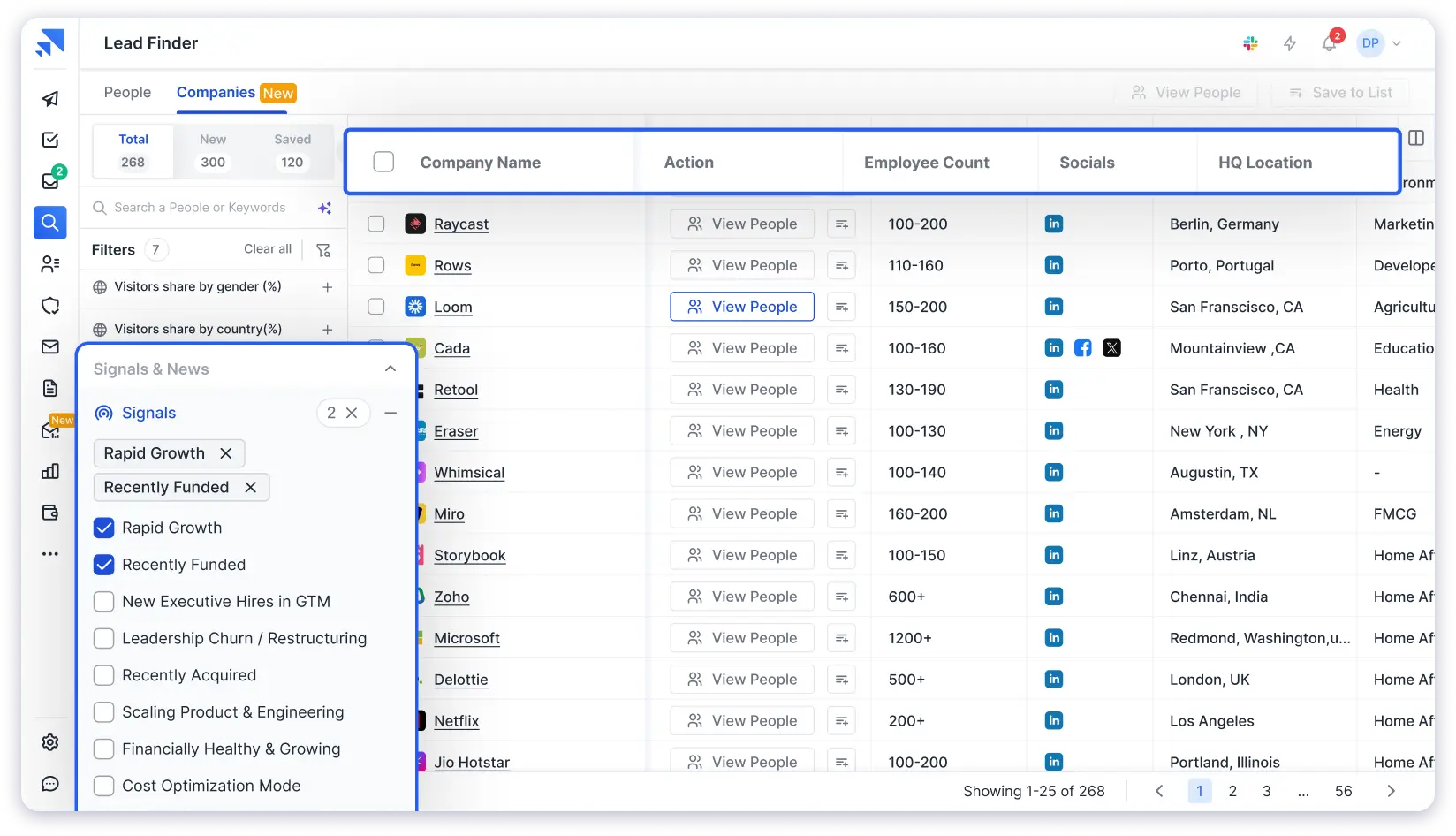
The 75+ advanced search filters let you get as granular as you need: company name, location, size, role, seniority, revenue, funding stage, tech stack, and buying signals.
The AI-powered lead search was a standout. Instead of manually setting filters, I described my ideal prospect in plain English and Saleshandy set the right filters automatically. It felt like a shortcut that actually worked.
What really separates Saleshandy is that you don’t need a separate tool for outreach.
You can import leads directly into a cold email sequence, personalize messages, set up auto follow-ups, and track engagement. All from the same platform.
Saleshandy also recently launched its outbound CRM, a Kanban-based prospect management system built specifically for cold email workflows.
You can see which prospects need follow-ups, who replied, and what stage each conversation is at.
It’s not a full-cycle sales CRM like Salesforce. It’s designed for outbound execution.
Data types available:
- Work and personal emails (real-time verified via waterfall enrichment)
- Phone numbers (direct dials)
- Job title, department, seniority
- Company revenue, size, industry, location
- LinkedIn profiles
- Tech stack and buying signals
Pricing
Plans start at $49/month (billed annually). There’s also a free plan to test it. No credit card needed.
2. Apollo.io
Apollo is one of the most popular B2B platforms for mid-market teams. The depth of features backs that up.
It packs database, email sequencing, call dialing, LinkedIn automation, and analytics into a single tool. Apollo’s 65+ search filters are among the most detailed I tested.
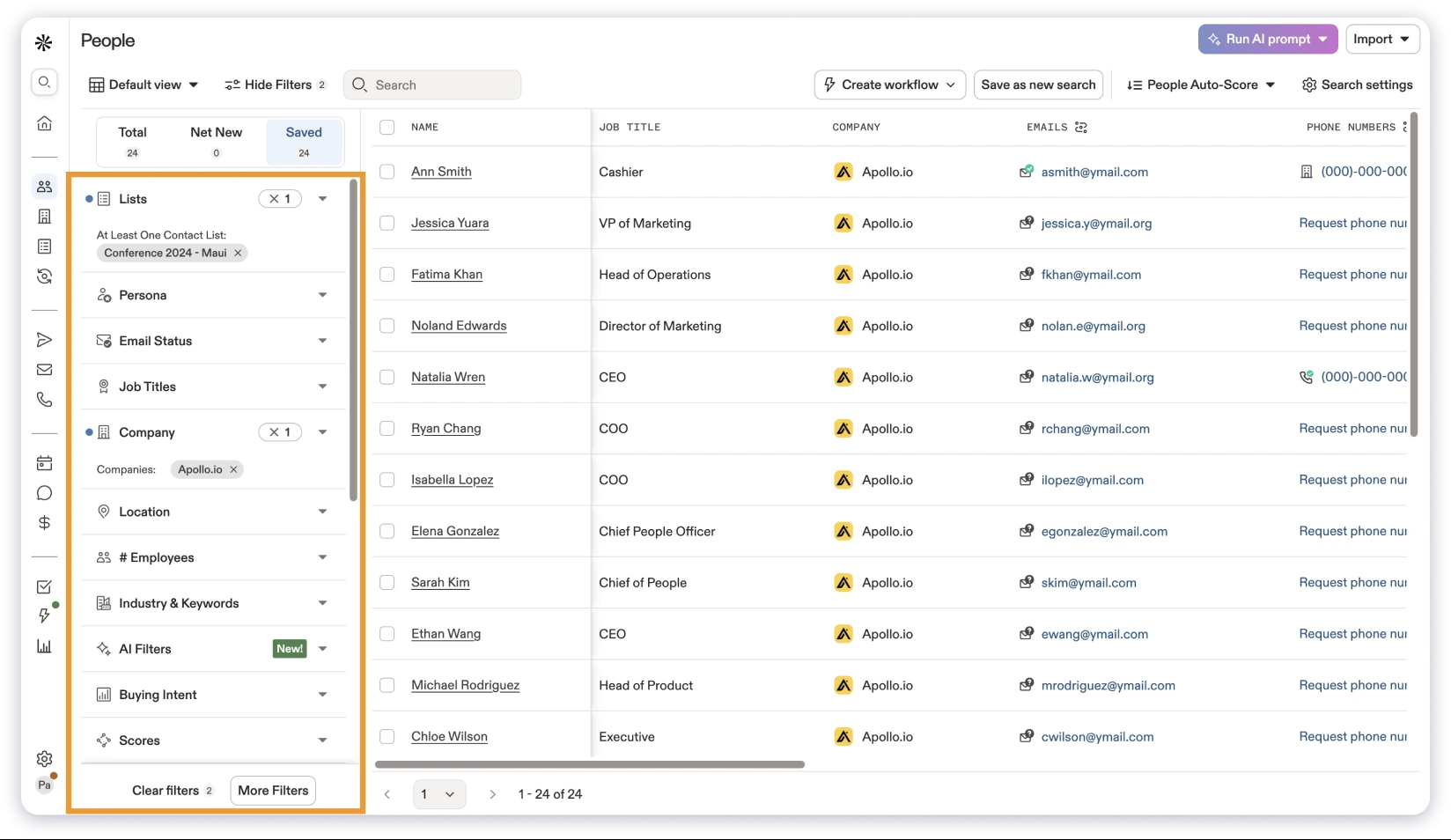
You can filter by intent signals, technology used, funding stage, job title, and company growth rate. Email accuracy was solid for North American B2B contacts.
Data types available:
- Verified email addresses
- Phone numbers (weaker on mobile/direct dials)
- Firmographics (company size, revenue, industry, funding)
- Technographic data (tech stack)
- Buying intent signals and job change alerts
- LinkedIn profiles
Pricing
Free plan available. Paid plans start at $49/user/month (billed annually).
3. ZoomInfo
ZoomInfo is the biggest name in B2B sales intelligence, and it earns that position for enterprise teams.
The depth of data is where it pulls ahead. Org charts, department-level headcounts, technographic data, and intent signals powered by proprietary first-party data and Bombora.
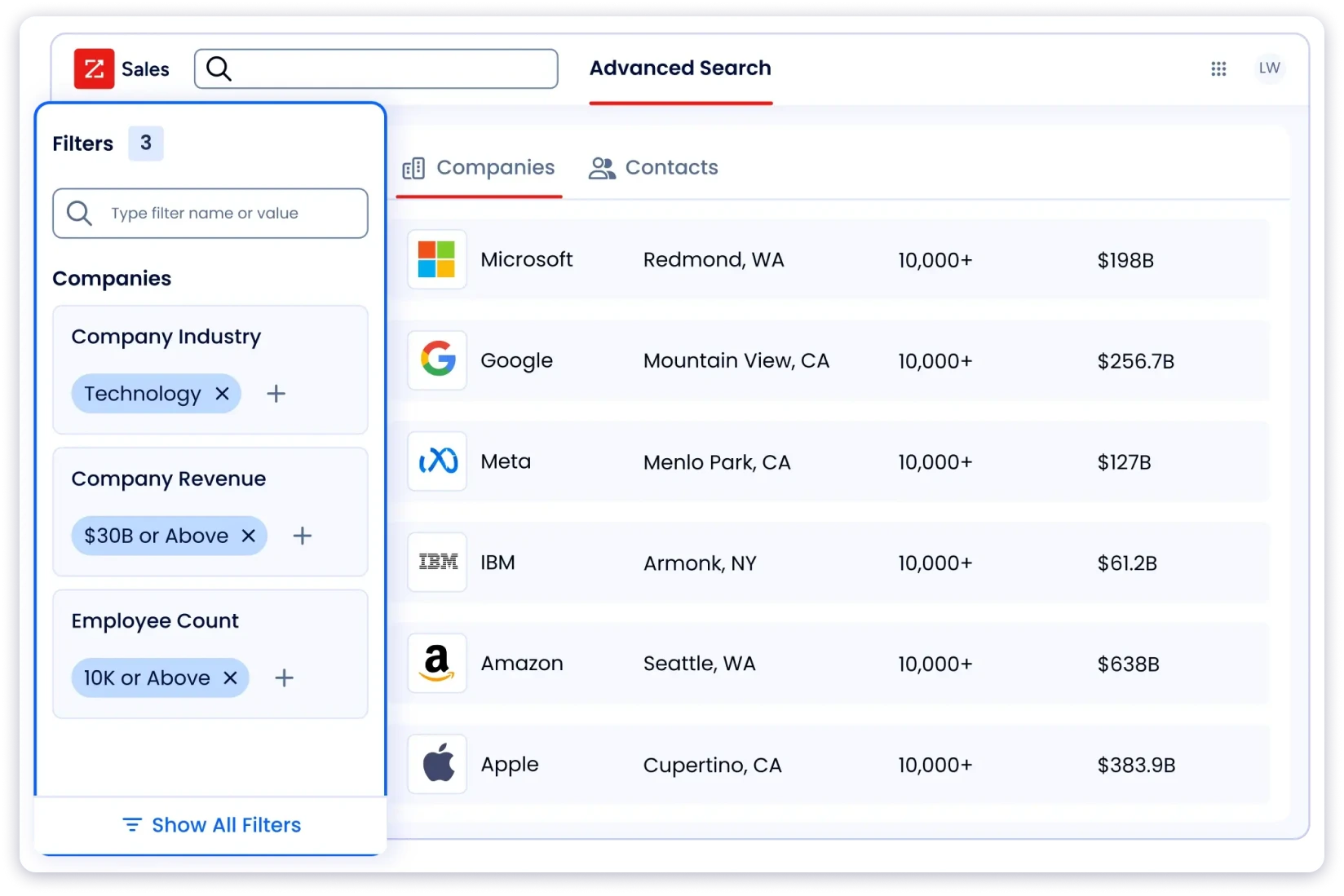
ZoomInfo’s North American data is particularly strong. If your ICP is mid-market to enterprise US companies, the coverage and accuracy are hard to beat.
Data types available:
- Verified emails and direct dial phone numbers
- Org charts and hierarchies
- Department-level headcounts
- Firmographics (deep: revenue, employee count, funding, industry)
- Technographic data (detailed software stack)
- Intent data (proprietary + Bombora)
- Website visitor tracking (higher plans)
- Job change and company news alerts
Pricing
Custom only. Typically $14,995+/year for a small team. Separate pricing for Sales, Marketing, and Talent suites.
4. Cognism
Cognism carved out a strong niche by focusing on two things most providers struggle with: European data quality and phone number accuracy.
Cognism’s Diamond Data includes 10M+ manually phone-verified contacts, delivering connection rates up to 87% on mobile numbers.
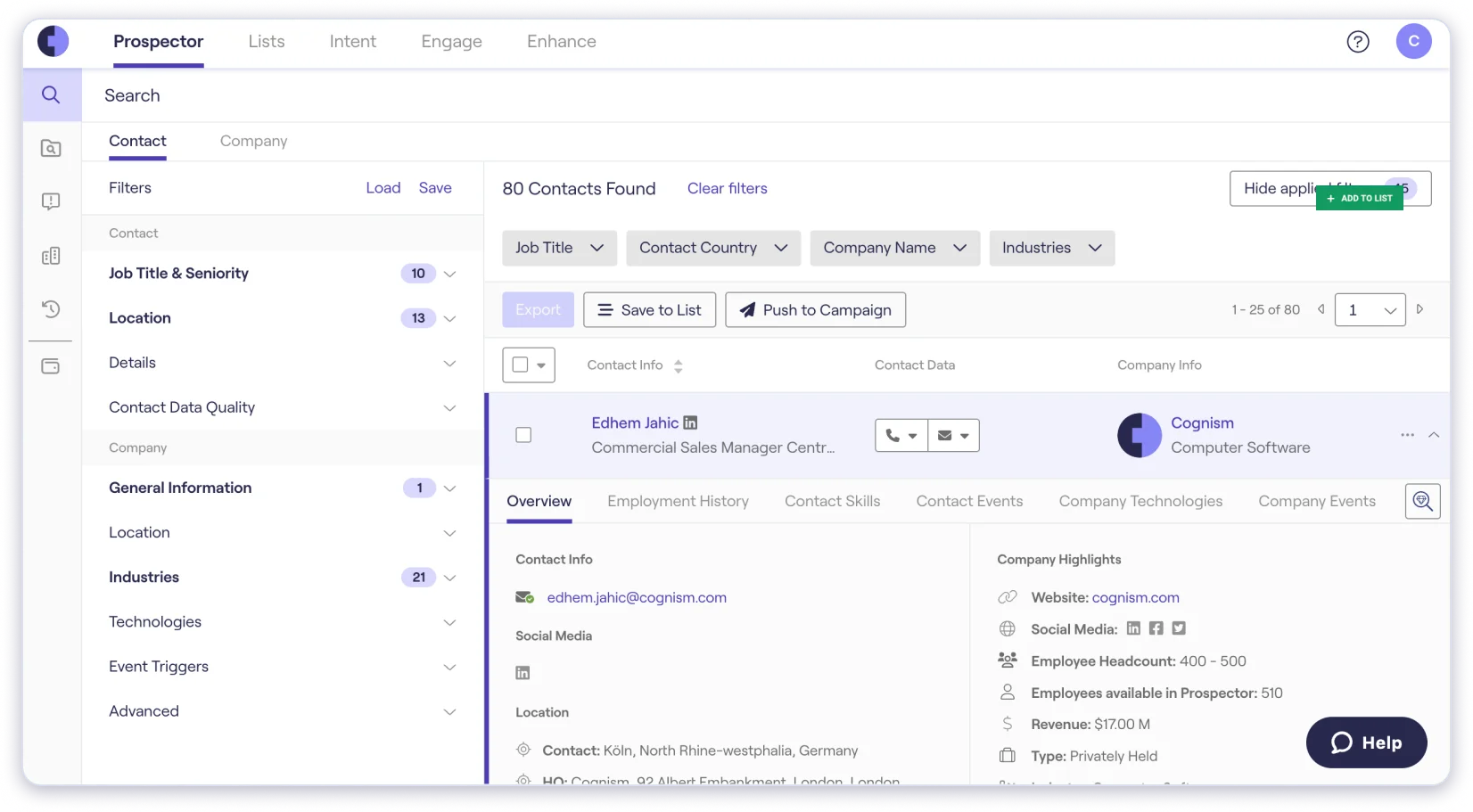
If cold calling is a core part of your outreach (especially in Europe), that’s a meaningful advantage.
Data types available:
- Verified email addresses
- Phone-verified mobile numbers (Diamond Data)
- Firmographics (company size, industry, revenue)
- Intent data (on higher-tier plans)
- Job change and hiring alerts
- DNC screening against 13+ global lists
Pricing
Custom only (demo required).
5. Lead411
Lead411 has been in the B2B data game since 2011. Its biggest differentiator is growth intent data: real-time signals like new hiring, funding rounds, technology adoption, and executive changes.
The Bombora intent data integration helps you target companies actively researching topics related to your product. I found this particularly useful for timing outreach to recently funded startups.
Data types available:
- Verified email addresses
- Phone numbers (direct dials, accuracy varies)
- Firmographics (company size, industry, revenue, location)
- Growth intent signals (Bombora, on Pro plans)
- Hiring, funding, and technology adoption alerts
- Basic technographic data
Pricing: Starts at $49/month. Pro plans with intent data cost more. Free trial available.
6. UpLead
UpLead’s pitch is simple: 95% data accuracy guarantee, with refunds for any bounced email.
If data quality is your #1 concern and you’ve been burned by stale databases before, UpLead delivers on that promise. Real-time email verification happens at the moment of search, not as a batch job later.

Data types available:
- Verified email addresses (95% accuracy guarantee)
- Phone numbers (available but variable quality)
- Firmographics (company size, revenue, industry, location)
- Technographic data (software stack tracking)
- Intent data (Bombora, on higher plans)
- Competitor intelligence
Pricing
Free trial available. Paid plans start at $99/month.
7. Lusha
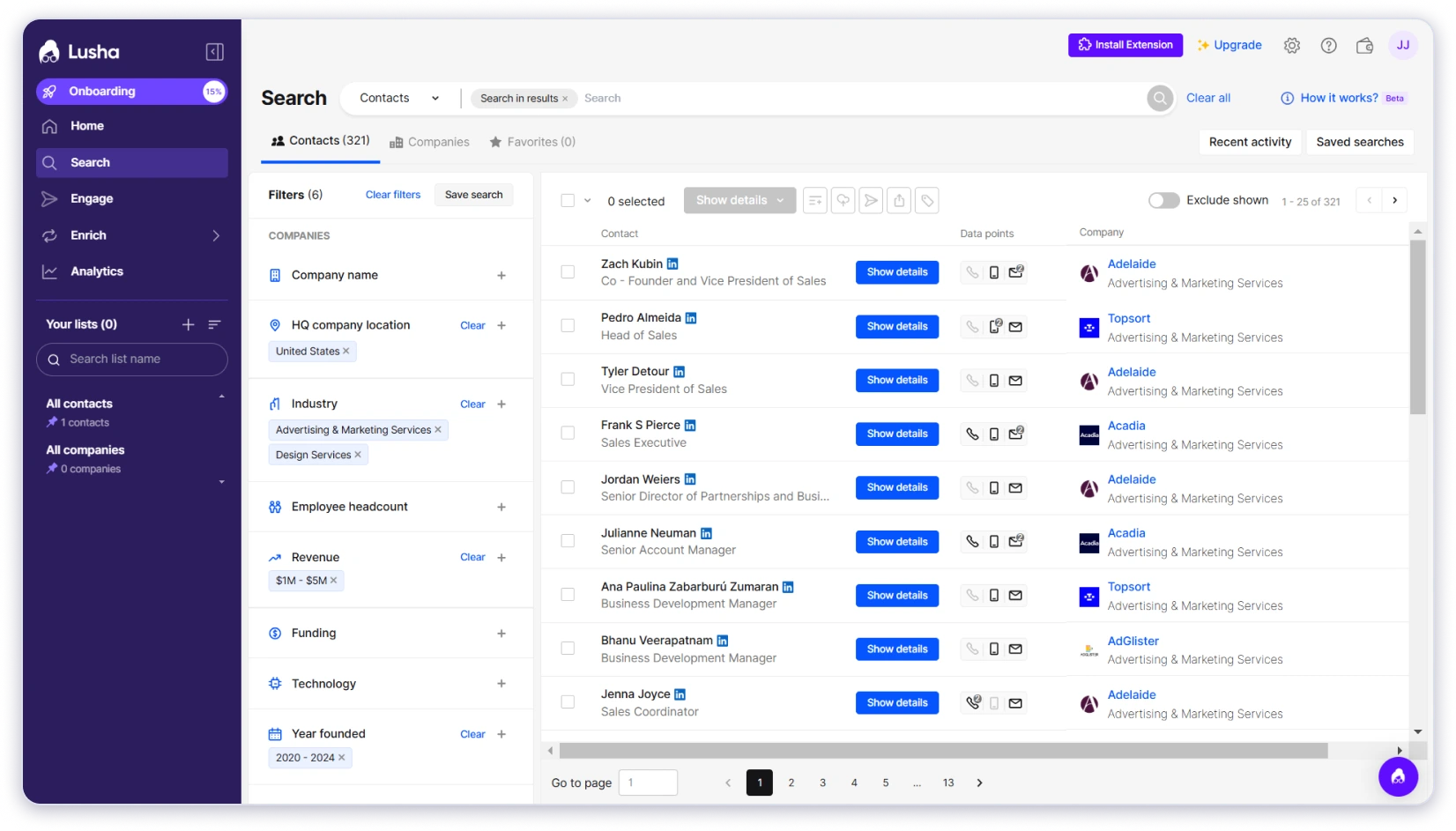
Lusha is built for speed. Its Chrome extension lets you pull contact details while browsing LinkedIn or company websites. Ideal for SDRs who prospect in-the-moment rather than building bulk lists.
Data types available:
- Verified email addresses
- Phone numbers (variable accuracy)
- Job title, seniority, department
- Company firmographics (size, industry, revenue)
- Intent data and lead scoring (newer feature)
Pricing
Free plan available (limited). Paid plans start at $36/user/month.
8. SalesIntel
SalesIntel takes a different approach from most tools on this list.
Instead of relying purely on AI and algorithms, SalesIntel uses human researchers to verify contacts every 90 days.
That gives it a claimed 95% accuracy rate, and in my testing, the email quality was genuinely strong.

The big selling point is the unlimited access model. No per-contact charges on most plans.
For teams that prospect at high volume, this removes the “will I run out of lookups” anxiety that comes with other platforms.
Data types available:
- Human-verified email addresses (re-verified every 90 days)
- Human-verified direct dials and mobile numbers
- Firmographics (company size, industry, revenue, location)
- Technographic data (detailed tech stack tracking)
- Intent data (Bombora integration)
- Research-on-Demand (request specific contacts not in the database)
Pricing
Custom pricing (demo required). Verify directly with their team.
9. Hunter.io
Hunter built its reputation on one thing: finding and verifying business email addresses.
It’s focused, simple, and reliable. If email is your primary outreach channel and you don’t need phone numbers, intent data, or multi-channel capabilities, Hunter does that one thing very well.

Data types available:
- Verified email addresses (high accuracy)
- Basic company firmographics (headquarters, headcount, industry)
- Technographic data (basic: technologies used)
- No phone numbers
- No intent data or buying signals
Pricing
Free plan available. Paid plans start at $34/month.
10. Seamless.AI
Seamless.AI takes a “real-time search engine” approach. Instead of searching a static database, it crawls and verifies contacts live when you search.
The result is a massive contact pool. But accuracy can be hit-or-miss.
In my testing, Seamless returned a high volume of results, but I had to verify emails independently before using them in campaigns.
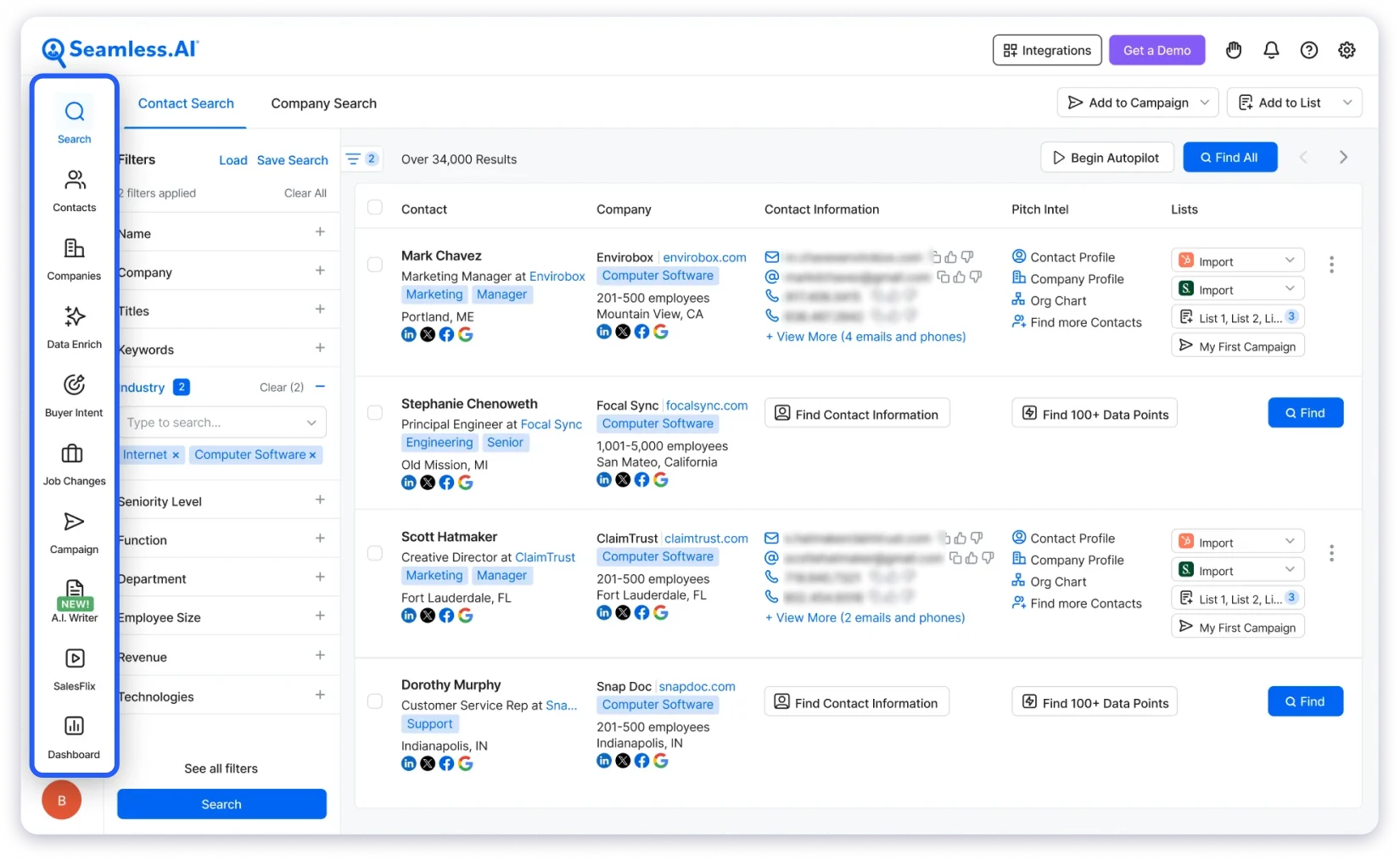
The claimed 98% accuracy didn’t hold up. Independent reviews and my own experience suggest 85-90% is more realistic.
Data types available:
- Email addresses (real-time verified, accuracy varies)
- Phone numbers (large volume, including mobile)
- Job title, seniority, department
- Company firmographics (size, revenue, industry)
- Technographic data
- Intent data and job change alerts (on higher plans)
Pricing
Free plan available. Paid plans start around $147/user/month (billed annually). Pro and Enterprise require sales calls.
11. ContactOut
ContactOut started as a recruiting tool and it shows. The platform excels at finding personal email addresses, which makes it valuable for both recruiters and sales teams trying to reach people outside corporate inboxes.

Data types available:
- Work and personal email addresses
- Phone numbers (variable quality)
- Job title, company, location
- LinkedIn profiles
- Basic firmographics
- No intent data, no technographics
Pricing
Free plan available. Paid plans start at $79/month.
12. RocketReach
RocketReach offers a large database and a straightforward interface. No sequencing, no CRM, no intent data. It’s pure prospecting and contact discovery.

Data types available:
- Email addresses (accuracy varies)
- Phone numbers (variable quality)
- Job title, company, location
- Basic firmographics
- No intent data, no technographics, no buying signals
Pricing
Plans start at $39/month (emails only). Phone access starts at $99/month.
Got the Data? Now Set Up Your Campaign!
You’ve seen all the tools to find sales leads.
Each tool has its own specialities, and I’ve made sure to highlight all of them.
Now, before you select a tool, I would highly suggest you read user reviews before making the investment.
However, if you are still unsure, I would suggest considering Saleshandy Lead Finder.
It offers one of the largest databases (over 800M+ B2B contacts) with an impressive 98% accuracy.
Additionally, you can easily export it to Saleshandy’s cold email tool to run your campaigns.
Sales Lead Database: FAQs
1. How to generate B2B sales leads?
You can generate B2B sales leads through multiple channels, including LinkedIn, a b2b database, networking events, referrals, and even with inbound content.
2. What Information is Included in a B2B Contact Database?
A high-quality sales lead database usually includes:
- Company Name
- Industry Type
- Company Size
- Contact Name
- Job Title
- Email Address
- Social Media Profiles
- Phone Number
- Geographic Location
Some tools even offer advanced features, such as buying intent signals and job change alerts.
3. Is buying leads legal?
Yes. If you buy leads from sources that comply with regional regulations and laws, GDPR (EU) and CAN-SPAM (US).
If the leads were scraped without the consent of the user, using them could land you in trouble and may even affect your sender reputation.