
Most exporters think finding buyers is a game of luck.
But the truth is, finding buyers for your export business is not that DIFFICULT!
There are thousands of import managers, wholesale distributors, and procurement heads sitting in offices across Dubai, Hamburg, and New York right now, actively searching for suppliers.
They want to buy products just like yours, but they just haven’t found you yet.
Which means the problem isn’t your product. It’s your approach.
You need to follow methods that puts you in front of the right buyers, in the right markets, with the right message.
In this blog, you’ll find 8 proven methods to find international buyers for export in 2026.
I’ve explained each method in detail—what it is, how to use it, and who it works best for.
Let’s get into it and find some buyers for you!
How to Find Buyers for Export — TOC
- TL;DR — Which Method Works Best to Find Buyers for Export?
- Define Your Ideal Export Buyer Before You Start Searching
- 8 Proven Ways to Find Buyers for Export in 2026
- Search a B2B Contact Database and Reach Out Directly
- Use Import-Export Data to Find Verified Buyers
- List Your Products on B2B Marketplaces
- Use LinkedIn to Connect With International Buyers
- Attend International Trade Fairs and Exhibitions
- Register With Government Export Promotion Programs
- Sell Through Online Export Platforms
- Partner With Buying Agents, Distributors, and Wholesalers
- How to Verify Export Buyers and Avoid Scams
- Your Next Step: Build Your Export Buyer System Today
- Frequently Asked Questions
TL;DR- Which Method Works Best to Find Buyers for Export?
There are 8 methods covered in this guide to find international buyers for export.
Here’s a quick breakdown of what works, who it works best for, and how fast you can expect results.
Define Your Ideal Export Buyer Before You Start Searching
Before you open any tool or platform, get clear on WHO you’re looking for.
Not just “international buyers.”
That’s too broad and leads to wasted outreach, irrelevant responses, and zero export orders.
Think of it this way.
If you export organic spices, your ideal buyer might be a food distributor in the UAE or Germany with 50 to 200 employees who already imports from South Asia.
That’s specific enough to actually search for.
Here are the questions you need to answer before searching anywhere:
- What HS Code or Trade Category Does Your Product Fall Under?
- Which Countries Have the Highest Import Demand for Your Product?
- What Type of Buyer Are You Targeting?
- What Company Size and Order Volume Make the Deal Worth It for You?
- What Certifications or Compliance Standards Does the Target Market Require?
Let’s get into the details!
1. What HS code or trade category does your product fall under
This is how global trade is organized. Knowing your HS code helps you search trade databases and filter the right buyers.
2. Which countries have the highest import demand for your product
Use the ITC Trade Map (a free tool from the International Trade Centre) to check which countries import the most in your product category. This is basic market research that most exporters skip entirely.
3. What type of buyer are you targeting
Wholesalers, distributors, retail chains, buying agents, or direct end-users? Each type has a different buying behavior, order volume, and decision-making process.
4. What company size and order volume make the deal worth it for you
A 10-person trading company and a 500-person retail chain are very different buyers. Be clear about what minimum order quantity works for your business.
5. What certifications or compliance standards does the target market require
ISO, HACCP, CE marking, FDA approval. If you don’t have the certifications a market requires, targeting buyers there is a waste of time until you do.
Once you have these answers, every method below becomes 10x more effective because you know exactly who you’re looking for.
8 Proven Ways to Find Buyers for Export in 2026
Now that you know who you’re looking for, here are 8 methods to actually find and reach them.
I’ve ordered these starting with the most direct and fastest approach, followed by channels that build visibility over time.
1. Search a B2B Contact Database and Reach Out Directly
The best and most recommended method to find export buyers is searching a B2B contact database where you can filter by industry, location, job title, and company size.
Then reach out directly through cold email, phone calls, and LinkedIn messages.
Most other methods make you wait.
You list products on Alibaba and hope a buyer messages you. You attend a trade fair and hope someone visits your booth.
But what if you could find the exact people who buy your type of product, get their verified email address and phone number, and reach out to them today?
That’s what Saleshandy Lead Finder does.
Here’s what makes it work for exporters:
Saleshandy gives you access to a database of 852M+ contacts across 42M+ companies worldwide.
You can filter using 75+ advanced search criteria, including industry, country, job title, company size, and revenue.
There’s also an AI-powered search where you describe your ideal buyer in plain English (“food importers in UAE with 50-200 employees”) and get a targeted list instantly.
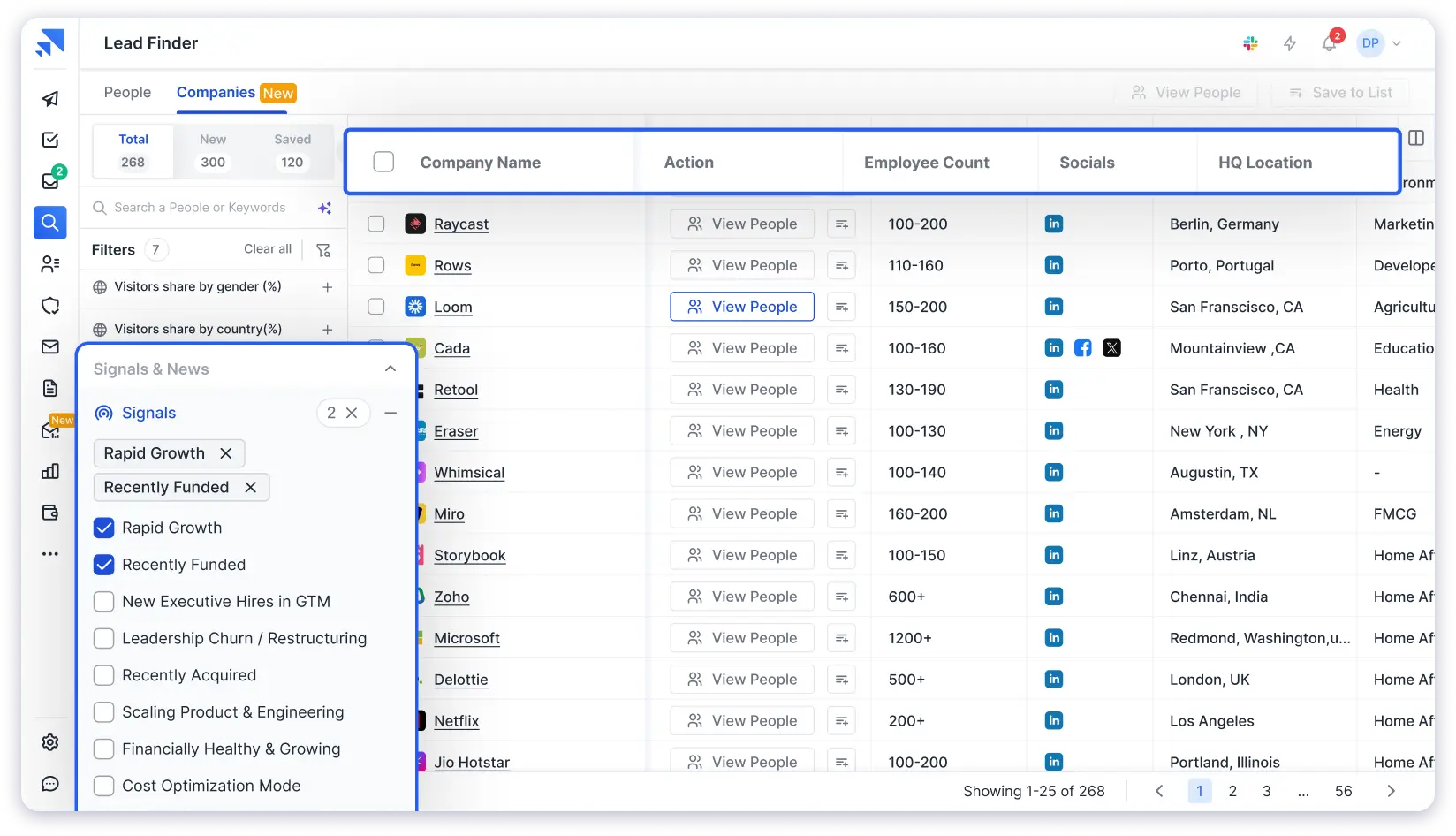
Every contact goes through waterfall enrichment, which means the data is verified across multiple sources before you see it.
You get verified email addresses and direct phone numbers. Not generic info@ addresses.
The full workflow (find, get contact details, reach out) 👇🏼
Step 1: Search for your ideal buyer
Login to Saleshandy and Open Lead Finder.
Apply your filters: “Import Manager” + “Food & Beverage” + “United Arab Emirates” + “50-200 employees.”
You get a filtered list of real people at real companies who are actively involved in importing.
Step 2: Reveal their contact details
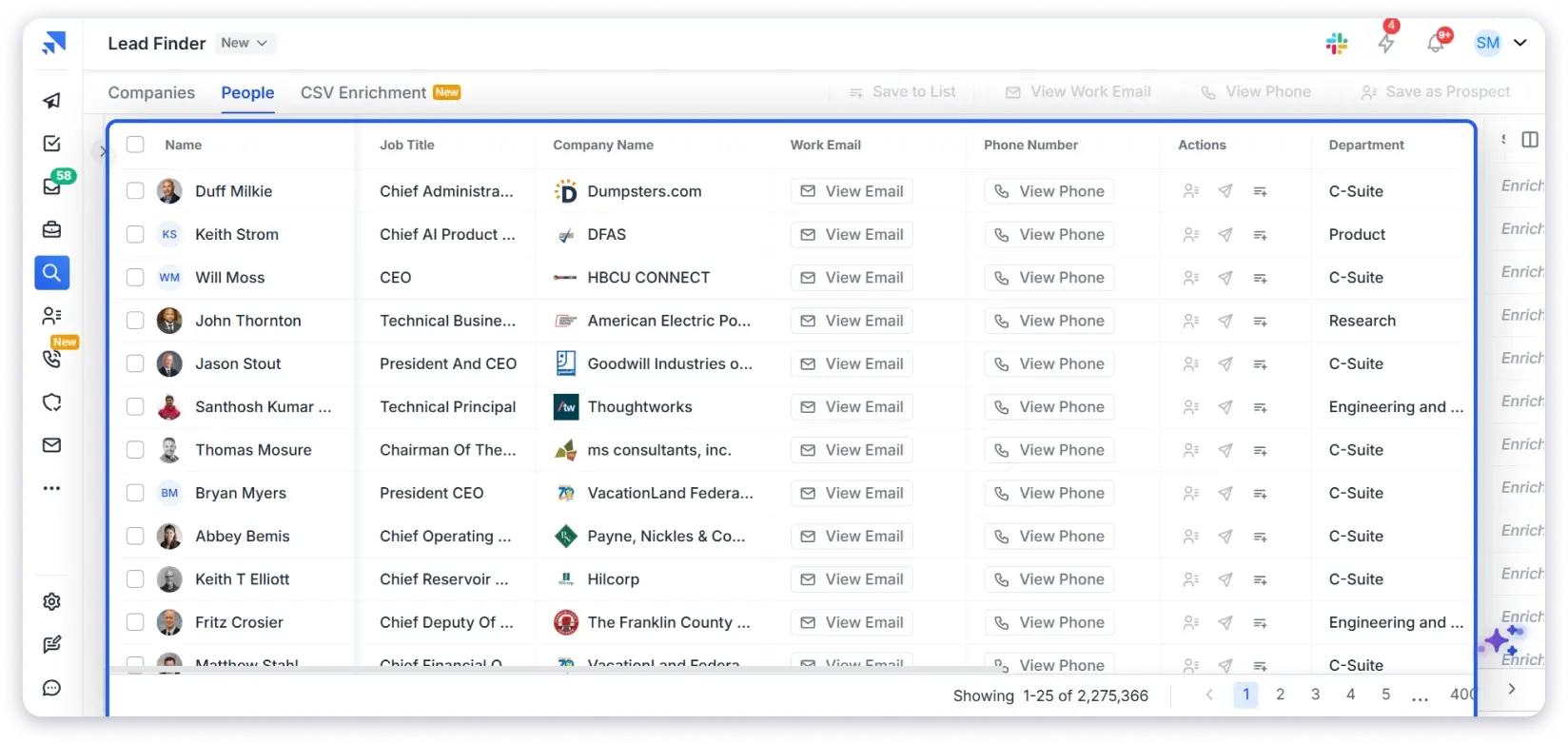
Get verified email addresses and direct phone numbers for every contact on your list. No guessing, no bouncing emails, no dead-end profiles.
Step 3: Reach out through multiple channels
Now you have three ways to connect with each buyer:
1. Cold email
Add contacts directly to a cold email sequence in Saleshandy.
Write a short, specific outreach email that includes who you are, what you export, your HS code, MOQ, packaging details, and relevant certifications.
Saleshandy handles automated follow-ups and sender rotation so your emails actually land in the inbox.
Here’s a simple email template that works for export outreach:
- MOQ: [X units/tons]
- Packaging: [export-ready packaging type]
- Certifications: [ISO/HACCP/etc.]
- FOB: [price range]
2. Cold calling
Use the phone numbers to call import managers directly.
A phone call after an email significantly increases your chances of getting a response because the buyer already has context.
Saleshandy’s built-in dialer lets you call US and Canada numbers directly from the platform, with your first number free.
Here’s a short cold call opener that works:
💡Pro Tip: Keep it under 20 seconds. The goal of the first call is not to close a deal. It’s to confirm they got your email and schedule a proper conversation.
3. LinkedIn message
Search for the same contact on LinkedIn and send a personalized connection request.
When a buyer sees your name in their inbox and then again on LinkedIn, you’re no longer a stranger.
Here’s a connection request message that gets accepted:
💡Pro Tip: Skip the “Dear Sir” opener and don’t attach your company brochure in the first message. Keep it human and short, and let the conversation build from there.
Step 4: Follow up consistently
Most buyers don’t respond to the first touchpoint. Send 3 to 4 follow-ups spaced 3 to 5 days apart. Each follow-up should add new value: a product video, a pricing sheet, a certification document, or a reference from an existing buyer.
Saleshandy offers 50 free credits to test the database.
If you follow this method consistently for 30 days, you can reach 100+ qualified buyers.
2. Use Import-Export Data to Find Verified Buyers
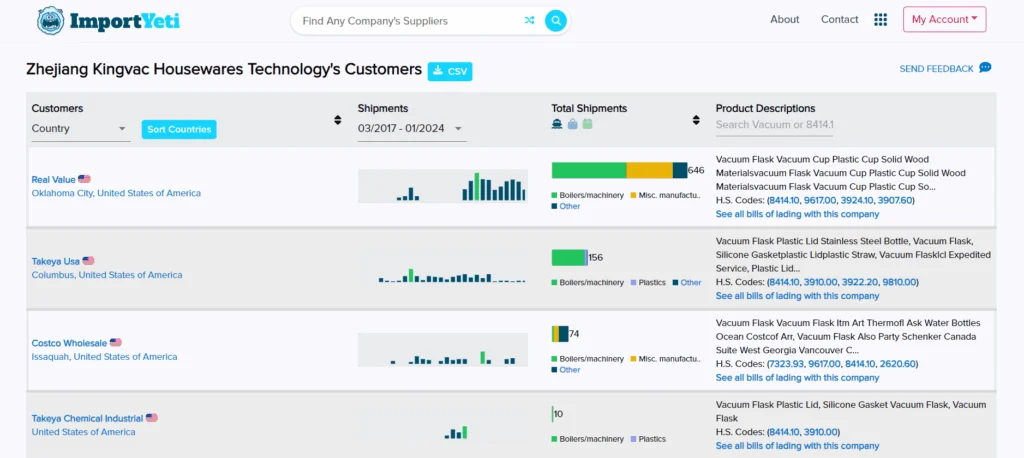
The next method you can use to find export buyers is analyzing real shipment and customs data.
This shows you which companies have actually imported your product in the last 6 to 12 months.
This is the data that changed my entire buyer search approach. Because here, the demand is confirmed.
The buyer is verified because their track record is visible. Past performance, import volume, product category. It’s all there.
You don’t need to convince these buyers that they need your product. They’re already buying it from someone else.
Tools you can use 👇🏼
- ImportYeti is free and shows historical US import records by company. Search by HS code or product name and you’ll see which companies imported what, from which country, and in what volume.
- Panjiva and ImportGenius are paid tools that cover more countries and provide deeper shipment-level data.
- Volza and Cybex.in offer similar trade intelligence with filters for product, country, and buyer type.
- ITC Trade Map (free) helps you analyze which countries import the most in your product category, so you can prioritize markets before searching for individual buyers.
Also check out: Our list of the best import export data providers that give you verified emails and phone numbers alongside shipment records.
3. List Your Products on B2B Marketplaces
The next method to find buyers for your export business is listing your products on B2B marketplaces where international buyers actively search for suppliers.
This is still the most common starting point for exporters.
And it works for generating passive leads over time.
Platforms that matter:
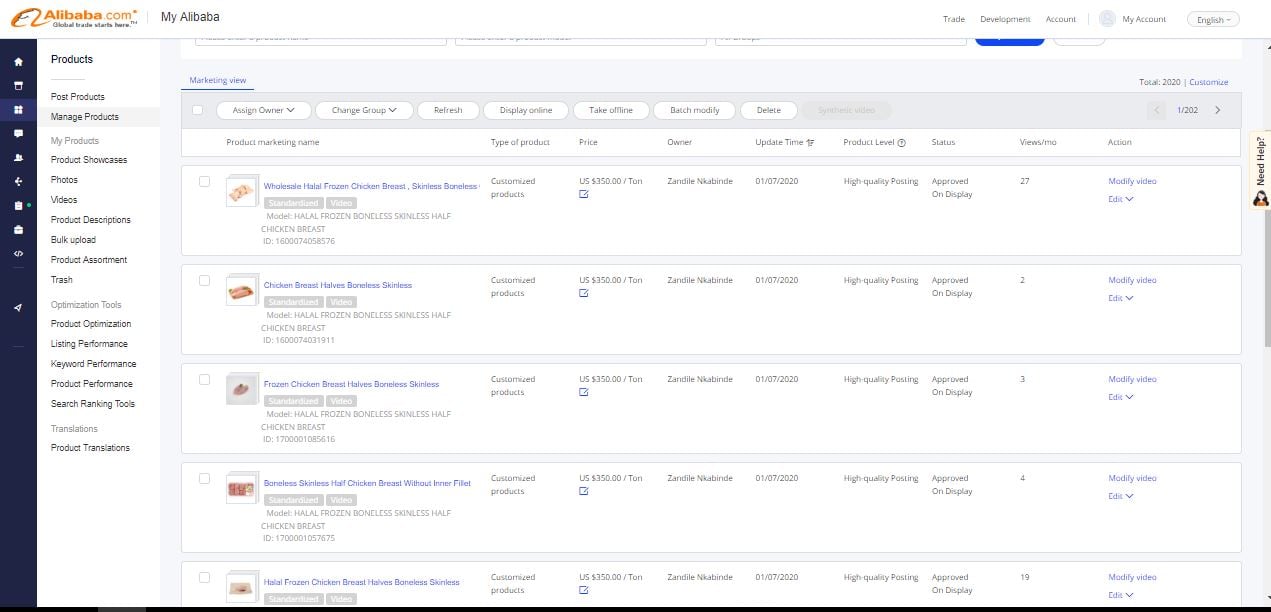
- Alibaba is the largest global B2B marketplace and still the first place most international buyers go when searching for suppliers.
- Global Sources is strong for electronics and verified wholesale buyers.
- TradeIndia and IndiaMART work well for exporters based in India.
- ExportersIndia and Made-in-China are additional options depending on your product category.
What actually works on these platforms:
Just listing your products is not enough.
Iused to think uploading a few photos and writing a basic description would bring in buyers. It didn’t.
The suppliers who win on marketplaces are the ones with professional profiles, clear product photos, detailed specifications including HS codes and MOQ, and fast response times.
Speed is your currency in export.
If a buyer messages you and you don’t reply within 2 to 3 hours, they move to the next supplier. That one thing alone can change your conversion rate.
4. Use LinkedIn to Connect with International Buyers
Another method to find foreign buyers for your export products is to use LinkedIn for both outreach and trust-building.
LinkedIn is where B2B buyers vet suppliers in 2026.
But there’s a massive difference between sending messages on LinkedIn and sending the right messages.
Most exporters default to writing “Hello sir, we export XYZ product” and hitting send. No reply. Ever.
Buyers get 200+ messages like that every day, and they skip all of them.
What actually works:
1. For outreach
Search for import managers, procurement officers, and wholesale buyers. Filter by country and industry.
Send a personalized connection request that includes something specific: your product, packaging proof, a short video, your HS code, or your MOQ.
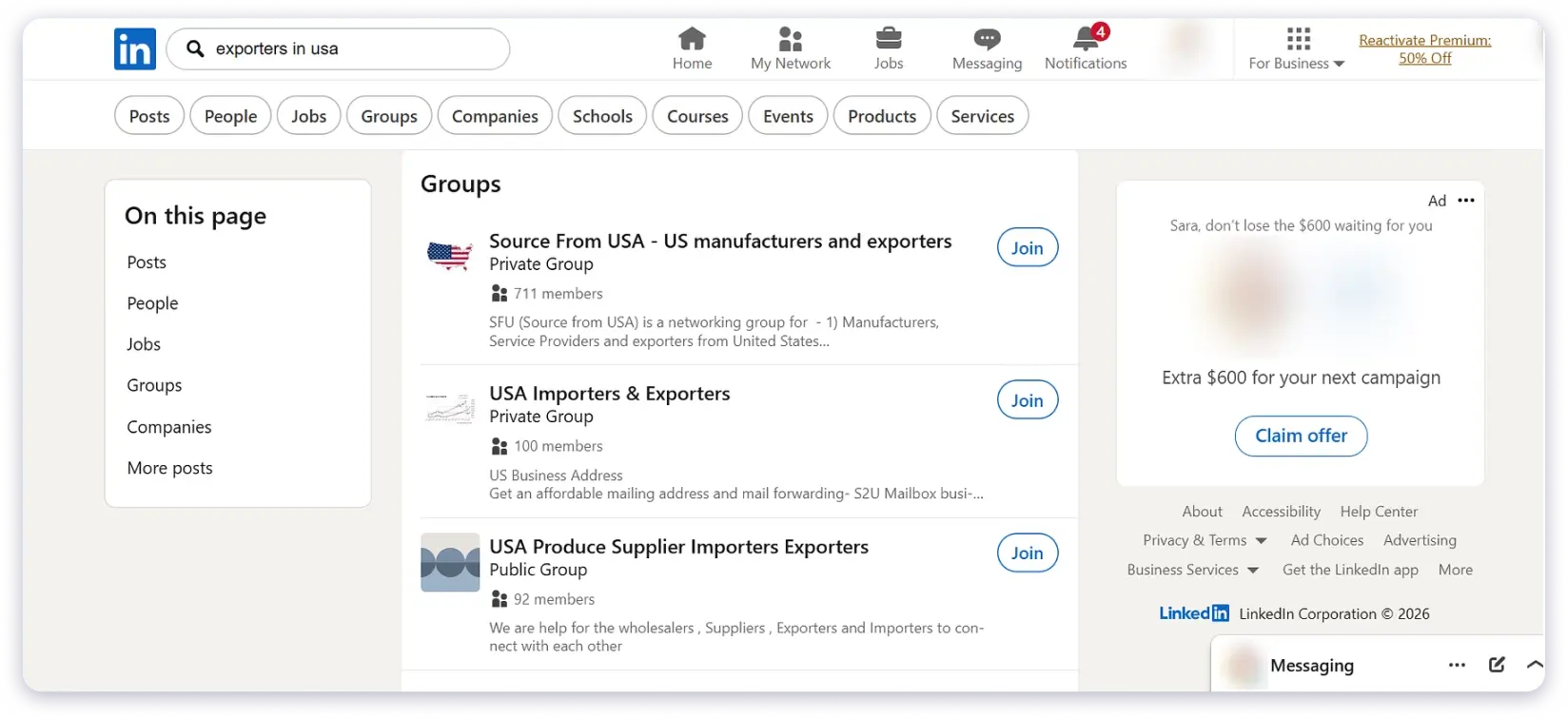
Keep it short, respectful, and clear. No walls of text. No “Dear Sir/Madam.”
2. For inbound
Post content that shows proof of your export capability.
Factory walkthrough videos, quality control processes, container loading clips, product certifications, and testimonials from existing buyers.
When a buyer receives your cold email or LinkedIn message, the first thing they’ll do is check your profile.
If it’s empty, they move on.
If it shows proof of a real, operating export business, they’re far more likely to respond.
LinkedIn Sales Navigator gives you advanced filters to find the right people. Worth considering if LinkedIn is a core channel for you. Here’s a detailed guide on how to find emails from LinkedIn profiles.
5. Attend International Trade Fairs and Exhibitions
The next way to find buyers for export is attending international trade fairs where buyers and suppliers meet in person.
This is still one of the highest-conversion channels for export deals.
Nothing builds trust faster than a handshake, a product sample, and a face-to-face conversation.
Industry-specific fairs worth attending:
- For food and agriculture: Gulfood (Dubai), Anuga (Germany), SIAL (France), and India International Trade Fair.
- For textiles and garments: Texworld (Paris), ITMA, and Magic Show (Las Vegas).
- For general trade: Canton Fair (China) is the largest trade fair in the world with thousands of international buyers attending every session.
How to get the most out of a trade fair:
Research attending buyers before the event.
Most major fairs publish a list of exhibitors and attendees. Identify the ones that match your product category and reach out before the fair starts.
Prepare product samples with FOB and CIF pricing ready. Buyers at trade fairs are in decision mode.
If you can give them a sample and a price on the spot, you’re ahead of 90% of the competition.
Follow up within 48 hours of the event. The longer you wait, the less they remember you.
💡Pro tip: Even attending without a booth can generate leads if you walk the floor, collect business cards, and follow up with structured outreach after.
6. Register with Government Export Promotion Programs
Another proven method to find buyers for export from India (and other countries) is registering with government export promotion agencies.
Most exporters completely underuse this channel.
But government-backed programs are among the safest routes to find genuine, verified buyers.
Agencies you should know about:
- In India: FIEO (Federation of Indian Export Organisations), APEDA (for agricultural and processed food exports), MPEDA (for marine products), Spices Board, and your sector-specific Export Promotion Council.
Make sure your IEC (Importer Exporter Code) is registered with DGFT. - In the USA: The U.S. Commercial Service offers a Gold Key Service that identifies, vets, and arranges meetings with potential overseas partners.
- In any country: Your local chamber of commerce and the commercial section of your target country’s embassy or consulate can provide lists of local distributors, wholesalers, and buying agents.
What these programs offer👇🏼
Verified buyer databases, subsidized trade delegations, buyer-seller meets organized by the government, and market intelligence reports on high-demand products in specific countries.
How to use them👇🏼
Register with the relevant council, attend their events, request buyer introductions for your target markets, and apply for subsidized trade fair participation.
7. Sell Through Online Export Platforms
If you sell finished consumer products, the next method to explore is listing on online export platforms like Amazon Global Selling.
Instead of finding individual wholesale buyers, platforms like Amazon let you sell directly to international customers. Amazon handles fulfillment, payment, and customer acquisition in markets like the US, UK, UAE, and Europe.
Other platforms include eBay Global Shipping and Etsy (for handmade and craft exports).
8. Partner with Buying Agents, Distributors, and Wholesalers
The last method to find buyers for your export business is partnering with intermediaries who already have established distribution networks in your target market.
Instead of finding 50 individual end-buyers, you find one good distributor or buying agent who already has the relationships and handles local distribution for you.
Types of intermediaries:
- Buying agents work on commission (typically 5% to 15%) and connect you with buyers in their region.
- Export Management Companies (EMCs) represent your products in foreign markets and handle the entire export process.
- Overseas distributors buy from you in bulk and handle local distribution, marketing, and customer relationships.
- Trading houses in import hubs like Dubai, Hong Kong, and Singapore buy products from multiple suppliers and resell across their networks.
How to find them: Trade directories, chamber of commerce referrals, LinkedIn, industry associations, and embassy commercial attaché introductions.
Related guide: A step-by-step guide on how to find wholesale buyers for export covers exactly how to do it.
How to Verify Export Buyers and Avoid Scams
Finding buyers is only half the job.
Verifying that they’re genuine is what protects your business, your shipment, and your cash flow.
Export scams are more common than most new exporters realize.
Common scams include fake RFQs to extract pricing, advance fee fraud before orders, and fake domains impersonating real companies.
- Check Company Registration and Trade Licenses
- Verify Their Domain and Email Address
- Request Bank References and Trade References
- Cross-Check With Import-Export Data
- Use Secure Payment Terms
- Start With a Small Trial Order
Here’s how to verify every buyer before you ship a single container:
1. Check Company Registration and Trade Licenses
Every legitimate import company has a registered business entity in their country. Ask the buyer for their company registration number, trade license, and tax identification number upfront.
Then verify it independently.
Don’t just take their word for it. Most countries maintain a public business registry where you can search by company name or registration number.
- For US companies, check the SEC EDGAR database or the relevant state’s Secretary of State website.
- For UK buyers, use Companies House.
- For UAE-based importers, check the Department of Economic Development (DED) portal for their emirate.
Also look at how long the company has been registered. A company registered two weeks ago that wants a $50,000 order on credit is very different from one that’s been operating for eight years.
2. Verify Their Domain and Email Address
If a buyer contacts you from a Gmail, Yahoo, or Hotmail address instead of a company domain, treat that as a red flag.
Real procurement managers at established companies use their company email.
Check if the email domain matches their company website.
Then visit the website and look for signs of a real business: employee profiles, physical office addresses, product catalogs, and contact pages with phone numbers.
A one-page website with stock photos, no company details, and a generic contact form is a warning sign.
Go a step further and check when the domain was registered using a WHOIS lookup. A website that was created last month but claims to represent a company with “20 years of experience” doesn’t add up.
You can also use Saleshandy’s email verification to confirm whether the email address is valid and active before you even respond.
3. Request Bank References and Trade References
Ask the buyer for two to three references from suppliers they’ve previously worked with, along with their bank details for wire transfer verification.
Genuine buyers won’t hesitate to provide this because they’ve done it with every other supplier they work with. It’s standard practice in international trade.
Don’t just collect the references.
Actually call or email them.
Ask specific questions: how long have they worked with this buyer, what payment terms do they use, what’s the average order value, and have they ever faced payment delays or disputes.
One five-minute phone call to a reference can save you from a six-figure loss.
4. Cross-Check With Import-Export Data
Use tools like ImportYeti, Volza, or Panjiva to verify whether the company has actually imported products before. Search their company name and check if shipment records exist.
If a company claims to import 500 tons of your product annually but has zero import history in any trade database, that’s a serious red flag. Also compare their claimed import volumes with what they’re ordering from you.
A company with a history of importing 10-ton shipments that suddenly places a 200-ton order deserves extra scrutiny and tighter payment terms.
Look at who else supplies them. If they already have three established suppliers for the same product, understand why they’re looking for a fourth. It could be a genuine need for diversification, or it could mean they’ve burned through suppliers who stopped working with them.
5. Use Secure Payment Terms
Payment terms are your single biggest protection against fraud.
Letter of Credit (LC) through a reputable international bank is the safest option for large orders.
The bank guarantees payment upon verified shipment, so you don’t depend on the buyer’s honesty alone.
For smaller deals, ask for 50% to 70% advance payment before production and the remaining balance before shipment or against the bill of lading.
Never ship on full credit to a new buyer, no matter how convincing they sound, how big their company seems, or how urgently they say they need the goods.
Urgency without documentation is the number one pattern in export fraud.
If a buyer pushes back hard against any form of advance payment or LC and insists on 90-day credit terms for a first order, slow down.
Legitimate buyers understand that trust is built over multiple transactions, not demanded on the first one.
6. Start With a Small Trial Order
Before committing to large volumes, do one small shipment to test the entire relationship.
A trial order verifies everything that paperwork can’t: their payment reliability, their communication speed during shipping, their customs clearance process, their documentation accuracy, and whether they try to renegotiate terms after receiving the goods.
Ship a small quantity, wait for full payment clearance, and evaluate how the entire process went.
If the trial goes smoothly, scale up gradually over the next two to three orders. If there were payment delays, communication gaps, or last-minute term changes, you’ll be glad you didn’t send a full container.
Any buyer who refuses a trial order entirely and insists on a large first shipment with deferred payment should be treated with extreme caution. Serious importers understand that building supplier relationships takes time.
Red flags to watch for at any stage 👇🏼
- Excessive urgency without proper documentation.
- Refusal to share trade references.
- Communication only through WhatsApp or personal email.
- Asking you to pay fees before receiving an order.
- Changing payment terms after the deal is agreed.
- Requesting you ship to a different address than what’s on the purchase order.
Your Next Step: Build Your Export Buyer System Today
You now have 8 methods to find international buyers for export. The worst thing you can do is bookmark this blog and come back to it “later.”
Here’s what a 30-day action plan looks like:
Today: Define your ideal buyer. Pick your target country, buyer type, and product category. Spend 30 minutes on ITC Trade Map to confirm import demand.
This week: Search Saleshandy Lead Finder for import managers in your target market. Use your 50 free credits to pull verified contacts. Send your first 20 cold emails using the template in this guide.
This month: Add LinkedIn outreach and marketplace listings to support your direct outreach. Follow up with every buyer who opened your email but didn’t reply. Register with your relevant Export Promotion Council.
In 30 days: You’ll have reached 500+ potential buyers. Even at a 10% response rate, that’s 50 conversations. And 5 of those will be serious.
Finding buyers for export is not about luck. It’s about building a system and showing up every day. The buyers are already looking for suppliers. Now you know exactly how to reach them.
Also read: Top 10 Import Export Data Providers in India.
Frequently Asked Questions
1. How Do I Find Genuine Buyers for Export?
The most reliable way to find genuine buyers for export is to use a combination of B2B contact databases, import-export trade data, and government export promotion programs.
Start by searching a database like Saleshandy Lead Finder to find import managers and procurement heads filtered by industry and country.
Verify their legitimacy by cross-checking with trade data tools like ImportYeti, requesting trade references, and using secure payment terms like Letters of Credit.
2. Which Is the Best Website to Find International Buyers?
For direct outreach, Saleshandy Lead Finder gives you access to 852M+ contacts with verified emails and phone numbers filtered by 75+ criteria.
For passive visibility, Alibaba and Global Sources are the largest B2B marketplaces where buyers search for suppliers.
For trade data, ImportYeti and Panjiva show which companies are actively importing your product.
3. How Do I Find Buyers for Export from India?
Indian exporters should register with FIEO, APEDA, or their relevant Export Promotion Council. Get your IEC from DGFT. List products on IndiaMART and Alibaba.
Use Saleshandy Lead Finder to search for import managers in your target country filtered by industry and company size.
Attend trade fairs like India International Trade Fair, Gulfood, and Canton Fair. Combine these channels with consistent cold email and LinkedIn outreach.
4. Can I Find Export Buyers Online for Free?
Yes, but with limitations. ITC Trade Map provides free data on import-export volumes by country. ImportYeti shows free US shipment records. LinkedIn lets you search for buyers manually.
Government agencies offer free buyer databases and trade delegation access.
For verified contact details at scale, paid tools like Saleshandy Lead Finder (which offers 50 free credits to start) provide much faster and more accurate results.
5. How Do I Contact Foreign Buyers Directly?
Once you identify a buyer, the most effective outreach combines three channels.
Send a personalized cold email with your product details, HS code, MOQ, certifications, and FOB pricing.
Follow up with a phone call if you have their direct number. Connect on LinkedIn with a short, specific message.
Use a cold email tool to automate follow-ups and track responses.
6. How Can I Get Export Orders from Foreign Buyers?
Getting export orders requires consistent outreach, not one-time efforts. Reach out to 30 to 40 buyers daily through cold email, LinkedIn, and phone calls.
Follow up 3 to 4 times with each buyer, adding new value each time. Attend trade fairs to meet high-intent buyers face to face.
Expect 100 outreach messages to generate 10 to 15 responses and 2 to 3 serious conversations. Your first order typically takes 2 to 6 months of consistent effort.
7. How Do I Verify If an International Buyer Is Genuine?
Check their company registration in their country’s business registry. Verify they use a company email domain, not Gmail or Yahoo.
Request bank references and trade references from other suppliers. Cross-check their import history using trade data tools.
Use secure payment terms like Letter of Credit or 50% to 70% advance payment. Start with a small trial order before committing large volumes.
8. What Is the Fastest Way to Find Buyers for Export Online?
The fastest method is using a B2B contact database like Saleshandy Lead Finder. Search by industry, country, job title, and company size. Get verified email addresses and phone numbers.
Add contacts to a cold email sequence and start outreach the same day. This is significantly faster than waiting for buyer inquiries on B2B marketplaces or trade fairs, which can take weeks or months.
 Anil Salvi