

 Anil Salvi
 Contents
- 1 Multichannel Lead Generation – TOC
- 2 What is Multichannel Lead Generation and Why Does It Matter?
- 3 What are the Top Channels for Multichannel Lead Generation?
- 4 How to Build a Multichannel Lead Generation Strategy (Step-by-Step Process)
- 4.1 Step 1: Define Your Ideal Customer Profile (ICP)
- 4.2 Step 2: Set Clear Goals and KPIs
- 4.3 Step 3: Use a Proper Combination of Channels
- 4.4 Step 4: Build Your Lead List
- 4.5 Step 5: Create Channel-Specific Messaging
- 4.6 Step 6: Automate and Sequence Your Outreach
- 4.7 Step 7: Nurture Leads Across Channels
- 4.8 Step 8: Track, Measure, and Optimize
- 5 What is the Best Tech Stack for Multichannel Lead Generation?
- 6 What Mistakes Should You Avoid in Multichannel Lead Generation?
- 6.1 Mistake 1: Trying to Do Too Many Channels At Once
- 6.2 Mistake 2: Using the Same Message on Every Channel
- 6.3 Mistake 3: Skipping Lead List Verification
- 6.4 Mistake 4: Giving Up After One or Two Touches
- 6.5 Mistake 5: Not Tracking Results by Channel
- 6.6 Mistake 6: Reaching Out on All Channels At the Same Time
- 7 Ready to Grow? Start Using a Multichannel Lead Generation Strategy
- 8 FAQs About Multichannel Lead Generation
Are you struggling to generate enough qualified leads from a single channel?
Many B2B teams start with one channel that performs well. Over time, that same channel begins to show its limits. No matter which one you have picked from the following.
- Cold email works until deliverability starts declining
- LinkedIn performs until reach becomes inconsistent
- Paid ads generate volume, but costs increase steadily
When your pipeline depends on one source, growth becomes fragile. Even small changes can disrupt results.
The issue is not that channels stop working, but that relying on a single channel creates risk. Your prospects engage across email, LinkedIn, search, and ads based on timing and intent.
No single channel can support every stage of the buying process.
This is why multi-channel lead generation matters for B2B teams.
In this guide, I will explain how multi-channel lead generation works, which channels matter most, and how to combine them in a structured way.
Multichannel Lead Generation – TOC
- TL;DR of Multichannel Lead Generation Strategy
- What is Multichannel Lead Generation and Why Does It Matter?
- What are the Top Channels for Multichannel Lead Generation?
- How to Build a Multichannel Lead Generation Strategy (Step-by-Step Process)
- What is the Best Tech Stack for Multichannel Lead Generation?
- What Mistakes Should You Avoid in Multichannel Lead Generation?
- Ready to Grow? Start Using a Multichannel Lead Generation Strategy
- FAQs About Multichannel Lead Generation
TL;DR: Multichannel Lead Generation Strategy
If you want a clear and practical overview, follow these core steps in order.
- Multichannel lead generation means showing up on multiple platforms like cold email, LinkedIn, and content.
- Define your ICP first, so you know exactly who you are targeting.
- Set clear goals, such as the number of meetings or leads per month, so you can measure what is working.
- Start with cold email as your main channel, add LinkedIn to warm up prospects, and use content to build trust.
- Build a clean, verified lead list before you start any outreach.
- Write different messages for each channel because what works in email does not work on LinkedIn.
- Automate your follow-ups so you do not miss opportunities.
- Track results by channel and focus more effort on what is generating quality leads.
This structured approach helps you generate predictable pipeline growth while scaling outreach across multiple channels.
What is Multichannel Lead Generation and Why Does It Matter?
Multichannel lead generation is the process of using two or more channels to find, engage, and convert potential customers.
Instead of relying on cold email alone or LinkedIn alone, you use a combination of methods. This could include cold email, LinkedIn outreach, content marketing, SEO, paid ads, or cold calling.
The idea is simple. Your prospects spend time on different platforms throughout their day. If you only show up on one, you miss them on all the others.
Why Does Multichannel Lead Generation Matter for Your Business?
B2B buyers do not make decisions after seeing one message. Research shows that most buyers interact with ten or more touchpoints before they are ready to speak with sales.
They read emails, browse websites, check LinkedIn profiles, consume content, and compare options over days or weeks.
If you are present on only one channel, you are invisible for most of that journey.
Multichannel lead generation helps you:
- Reach more of your target audience by showing up where they already spend time
- Build familiarity faster because prospects see your name across multiple platforms
- Reduce risk so that when one channel slows down, others continue generating leads
This approach is about being present in the right places so you can connect with prospects when they are ready to engage.
What are the Top Channels for Multichannel Lead Generation?
Here is my breakdown of the channels that matter for B2B lead generation.
- Cold Email Outreach
- LinkedIn Outreach
- Content Marketing
- SEO (Search Engine Optimization)
- Paid Advertising
- Cold Calling
- Social Media Marketing
1. Cold Email Outreach
Cold email is the backbone of most B2B outbound strategies. It is direct, scalable, and cost-effective.
When I compare cost per meeting across channels, cold email almost always wins.
You reach decision makers directly in their inbox with no algorithm standing between you and your prospect.
But cold email only works if you get the fundamentals right.
That means a verified and targeted list, personalized messaging, proper technical setup for deliverability, and a follow-up sequence that is persistent.
When to prioritize cold email:
- You have a clear ICP and can build email lists
- You are selling B2B products or services
- You need a scalable and cost-effective outbound channel
What works, from what I have observed:
Short emails that lead with the prospect’s problem. An irresistible and low-friction call to action, like a 15-minute call. Next is writing follow-ups that add value rather than just bumping the previous email.
2. LinkedIn Outreach
LinkedIn is where B2B decision makers spend their time.
This channel includes a social layer that email does not. Profiles, posts, and mutual connections provide context before engagement.
I think of LinkedIn as the perfect complement to cold email. Your prospect sees your email and checks your LinkedIn profile.
If your profile is credible and your content is relevant, they are more likely to engage.
The challenge with LinkedIn is scale. The platform limits the number of connection requests and messages you can send daily.
When to prioritize LinkedIn:
- You are targeting senior decision makers
- Your ICP is active on LinkedIn
- You want to warm up prospects before or after email
What works, from what I have observed:
Use short connection notes that reference something specific, such as a recent post or a mutual connection. Avoid pitching in the connect request. Once the connection is accepted and the relationship feels warm, share the pitch in a follow-up message.
3. Content Marketing
Content marketing builds up an advantage that compounds over time.
Every piece of content you publish becomes an asset.
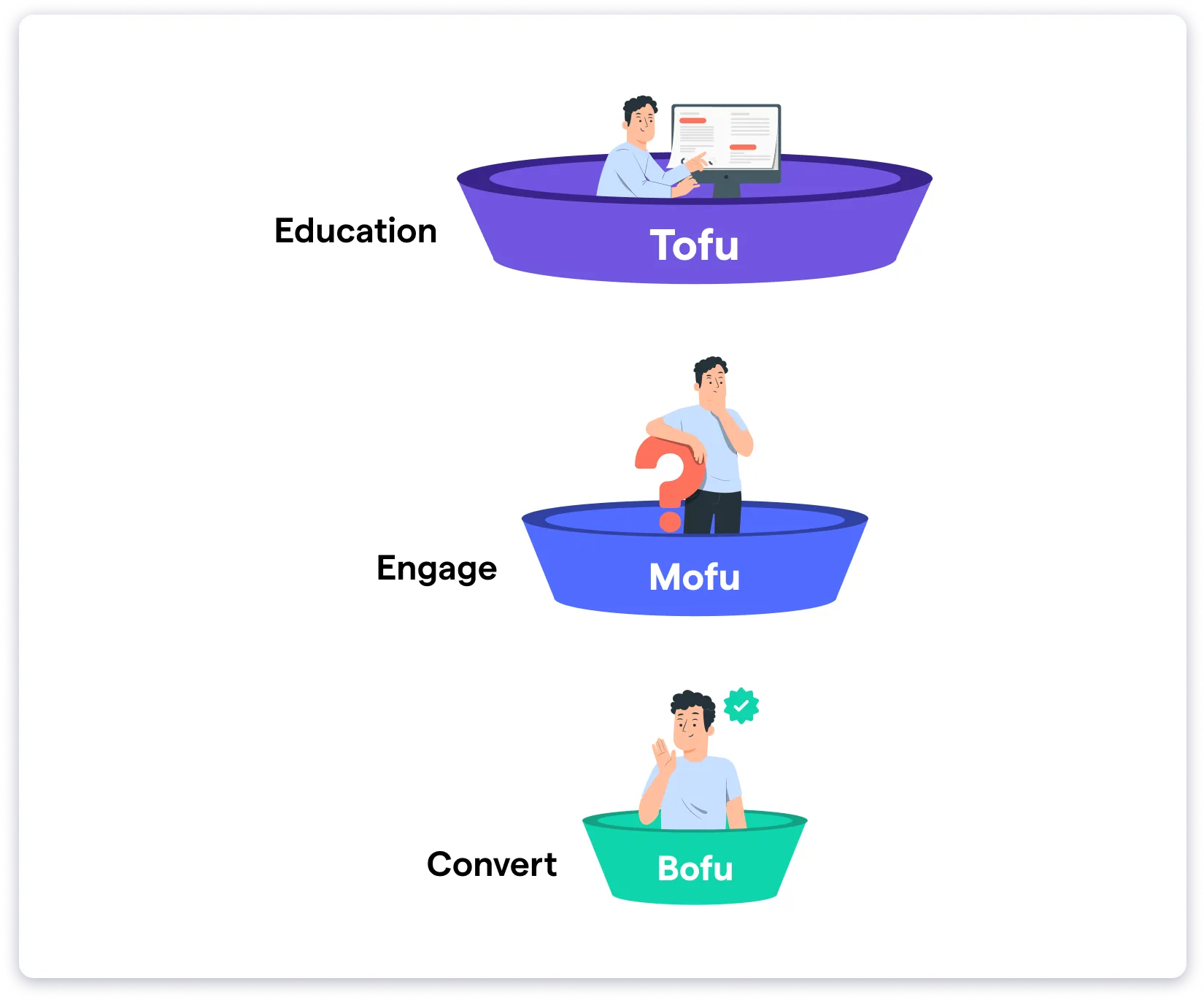
Content shows up in search results. It gives your outbound messages credibility. It nurtures prospects who are not ready to buy yet.
When a prospect receives your cold email and visits your website, what do they find?
If they find useful content that addresses their problem, you become a resource instead of just another vendor.
When to prioritize content:
- You are playing a long game
- Your prospects research solutions before talking to sales
- You have expertise worth sharing
What works, from what I have observed:
Write content that provides real value to readers and directly addresses their pain points. Stay specific and share practical advice that your ideal customer profile can apply. You can also include case studies with real numbers to build trust and authenticity.
4. SEO (Search Engine Optimization)
When someone searches for solutions to their problem, ranking for those queries puts you in front of high-intent prospects.
SEO captures demand that already exists. The downside is time. SEO takes months to build.

But once it is working, SEO becomes a predictable source of inbound leads without paying for every click.
When to prioritize SEO:
- You can invest for the long term
- Your prospects search for solutions online
- You want a predictable inbound channel
What works, from what I have observed:
SEO is a long-term effort that requires a clear and consistent strategy. Start by targeting specific, low-competition keywords that match what your buyers actively search. Create content that answers their questions better than existing results, publish consistently, and update older content regularly to keep it relevant and useful.
5. Paid Advertising
Paid ads give you immediate visibility. You can put your message in front of exactly the right people starting today.
The trade-off is cost. LinkedIn ads are effective for B2B targeting but expensive.
I typically recommend paid ads for specific purposes. These include promoting lead magnets and retargeting website visitors. They also work well for amplifying content that is already performing well.
When to prioritize paid ads:
- You need quick visibility and have the budget
- You are promoting a lead magnet or event
- You want to retarget warm prospects
What works, from what I have observed:
Choose the right platform based on your goal. Use Google Ads to capture people actively searching for solutions, and LinkedIn Ads to reach specific job titles and industries. Start with a lead magnet instead of asking for a demo upfront, and ensure your landing page aligns with the ad while presenting one clear call to action.
6. Cold Calling
Cold calling, if done right, helps teams connect with prospects directly. I do not recommend cold calling as a standalone channel.
But as part of a multichannel sequence where you have already emailed and connected on LinkedIn, a call at the right time can break through.
When to prioritize cold calling:
- You are selling high-ticket products or services
- You are targeting accounts that are not responding to email or LinkedIn
What works, from what I have observed:
Call prospects after they have seen your email or LinkedIn message. Research their company and role before dialing so you can reference something specific. Focus on starting a meaningful conversation, and if interest is shown, book a proper meeting instead of trying to cover everything during the first call.
7. Social Media Marketing
For B2B lead generation, social media beyond LinkedIn is more about brand building than a direct pipeline.
I rarely see social media drive direct B2B leads at scale. It is a supporting channel useful for brand awareness and content distribution.
When to prioritize social media:
- You have strong personal brands to leverage
- You want to build long-term brand equity
What works, from what I have observed:
Founder-led content often performs better than posts from company pages on LinkedIn or X. Repurpose blog content into shorter social posts instead of creating everything from scratch, and actively engage in industry conversations rather than only sharing your own updates.
How to Build a Multichannel Lead Generation Strategy (Step-by-Step Process)
Here is the process I use to build multichannel strategies that generate consistent results.
- Define Your Ideal Customer Profile (ICP)
- Set Clear Goals and KPIs
- Use a Proper Combination of Channels
- Build Your Lead List
- Create Channel-Specific Messaging
- Automate and Sequence Your Outreach
- Nurture Leads Across Channels
- Track, Measure, and Optimize
Step 1: Define Your Ideal Customer Profile (ICP)
If you do not know exactly who you are targeting, every channel becomes a matter of guesswork.
What differentiates successful campaigns is having a clear ICP and target audience.
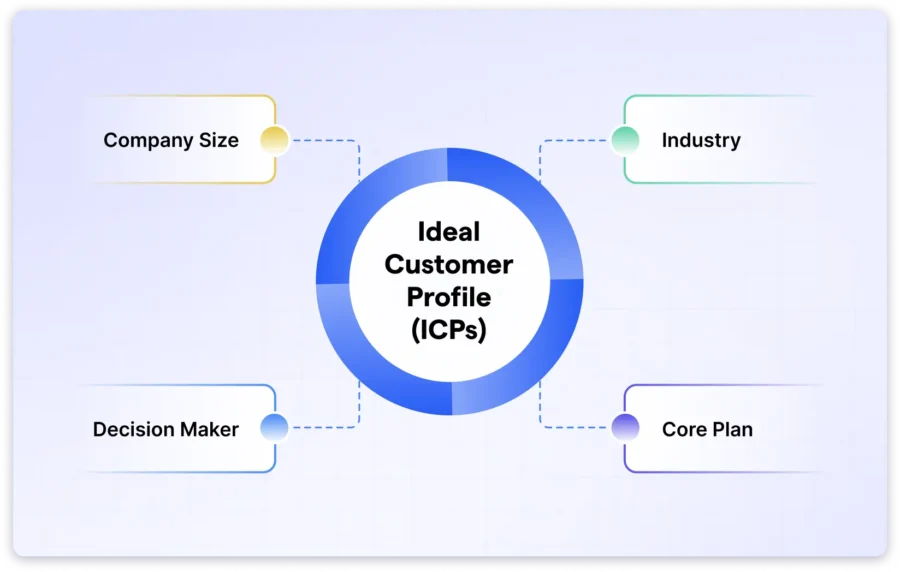
Your ICP should be specific enough to build a targeted list and write messaging that resonates.
Define these elements:
- Company characteristics: Industry, size, location, tech stack, growth stage
- Decision maker profiles: Job titles, seniority, responsibilities
- Pain points: What problems keep them up at night?
- Buying triggers: What events signal they might be in the market? (Funding rounds, new hires, leadership changes)
The more specific you get, the more targeted your lists and the more relevant your messaging.
Step 2: Set Clear Goals and KPIs
Once you’re ready with your target audience and ICP, you need to set your goals and KPIs.
So, you need to define what success looks like in concrete terms:
- How many qualified leads do you need per month?
- What is your target cost per lead?
- How many meetings do you need to book?
- What pipeline value are you aiming to generate?
Then break it down by channel.
For example, if you need 50 meetings per month, how many will come from cold email? How many from social websites? How many from inbound content?
Having proper metrics to measure forces you to be realistic about what each channel can deliver.
Step 3: Use a Proper Combination of Channels
Start with the channels that offer the greatest leverage for your specific situation.
For most B2B teams starting with multichannel, I recommend:
- Primary channel: Cold email (scalable, cost-effective, direct)
- Supporting channel: Social sites (warms up prospects, adds credibility)
- Credibility layer: Content (supports outbound, captures inbound)
Once these are running and you are hitting your meeting targets, you can layer in additional channels like paid ads, cold calling, or SEO.
The mistake I see most often is launching five channels at once. On top of that, executing them poorly, and concluding that multichannel marketing does not work.
At this stage, be focused, build by competence, and then expand over time.
Step 4: Build Your Lead List
Your campaign is only as good as your data.
A great email sequence sent to the wrong people or to invalid email addresses will fail.
Invest in building a quality list:
- Filter by your ICP criteria (job title, industry, company size, location)
- Verify email addresses before sending (bounces destroy deliverability)
- Enrich records with additional context (social sites like LinkedIn profiles or Facebook, company news)
This is where a lead finder tool pays for itself. You can search a database by your exact criteria, get verified contact information, and export leads directly into your outreach sequences.
Saleshandy Lead Finder lets you search 800M+ contacts, filter by detailed criteria, verify emails automatically, and export leads directly into your campaigns.
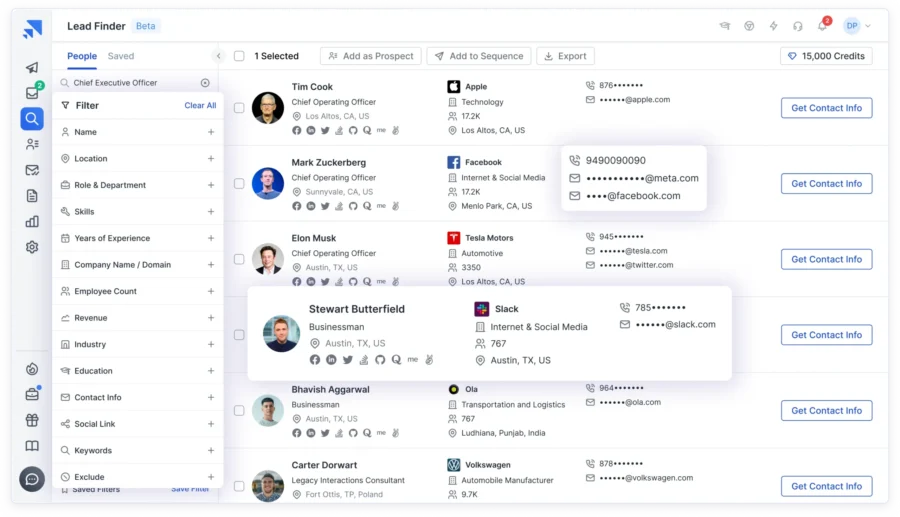
Do not skip this step or try to shortcut it with cheap data. The downstream consequences are not worth it.
Step 5: Create Channel-Specific Messaging
At this stage, you need to have proper messaging for your different channels. Make sure your core message is consistent across channels.
However, the format should be adaptable according to each platform.
Cold email:
- Short (under 150 words)
- One clear ask per email
- Personalized opening that shows you have done homework
- No attachments and minimal links
LinkedIn:
- Conversational, not formal
- Reference their profile, content, or company specifically
- Do not pitch in the connection request
- Lead with curiosity or value
Content:
- Educational, not promotional
- Address the prospect’s problem, not your product
- Provide actionable takeaways
The test is simple: would this message make sense on this channel? Match the medium.
Step 6: Automate and Sequence Your Outreach
If you are personally sending every email and tracking every follow-up in a spreadsheet, you will max out quickly.
Use an outreach platform that handles:
- Automated sequences that run on their own
- Personalization of email at scale with merge fields and custom variables
- Follow-up scheduling without manual intervention
- Sender rotation to protect deliverability
- Reply detection that pauses sequences when someone responds
Saleshandy handles all of this. You can run complex sequences across unlimited email accounts, rotate senders, A/B test messaging, and track every interaction in one dashboard.
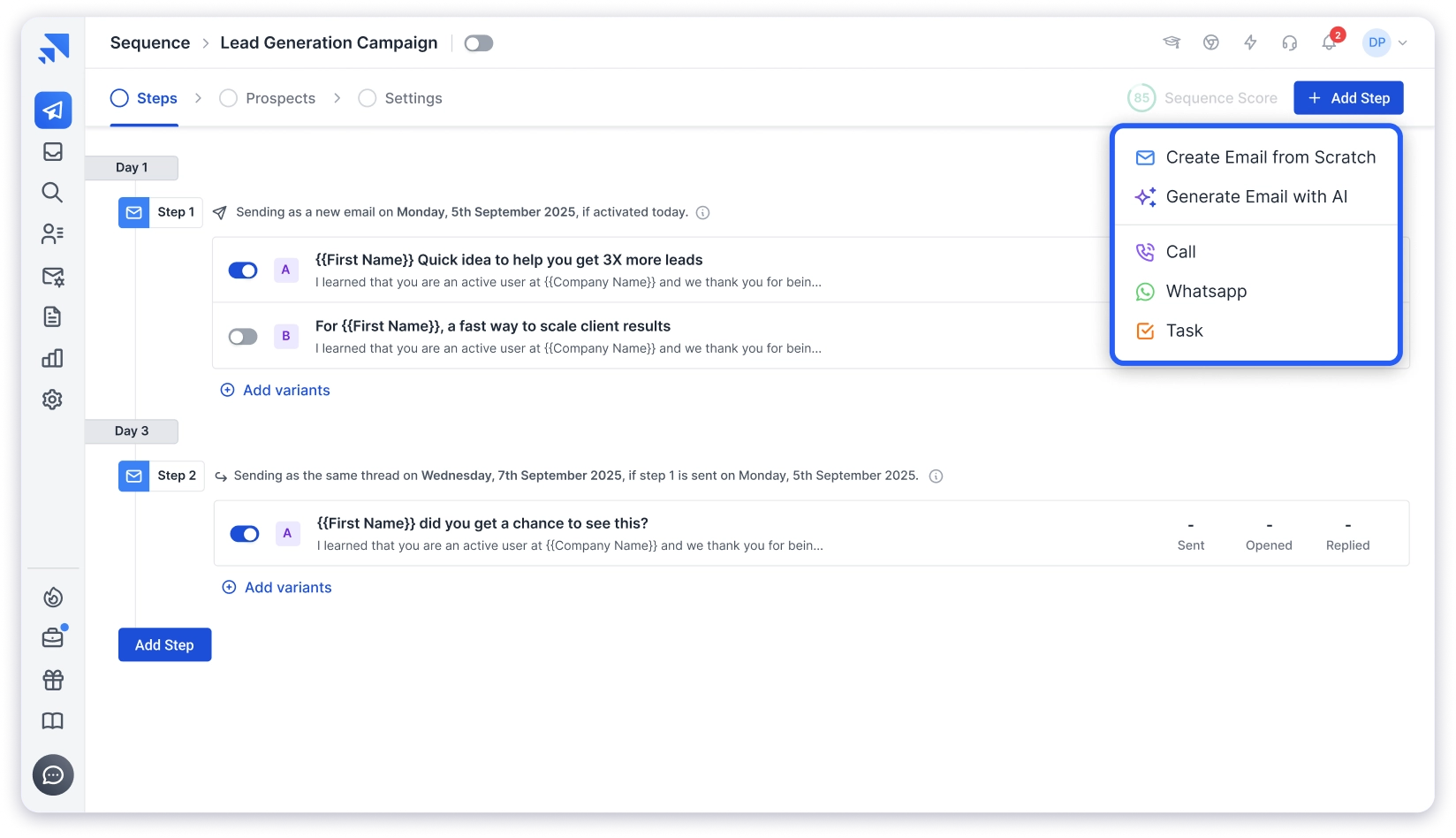
The right tool lets you run campaigns at scale while maintaining the quality that gets responses.
Step 7: Nurture Leads Across Channels
Your job here is to nurture leads at this stage. This is where multichannel really works.
Build nurture sequences that combine:
- Follow up emails with useful content (guides, case studies, relevant articles)
- LinkedIn engagement manually (comment on their posts, share relevant content)
- Retargeting ads for prospects who visited your site but did not convert
Your goal should be helpful and present so that when they are ready to act, you are top of mind.
Step 8: Track, Measure, and Optimize
Multichannel only works if you know what is working.
Track performance by channel:
- Open rates and reply rates for email
- Connection acceptance and response rates for LinkedIn
- Traffic and conversion rates for content and SEO
- Cost per lead and return on ad spend for paid ads
Compare performance across channels. You need to identify what is generating quality leads at a reasonable cost. Also, take care of what is draining resources without delivering.
Then optimize. Test new subject lines, messaging angles, channel combinations, timing, and audiences. Small improvements compound over time.
What is the Best Tech Stack for Multichannel Lead Generation?
Here is the table you can use to review the tech stack for multichannel lead generation.
| Tool Category | What It Does | Must-Have Features | Top Tools | Recommended |
|---|---|---|---|---|
| Lead Finder | Finds verified contact information for your target prospects | • Large database • Advanced filters • Built-in verification • Direct export | • Saleshandy Lead Finder • Apollo • ZoomInfo • Lusha • Cognism • RocketReach • UpLead | Saleshandy Lead Finder (800M+ contacts, 25+ filters, built-in verification, direct export to sequences) |
| Cold Email Outreach | Sends personalized emails at scale with automated follow-ups | • Multi-step sequences • Sender rotation • Reply detection • A/B testing • Deliverability tools | • Saleshandy • Instantly • Lemlist • Smartlead • Woodpecker • Mailshake • Reply.io | Saleshandy (unlimited email accounts, sender rotation, unified inbox, A/B testing, sequence score) |
| Email Verification | Verifies email addresses to reduce bounces and protect deliverability | • Real-time verification • Bulk cleaning • Catch-all detection | • Saleshandy (built-in) • ZeroBounce • NeverBounce • Debounce | Saleshandy (double verification at export and before sending) |
| LinkedIn Outreach | Connects with prospects and sends messages on LinkedIn | • Connection management • Message sequencing • Profile tracking • CRM sync | • LinkedIn Sales Navigator • Expandi • Dripify • Waalaxy | LinkedIn Sales Navigator + Manual outreach (hybrid approach recommended) |
| CRM | Stores contacts, tracks interactions, and manages the sales pipeline | • Contact records • Activity tracking • Pipeline management • Integrations | • HubSpot • Pipedrive • Salesforce • Close • Zoho CRM • Freshsales | HubSpot (free tier available, all-in-one platform) or Pipedrive (simple and sales-focused) |
| Analytics and Reporting | Tracks performance across all channels | • Multi-channel tracking • Custom dashboards • Conversion attribution | • Saleshandy analytics • HubSpot reports • Databox • Google Looker Studio | Saleshandy analytics + CRM reports |
Launch Multichannel Lead Generation from One Dashboard
What Mistakes Should You Avoid in Multichannel Lead Generation?
I have seen many multichannel campaigns fail. Most of the time, it is for reasons that are easy to avoid.
- Mistake 1: Trying to Do Too Many Channels At Once
- Mistake 2: Using the Same Message on Every Channel
- Mistake 3: Skipping Lead List Verification
- Mistake 4: Giving Up After One or Two Touches
- Mistake 5: Not Tracking Results by Channel
- Mistake 6: Reaching Out on All Channels At the Same Time
Mistake 1: Trying to Do Too Many Channels At Once
When you want quick results, launching everything together feels like the right move.
Cold email, LinkedIn, content, paid ads, and cold calling all at once.
But with limited time and resources, nothing gets the attention it needs. Emails feel rushed. LinkedIn outreach stops after a few days. The ad budget runs out with no learning.
How to avoid:
Pick two or three channels that match your audience and run them consistently for four to six weeks. Once you start seeing results, add the next channel.
Mistake 2: Using the Same Message on Every Channel
Copying one message to email, LinkedIn, and everywhere else saves time. But a cold email has a different format than a LinkedIn message.
Your prospects can tell when something feels out of place, and they ignore it.
How to avoid:
Keep your core message consistent, but adjust how you present it for each platform. Cold emails can be slightly longer and more direct, while LinkedIn messages should stay short and conversational. Match the natural communication style people expect on each platform.
Mistake 3: Skipping Lead List Verification
When you are eager to start outreach, verifying emails feels like an extra step you can skip. You upload a list and hit send without checking if the emails are valid.
Then bounce rates go up, inbox placement drops, and your domain gets flagged. Recovering from this takes weeks or months.
How to avoid:
Verify every email before you send. Tools like Saleshandy offer a built-in email verification feature to help you, so you do not have to do it manually or pay for a separate tool.
Mistake 4: Giving Up After One or Two Touches
A prospect does not reply to your first email, and you assume there is no interest. But most buyers need multiple touches before responding. Stopping early means you lose deals that were close to happening.
How to avoid:
Plan for four to six follow-ups from the start and spread them across two to three weeks. Each follow-up should add something useful instead of only asking whether they saw your last email.
Mistake 5: Not Tracking Results by Channel
When teams track only total leads, they lose visibility into sources and misallocate time and budget. Without data, every decision is a guess.
How to avoid:
Track each channel separately from day one. Monitor open rates, reply rates, and meetings booked. Review these numbers weekly and shift your time and budget toward the channels that generate real results.
Mistake 6: Reaching Out on All Channels At the Same Time
More touches on the same day feel like better chances. You send an email, a LinkedIn request, and make a call all within hours. But to your prospect, it feels overwhelming. It pushes them away instead of bringing them closer.
How to avoid:
Space your touches across days instead of hours. Send the first email on day one, reach out on LinkedIn on day three, and follow up with another email on day five. Give prospects enough room to respond at their own pace.
Ready to Grow? Start Using a Multichannel Lead Generation Strategy
Relying on a single channel to fill your pipeline is risky.
When that channel slows down, your leads dry up.
Multichannel lead generation solves this by helping you reach prospects wherever they spend their time.
In this guide, you now have everything you need to get started:
- The top channels that actually work for B2B lead generation
- A step-by-step process to build your multichannel strategy
- Best practices to get better results from every channel
- Common mistakes to avoid so you do not waste time and money
But if you want a reliable way to start generating leads across multiple channels, your best option is a platform like Saleshandy.
Why?
Because it gives you everything in one place. You can find verified leads from a database of 800M+ contacts, send personalized cold emails at scale, automate follow-ups, and track results from a single dashboard.
Also read: A detailed comparison of the best multichannel outreach tools for B2B sales teams.
FAQs About Multichannel Lead Generation
1. What are the best channels for B2B lead generation?
For most B2B teams, cold email and LinkedIn are the most effective direct outreach channels. They are cost-effective, scalable, and give you direct access to decision makers. Content marketing and SEO support these efforts by building credibility and capturing inbound interest.
2. How is multichannel different from omnichannel?
Multichannel means using multiple platforms to reach prospects, with each channel operating somewhat independently. Omnichannel integrates channels into a unified experience in which data flows between platforms and the prospect’s journey is coordinated across touchpoints.
3. How do I measure success in multichannel campaigns?
Track metrics by channel: leads generated, meetings booked, reply rates, conversion rates, and cost per lead. Compare performance across channels to identify what is generating quality results efficiently.
4. Is cold email still effective for lead generation?
Yes. Cold email remains one of the most cost-effective B2B lead generation channels when executed properly. The keys are a verified and targeted list, personalized messaging, proper technical setup for deliverability, and consistent follow-up.
5. How many channels should I start with?
Start with two or three channels that align with your ICP and team capacity. For most B2B teams, that means cold email as the primary channel, LinkedIn as a supporting touchpoint, and content as a credibility layer.